
Removing Expired Penalty Points from Your UK Driving Licence in 2025
Most expired endorsements (penalty points) will be removed from your driving record automatically once they’re no longer valid. How long points stay on your licence depends on the offence; some points remain for 4 years, others for 11 years, based on seriousness. It’s important to give your driving licence a “health check” periodically. Incorrect or outdated information on your licence can lead to higher insurance premiums, issues with police or employers, or even problems hiring a car abroad. Follow this guide to make sure your licence record is accurate and up to date, so you’re not being penalised by old points that should have been removed.
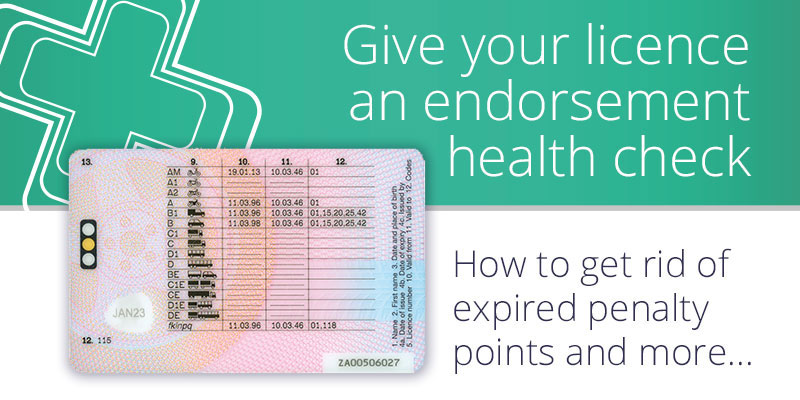
Give Your Licence a Full Health Check
A well-maintained driving licence is crucial. Since the paper counterpart of UK driving licences was abolished in 2015, all penalty points and endorsements are now recorded digitally. This means you need to use the DVLA’s online services to check what’s on your licence; you can no longer rely on the old paper counterpart to see endorsements. Taking a few minutes to review your driving record will ensure there are no surprise points lingering that could affect your insurance or job, or result in a costly car hire refusal. Here’s how to check your licence status and clean up any expired points:
Using the DVLA ‘View Driving Licence’ Service
The DVLA provides an online service called View or Share Your Driving Licence Information. By logging in to this free 24/7 service, you can see exactly what’s on your driving licence record, including your current penalty points, any disqualifications, the vehicle categories you’re allowed to drive, and personal details like your address. It’s the fastest way to confirm if expired points have been removed. To access the service, you will need:
- Driving licence number (found on your photocard licence)
- National Insurance number (for identity verification)
- Postcode associated with your driving licence
Once logged in, you can view your licence details and also use the “Share your licence” feature to generate a check code if needed. The information is updated in real time. Make sure your personal details (name, address, etc.) are correct; failing to update a changed address, for example, could land you with a fine. If you spot any errors (such as points that should have expired), you’ll want to get them corrected with DVLA.
Tip: The DVLA’s View Driving Licence service also allows you to create a licence check code to share your driving record with others (for example, a car hire company or employer). The code is valid for 21 days and lets the third party see what’s on your licence. We’ll discuss this more below in the car hire section, but it’s good to know that sharing your up-to-date licence info is easy once your record is clean.
Understanding Endorsements and Penalty Points
Endorsements are the official records of driving offences on your licence, each with a unique code (e.g. SP30 for speeding) and a number of penalty points (from 1 to 11). Generally, minor offences carry fewer points, while serious offences carry more. Accumulating too many points can lead to consequences like fines, increased insurance costs, or even a driving ban. In fact, some very serious offences don’t use points at all; they result in an instant disqualification of your licence. For most offences, though, points are added and will stay on your driving record for a set number of years.

How long do points stay on your licence? It depends on the offence: in most cases, points remain on record for 4 years from the date of the offence (or date of conviction in some cases), but the most serious offences remain for 11 years. This is a legal requirement to ensure that offences like drink-driving or causing death by dangerous driving have a longer impact. Importantly, even though points might only count towards a “totting up” ban for 3 years, they are visible on your record (and to insurers or employers) until they are formally removed at the 4 or 11-year mark. That’s why removing expired points matters. Once the endorsement expiry date has passed, you want those points cleared off your record so they don’t affect you.
Below is the full list of driving endorsement codes used in Great Britain, along with the offence description, the typical penalty point range, and how long the endorsement stays on your licence. This list is up to date as of 2025, including recent additions (for example, a new code for causing serious injury by careless driving). Use it to check any codes on your record:
Endorsement Codes and Penalty Points by Offence
Accident offences, endorsements for causing or failing to report an accident. (Stay on record 4 years from the date of offence.)
- AC10, Failing to stop after an accident – 5 to 10 points
- AC20, Failing to give particulars or report an accident within 24 hours – 5 to 10 points
- AC30, Undefined accident offences – 4 to 9 points
Disqualified driver, driving after a disqualification. (BA10, BA30 stay on record 4 years from date of offence. BA40, BA60 stay 4 years from the date of conviction.)
- BA10, Driving while disqualified by order of court – 6 points
- BA30, Attempting to drive while disqualified by order of court – 6 points
- BA40, Causing death by driving while disqualified – 3 to 11 points
- BA60, Causing serious injury by driving while disqualified – 3 to 11 points
Careless or inconsiderate driving, offences often called “driving without due care and attention.” (Codes CD10–CD33 stay on record 4 years from the date of offence. Codes CD40-CD70 stay 11 years from the date of conviction. Codes CD80–CD90 stay 4 years from the date of conviction.)
- CD10, Driving without due care and attention – 3 to 9 points
- CD20, Driving without reasonable consideration for other road users – 3 to 9 points
- CD30, Driving without due care and attention or without reasonable consideration – 3 to 9 points
- CD33, Causing serious injury by careless or inconsiderate driving – 3 to 9 points (new offence introduced in recent years)
- CD40, Causing death through careless driving when unfit through drink – 3 to 11 points
- CD50, Causing death by careless driving when unfit through drugs – 3 to 11 points
- CD60, Causing death by careless driving with an alcohol level above the limit – 3 to 11 points
- CD70, Causing death by careless driving, then failing to supply a specimen for alcohol analysis – 3 to 11 points
- CD80, Causing death by careless, or inconsiderate, driving (not alcohol or drugs related) – 3 to 11 points
- CD90, Causing death by driving: unlicensed, disqualified or uninsured driver – 3 to 11 points
Construction and use offences, vehicle defects and unsafe use. (Stay on record 4 years from date of offence.)
- CU10, Using a vehicle with defective brakes – 3 points
- CU20, Using a vehicle in a dangerous condition (e.g. vehicle or parts unsuitable or unsafe) – 3 points
- CU30, Using a vehicle with defective tyres – 3 points
- CU40, Using a vehicle with defective steering – 3 points
- CU50, Causing or likely to cause danger by reason of load or passengers – 3 points
- CU80, Breach of requirements as to control of the vehicle, such as using a mobile phone – 3 to 6 points (currently 6 points for mobile phone use)
Reckless/dangerous driving, major dangerous driving offences. (Stay on record 4 years from date of conviction.)
- DD10, Causing serious injury by dangerous driving – 3 to 11 points
- DD40, Dangerous driving – 3 to 11 points
- DD60, Manslaughter or culpable homicide while driving a vehicle – 3 to 11 points
- DD80, Causing death by dangerous driving – 3 to 11 points
- DD90, Furious driving (road rage-related offence) – 3 to 9 points
Drink driving offences (Alcohol), driving or being in charge of a vehicle under the influence of alcohol. (Codes DR10–DR61 stay on record 11 years from date of conviction.)
- DR10, Driving or attempting to drive with an alcohol level above the limit – 3 to 11 points
- DR20, Driving or attempting to drive while unfit through drink – 3 to 11 points
- DR30, Driving or attempting to drive, then failing to supply a specimen for analysis – 3 to 11 points
- DR31, Driving or attempting to drive, then refusing to allow a blood sample to be analysed (without consent, due to incapacity) – 3 to 11 points
- DR61, Refusing to allow analysis of a blood sample taken without consent (in circumstances other than driving) – 10 points
(Codes DR40–DR70 stay on record 4 years from the date of offence, or 4 years from the date of conviction if a driving ban was imposed.)
- DR40, In charge of a vehicle while alcohol level above limit – 10 points
- DR50, In charge of a vehicle while unfit through drink – 10 points
- DR60, Failure to provide a specimen for analysis (in circumstances other than driving) – 10 points
- DR70, Failing to co-operate with a preliminary test (e.g. roadside breathalyser) – 4 points
Drug driving offences, driving under the influence of drugs. (Codes DG10, DG60, DR80 stay on record 11 years from date of conviction.)
- DG10, Driving or attempting to drive with a drug level above the specified limit – 3 to 11 points
- DG60, Causing death by careless driving with a drug level above the limit – 3 to 11 points
- DR80, Driving or attempting to drive when unfit through drugs – 3 to 11 points
(Codes DG40, DR90 stay on record 4 years from date of offence, or 4 years from conviction if a ban was imposed.)
- DG40, In charge of a vehicle while drug level above the specified limit – 10 points
- DR90, In charge of a vehicle when unfit through drugs – 10 points
Insurance offences, driving without proper insurance. (Stay on record 4 years from date of offence.)
- IN10, Using a vehicle uninsured against third-party risks – 6 to 8 points
Licence-related offences, driving licence issues. (Stay on record 4 years from date of offence.)
- LC20, Driving otherwise than in accordance with a licence (e.g. wrong licence category) – 3 to 6 points
- LC30, Driving after making a false declaration about fitness when applying for a licence – 3 to 6 points
- LC40, Driving a vehicle, having failed to notify a disability – 3 to 6 points
- LC50, Driving after licence has been revoked or refused on medical grounds – 3 to 6 points
Miscellaneous offences, other offences not covered elsewhere. (Stay on record 4 years.)
- MS10, Leaving a vehicle in a dangerous position – 3 points
- MS20, Unlawful pillion riding (carrying a passenger on a motorbike improperly) – 3 points
- MS30, Play street offences (e.g. driving in areas designated for play) – 2 points
- MS50, Motor racing on the highway – 3 to 11 points
- MS60, Offences not covered by other codes (including vehicle control requirements) – 3 points
- MS70, Driving with uncorrected defective eyesight – 3 points
- MS80, Refusing to submit to an eyesight test – 3 points
- MS90, Failure to give information as to the identity of the driver (e.g. not naming a driver when required) – 6 points
Motorway offences, non-speeding motorway violations. (Stay on record 4 years.)
- MW10, Contravention of special roads regulations (e.g. driving on a motorway where prohibited, excluding speeding) – 3 points
Pedestrian crossing offences, ignoring crossing rules. (Stay on record 4 years.)
- PC10, Undefined contravention of pedestrian crossing regulations – 3 points
- PC20, Contravention of pedestrian crossing regulations with a moving vehicle – 3 points
- PC30, Contravention of pedestrian crossing regulations with a stationary vehicle – 3 points
Speed limit offences, speeding violations (by vehicle type or location). (Stay on record 4 years.)
- SP10, Exceeding goods vehicle speed limits – 3 to 6 points
- SP20, Exceeding speed limit for the type of vehicle (excluding goods or passenger vehicles) – 3 to 6 points
- SP30, Exceeding the statutory speed limit on a public road – 3 to 6 points
- SP40, Exceeding passenger vehicle speed limit – 3 to 6 points
- SP50, Exceeding speed limit on a motorway – 3 to 6 points
(Note: There is no SP60 code in current use; SP50 covers motorway speeding. Older SP60 codes for undefined speeding are now obsolete.)
Traffic direction and signs, ignoring traffic signs or signals. (Stay on record 4 years.)
- TS10, Failing to comply with traffic light signals – 3 points
- TS20, Failing to comply with double white lines – 3 points
- TS30, Failing to comply with a “Stop” sign – 3 points
- TS40, Failing to comply with the direction of a constable or traffic warden – 3 points
- TS50, Failing to comply with a traffic sign (excluding Stop, traffic lights, or double whites) – 3 points
- TS60, Failing to comply with a school crossing patrol sign – 3 points
- TS70, Undefined failure to comply with a traffic direction sign – 3 points
Special code, totting-up disqualification. (TT99 stays on record 4 years from the date of conviction.)
- TT99, Indicator of a disqualification under the “totting up” system (for accumulating 12+ points within 3 years). This code isn’t an offence by itself, but it shows you were banned for reaching too many points.
Theft or unauthorised taking, vehicle theft-related. (Stay on record 4 years.)
- UT50, Aggravated taking of a vehicle (e.g. joyriding) – 3 to 11 points
‘Mutual recognition’ codes, offences committed in certain other territories. (Stay on record 4 years from date of conviction.)
These codes are added to your GB licence if you are disqualified from driving in Northern Ireland or the Isle of Man (the ban is mutually recognised in Great Britain).
- MR09, Reckless or dangerous driving (in NI or Isle of Man)
- MR19, Wilful failure to carry out duties after an accident (hit and run)
- MR29, Driving a vehicle while under the influence of alcohol or other substances
- MR39, Driving a vehicle faster than the permitted speed
- MR49, Driving a vehicle whilst disqualified
- MR59, Other conduct constituting an offence for which a driving disqualification has been imposed by the foreign court
(Note: If you were disqualified in the Republic of Ireland or other EU countries, it may not automatically appear on your GB licence post-Brexit; check current agreements. The above MR codes currently apply to NI/Isle of Man offences.)
Aiding, abetting, counselling, or procuring, if you help someone else commit a motoring offence. In these cases, the endorsement code is similar to the main offence but with the last digit changed to a 2. For example, helping someone to drive uninsured (IN10) would be recorded as IN12 on your licence.
Causing or permitting an offence, if you allowed someone else to commit an offence (for example, letting someone drive your car uninsured). These codes are the same, but with the last digit changed to a 4. For example, IN14 would mean you caused or permitted someone to drive uninsured.
Inciting an offence, if you incite (persuade or pressure) someone to commit a motoring offence. These endorsement codes have the last digit changed to a 6. For instance, inciting someone to dangerous driving (DD40) would appear as DD46 on your record.
New Drivers: Penalty Points and Licence Revocation
If you’re a newly qualified driver, be aware of the stricter rules in your first two years. Under the New Drivers Act, your driving licence will be revoked if you accumulate 6 or more points within 2 years of passing your first driving test. This limit is lower than the normal 12-point threshold and applies to anyone in their probationary period (the first two years after getting a full licence).

Key points for new drivers to remember:
- Penalty points on a provisional licence do carry over. If you earned points on your provisional licence and then passed your test, those points transfer to your full licence. They count towards the 6-point limit. For example, if you had 3 points as a learner and then got 3 more as a new full licence holder, that’s 6 total; your licence would be revoked.
- If your licence is revoked in the first two years, you don’t just get the points removed by passing time; you must start over. You’ll have to apply for and pay for a new provisional licence and retake both the theory and practical driving tests to regain a full licence. There’s no shortcut; the slate is wiped clean of points, but you’re essentially back to learner status.
- These rules apply to all new drivers, including those who exchange a foreign licence for a UK licence and then pass a UK driving test. The probationary period is a one-time deal: it doesn’t reset if you pass another category test (like upgrading to an HGV licence).
The bottom line: new drivers need to be extra cautious. Just one serious speeding ticket (which might be 6 points) could cost you your licence. Drive carefully during that period (and beyond, of course) to avoid the hassle and cost of losing your licence and having to retake tests.
Removing Expired Endorsements from Your Licence
So, what do you actually need to do to remove expired penalty points from your driving licence? In most cases, nothing at all, the removal is automatic once the endorsement reaches its expiry date. The DVLA will clear it from your record without any action or fee required from you. However, there are a couple of scenarios to consider, especially if you still have an old paper driving licence.
Automatic Removal of Spent Points (Digital Records)
If you have a modern photocard licence (the credit-card-sized licence with your photo), your endorsements are tracked electronically. When a penalty point endorsement “expires” (after 4 or 11 years, as discussed above), the DVLA’s system should automatically purge it from your record. You no longer receive any physical notification of this; it simply disappears from the digital record. There is no fee for this service; it’s done as part of DVLA’s regular record maintenance.
However, mistakes can happen. This is why it’s wise to use the View Driving Licence service periodically. If a spent endorsement is still showing on your record past its removal date, you’ll want to contact DVLA to have it corrected. An outdated endorsement lingering on your licence could unfairly affect you (for example, an insurer or employer might think you still have those points). Generally, though, you can rest easy knowing that expired points are cleared automatically, unlike years ago when you had to send off paperwork to remove them.
Old-Style Paper Licences (Removing Points by Upgrading to Photocard)
If you still hold an old paper driving licence (the green or pink paper licence issued before photocard licences), any endorsements would have been written or printed on it. Since the paper licence itself isn’t updated by DVLA anymore, having old points “removed” effectively means exchanging your paper licence for a new photocard licence. The DVLA no longer reissues paper licences with points removed; they will issue a photocard instead (note: by 2033, all EU/UK licences must be photocard, so it’s better to switch sooner rather than later).
To exchange your paper licence for a photocard (and thereby remove the expired endorsements visible on the paper), you will need to:
- Complete a D1 application form for a driving licence (available from many Post Office branches or via DVLA’s website).
- Gather the required documents: your current paper licence, an original identity document (such as a passport), and a passport-style photograph (colour).
- Include the applicable fee; at the time of writing, £20 is the standard fee for exchanging a paper licence for a photocard (if no changes in name or address are needed). Payment can be made by cheque or postal order to “DVLA” if applying by post.
- Send the form, documents, photo, and payment to DVLA. For ordinary car/motorcycle licences, the postal address is:
DVLA, Swansea, SA99 1BU, United Kingdom. (Double-check the address on your D1 form or the gov.uk site in case of updates.)
Once DVLA processes your application, they will send you a new photocard licence. When it arrives, it should be “clean” of the expired points. Essentially, by issuing a new licence, DVLA omits the old endorsements that are past their validity. This process not only removes expired points from your physical licence, but also upgrades you to the modern licence system. Turnaround is usually a few weeks, so plan accordingly if you need the licence for an upcoming trip or ID check.
Note: If your paper licence is still completely valid (no expired points, all details up to date), you don’t have to exchange it until 2033. But if you have old points on it, you’ll need to go through the above steps to get a clean licence. Also, any time you change your address or name, you’ll be issued a photocard; paper licences are effectively being phased out.
Hiring a Car Abroad: Why Licence Points Matter
One of the major reasons travellers worry about expired points is the effect on hiring a car abroad. When you rent a car (whether in the UK or overseas), the rental company may check your driving licence for endorsements. Since the paper counterpart is gone, rental agencies that want to see your penalty points now use the DVLA’s online check code system. Here’s what you need to know:
- Some car hire companies do check for points: Not every rental desk will ask for a licence check code, but many do, especially in popular holiday destinations in Europe. They may want to verify you haven’t got serious convictions or a recent disqualification. The process can vary: some accept just seeing your photocard licence, while others will explicitly ask for a DVLA check code or a printout of your licence details.
- Prepare a DVLA check code before you travel: It’s wise to generate a licence share code via the View Driving Licence service and/or print out your licence record shortly before your trip. The code is free and easy to get online (or by phone if you have no internet). Each code is valid for 21 days and can be used once. You can even generate multiple codes (up to 15 active at once) in case you need to give one to the rental company and perhaps one to someone else (like a backup driver or another hire company). The code simply allows the hiring company to see what endorsements you have. If all your points are expired and removed, your shared record will show a clean licence, which is what you want them to see.
- Expired points should not show up: Once points have passed their valid period and are removed by DVLA, they will not appear when the hiring company checks your licence. This is why ensuring expired endorsements are gone is important. A hiring company typically looks for recent endorsements. If, for instance, you had a serious conviction like drink-driving within the last few years, some international rental companies might refuse to rent to you. But if your old minor speeding points from, say, five years ago have expired and been wiped, they won’t be held against you.
- Be aware of each company’s policy: Car hire firms differ. One company might ignore a single 3-point speeding offence; another might have a policy not to rent to anyone with a conviction for dangerous driving in the last 10 years. Always check the terms or ask the rental agency beforehand if you’re concerned. Having your paperwork in order (licence, code, printout) will expedite the process at the desk and demonstrate your transparency.
In summary, if you plan to hire a car on holiday, make sure to check your UK licence before you go. Remove any expired points (or rather, confirm DVLA has removed them) and take a licence check code with you. This will help avoid any nasty surprises at the rental counter, such as being told you can’t take the car because of an old endorsement on your record. With a clean licence and a valid check code in hand, hiring a car abroad should be smooth sailing.
The Impact of Penalty Points on Car Insurance
Another practical reason to clear your record of expired points is the cost of car insurance. Insurance companies in the UK typically ask about any motoring convictions or penalty points in the past 5 years when you apply for a policy. If you have points on your licence, insurers generally view you as a higher risk and will hike up your premium. Here are some key points regarding insurance and penalty points:
- Even a few points can raise your premium: A minor speeding offence (3 points) might increase your car insurance cost modestly (perhaps a 5–10% uptick, depending on the insurer). However, more serious or multiple offences have a bigger impact. For example, having 6 or more points can dramatically increase your premium; some data suggests it could be 30–50% higher or more, especially if the offences are recent. Essentially, insurers see points as indicators of risky driving behaviour.
- Points stay relevant to insurers longer than on your licence: As noted, penalty points are typically “spent” (legally expired for totting-up) after 3 years and removed from your DVLA record after 4 or 11 years. But many insurers ask for your conviction history for the last 5 years. This means even if a point is no longer on your licence, you might still have to declare it to the insurer until the 5-year mark since the offence. Always answer insurers’ questions truthfully. If they ask for 5 years of history, you must include points that were removed from the licence in year 4 if within that window. Failing to declare could invalidate your insurance.
- Expired points no longer affect premiums (once you don’t have to declare them): The good news is that once a conviction is over 5 years old (and no longer needs to be disclosed), it should not impact your premium. Also, if you see an endorsement disappear from your DVLA record, it signals that you’re closer to the point where an insurer will disregard it. For example, say you got a speeding ticket 4 years ago; it’s now off your DVLA record. You’d still declare it to insurers until the 5th anniversary, but some insurers may weigh an older offence less heavily than a recent one. By the time it’s 5+ years old, it won’t factor in at all.
- Higher risk offences and specialist insurers: If you have endorsements for things like drink-driving (DR codes) or driving without insurance (IN10), mainstream insurers might significantly penalise you or even refuse cover. There are specialist insurers for convicted drivers, but rates will be steep. As points expire and are removed, your pool of insurance options and costs should improve. For instance, after 5 years free of new offences, you may regain access to standard insurance rates.
Bottom line: Keeping your licence free of points is the best way to avoid insurance surcharges. If you do have points, shop around at renewal time; insurers differ in how much they load premiums for certain convictions. And crucially, once your points expire and are off your record, update your insurance quotes to see if you can get a better deal. Insurers won’t automatically lower your premium mid-policy when points expire, but you might find a cheaper rate at renewal now that you have a clean record again. Clearing those expired points from the record can literally save you money.
FAQs
New drivers in the UK are on probation for two years after passing their test. If you accumulate 6 or more points within those first 2 years, your licence will be revoked by the DVLA. This could be two minor offences (e.g. 3 + 3 points) or one serious offence worth 6 points. After revocation, you’d have to reapply for a provisional licence and pass the theory and practical tests again to regain a full licence.
Penalty points stay on your driving licence record for either 4 years or 11 years, depending on the offence. Most offences (speeding, traffic signals, etc.) are 4 years from the date of the offence. The most serious offences (those involving death or substance impairment) stay on record for 11 years. Remember, points are usually “active” for totting-up for the first 3 years, but they remain visible on the record for 4/11 years. After that period, they expire and are removed automatically.
No. You cannot have penalty points removed early by any legal process. Once points are on your licence, you must wait until they reach their expiration date. They will then be removed automatically by DVLA when they are no longer valid. The only exception is if a court quashes your conviction on appeal, in which case the points would be removed. But you can’t take a course or pay a fee to erase points early; you simply have to drive safely and let time pass until they expire.
It depends on how far over the speed limit you were and the specific circumstances. Typically, speeding offences carry 3 to 6 points. For example, a low-level speeding offence (e.g. SP30 on a 30mph road when slightly over the limit) will usually be 3 points. More excessive speeding, or speeding in a risky context, can be 4, 5, or 6 points. In some cases, extremely high speeds can lead to an immediate ban instead of points. Additionally, first-time minor speeding offenders might be offered a speed awareness course instead of points (no points if you complete the course). The range is 3-6 points in most cases where points are imposed.
Driving without valid insurance is taken very seriously. The fixed penalty if caught is 6 penalty points on your licence and a £300 on-the-spot fine. If the case goes to court (for example, if there are aggravating circumstances or you contest it), you can face an unlimited fine(there is no upper limit) and even be **disqualified from driving. The endorsement code for no insurance is IN10, which stays on your licence for 4 years. Aside from legal penalties, being caught uninsured can also make future insurance much more expensive.
Using a handheld mobile phone or device while driving is illegal (except in an absolute emergency to call 999/112, or when parked safely). The penalty was significantly increased a few years ago. It’s now 6 penalty points and a £200 fine if you’re caught using a phone in your hand while driving. There is no longer a remedial course for mobile phone offences; you will get the points and a fine. For new drivers, 6 points means you would lose your licence (as it’s over the new driver’s 6-point limit). Note that the law now covers not just calling or texting, but any handheld phone use (scrolling music, taking photos, etc.) while driving. The only acceptable use is hands-free (and even then, if police think you’re distracted, they could charge you with careless driving).
Running a red light is an endorsable offence. The usual penalty is 3 penalty points on your licence and a fine. The fine for a red light offence is often given as a fixed penalty of £100. However, if it goes to court (for instance, you dispute it or the offence is considered particularly dangerous), the fine can go up to £1,000 (the maximum for most traffic light offences). The endorsement code for this is TS10 (traffic signal offence), and the 3 points stay on your record for 4 years. It’s always best to stop on amber if you can safely do so; risking 3 points for jumping a red is not worth it.
Not after the fact. Once points are on your licence, you cannot reduce or remove them by taking a course. However, in some cases, before points are officially given, you might be offered a driver improvement course instead of points. For example, for a minor speeding offence or low-level careless driving, police may offer a Speed Awareness Course or Driver Improvement Course. Completing that course means you avoid the points entirely (though you still pay the course fee). These offers are at the discretion of the police/court and are usually only for first-time or very borderline offences. If you’ve already been convicted and received points, a course won’t remove them. The points will remain until they expire. Always drive safely, prevention is better than cure when it comes to points.
Yes, you can appeal a conviction or sentence, but there are specific procedures and time limits. If you believe you were wrongly convicted of a motoring offence or that the penalty was unjust, you typically have 21 days from the date of sentencing to lodge an appeal (in England and Wales, an appeal from the Magistrates’ Court to the Crown Court). During an appeal, the case can be reheard, and the court can quash the conviction or adjust the penalty. It’s important to have valid grounds for appeal, e.g., new evidence, procedural errors, or a disproportionate sentence. Simply feeling that the punishment is harsh is not usually enough. If you do appeal, seek advice from a legal professional. Keep in mind that an appeal can sometimes result in the same or even a harsher outcome, and if you lose the appeal, you may have to pay additional costs. In short, yes, you can appeal, but do so with proper guidance and within the allowed timeframe.
Reaching 12 or more active points on your licence within a 3-year period will trigger a “totting-up” ban under UK rules. This usually results in an automatic disqualification from driving for at least 6 months. The actual length of the ban can be longer (e.g. 12 months for a second totting-up offence, 2 years for a third). When you hit 12 points, you’ll have to go to court, where you can plead mitigating circumstances (for example, if a ban would cause exceptional hardship). In some rare cases, courts have shown leniency and allowed a person to keep their licence with 12+ points, but you should not count on this; it’s truly exceptional. In most cases, 12 points = 6-month ban. After the disqualification period, your licence is reinstated and the points are wiped (the slate is clean, though the record will show the TT99 code for 4 years). The best strategy is to avoid reaching that point: drive carefully, and if you already have points, be extra cautious to stay below 12. Remember that for new drivers, the threshold is lower (6 points leading to revocation rather than a totting ban).
Related Articles You May Find Useful
Explore more helpful guides and updates from APH to keep your driving knowledge up to date:
- DVLA Driving Licence Changes – Everything You Need to Know
Stay informed about the latest updates to UK driving licences and what they mean for motorists. - How to Cancel Road Tax and Claim a Refund When Selling or Storing Your Car
Discover how to legally cancel your road tax and request a refund if you sell your vehicle or take it off the road. - Do I Need to Inform the DVLA About My Medical Condition?
Learn which health conditions must be declared to the DVLA and whether you’re still fit to drive. - Renewing Your Driving Licence at 70 – What You Need to Know
Find out how to renew your driving licence at 70 and continue driving legally and safely. - Essential Travel Safety Tips: Understanding UK Driving Licence Categories
A clear guide to what you can and can’t drive with a standard UK driving licence. - How to Report an Untaxed Vehicle in Your Area
Step-by-step guidance on how to report a car you believe has been left untaxed on your street. - Checked the ‘4B’ on Your Driving Licence? It Could Save You £1,000
Find out why a quick look at one small detail on your licence could save you a big fine. - How to Check Your Car Tax, Insurance, MOT, and Licence Details Online
A simple guide to checking your car and licence information online in minutes. - How to Identify and Report an Abandoned Vehicle
Learn how to find out if a car has been abandoned and what steps to take to get it removed.
Disclaimer: This guide provides general information based on the rules and best practices as of 2025. Driving laws and DVLA procedures can change, and individual circumstances vary. Always double-check the latest official DVLA guidance (on GOV.UK) for up-to-date information. If you have a specific issue, for example, you believe there’s an error on your driving record, or you’re facing a court case, it’s wise to contact the DVLA directly or seek advice from a legal professional. Always ensure you comply with current laws and regulations when it comes to your driving licence. Safe driving
hi i wanted to know can i remove points from my driving licence, if i can how?
how do I remove the 107 on my licence
I only have a provisional licence but passed my theory and got caught driving a couple of times (i have learned that lesson now ) resulting in disqualification but once my disqualification ends is my theory still valid as it would still be within 2 years of passing just not sure if the disqualification would cancel it out or not ? Any helpful links would be appreciated many thanks in advance
Endorsements and new drivers: Anyone receiving six or more penalty points within two years of passing their driving test will have the licence revoked.
Any unexpired points on your provisional licence will be carried over to your full version if you pass your test.
If your licence is revoked within two years of passing your test, you’ll have to retake it – both the theory and practical elements.
I wanted to know if you have 6 penalty points and 3 expire in 2017 but the removal date is 2018 if you were to get six more after they expire in 2017 would this mean you would technically have 12 or 9 because the three points from 2014-2017 have been expired but NOT removed. Would this mean you have 9 or 12 points. Please explain as with 12 you would be disqualified
Hi Adam, Just wondering if you managed to get an answer?
hi i wanted to know can i remove points from my driving licence, if i can how?
H0w can I get my points off my drivers license as time spent.
Please let me know how to do this.
Thank you
You need to do nothing .Since 2015 dvla will automatically remove your points with no cost to yourself,due to the paper driving license being abolished
I have a paper driving license with my PC20 code date and penalty points for my offence whitch have expired do I send it into theDVLA or can I shred it .
Harry Wilson,
If you haven’t already dones so, Simply apply for a new photo licence, once you get it the expired points will automatically be removed.