
Heading to an unfamiliar destination or airport in the UK? Don’t get caught by surprise toll roads, bridge fees, tunnel charges or city congestion zones as you travel. The UK doesn’t have a huge number of tolls compared to some countries, but the ones we do have can pop up unexpectedly, from major motorways to small local bridges. It’s important to plan ahead so you’re not stuck at a toll booth without payment or facing a fine later on. This guide provides up-to-date, 2025 information on the UK’s main toll routes and congestion charge zones, along with tips to help drivers (especially airport travellers, tourists and anyone unfamiliar) navigate them smoothly.
Toll roads, tunnels and bridges are routes that charge a fee for vehicles to use them. Examples include the Dartford Crossing on the M25, the M6 Toll near Birmingham, and local crossings like the Mersey Gateway Bridge in Cheshire. Congestion charge zones, on the other hand, are areas (usually city centres) where drivers must pay a daily fee to enter, aimed at reducing traffic and pollution, for example, the London Congestion Charge zone. Always check the specific rules, operating hours and prices for each location before you travel, as these can vary widely and are subject to change.
Below is an at-a-glance table of the major UK toll bridges, tunnels and roads, including the current cost for a car, whether the toll applies in both directions, and how you need to pay. Use this toll finder to quickly see what charges you might face on your route, and read on for detailed information and tips for each location.
At-a-Glance Toll Charges for UK Bridges, Tunnels and Roads
| Toll Bridge / Road / Tunnel | Car Toll (one way) | Charged Both Ways? | How to Pay |
| Batheaston (Bathampton) Toll Bridge (A4, Bath) | £1.20 per crossing (from Apr 2025) | Yes (each way) | Cash or card to attendant |
| Cleddau Bridge (A477, Pembrokeshire) | Free (toll removed 2019) | N/A (no toll) | N/A (no payment needed) |
| Dartford Crossing (M25, Kent/Essex) | £3.50 per crossing (cars) | Yes (both ways; free 22:00–06:00) | Online, app or phone (by next day) |
| Dunham Bridge (A57, Lincolnshire) | £0.50 per crossing | Yes (each way) | Cash at toll booth (prepaid tag available) |
| Humber Bridge (A15, Humber Estuary) | £1.50 per crossing (cars); rising to £2.00 late 2025 | Yes (each way) | Contactless card, mobile payment, or HumberTAG (no cash) |
| Itchen Bridge (B3039, Southampton) | £1.20 for cars (non-resident peak) | Yes (each way) | Cash, contactless, or SmartCities card (local residents’ scheme) |
| M6 Toll (M6 bypass, West Midlands) | Up to ~£10.50 for a car (full route, peak) | Yes (both directions) | Cash, credit/debit card, or M6 Tag (contactless at toll plazas) |
| Mersey Gateway Bridge (A533, Cheshire) | £2.40 per crossing (unregistered car) | Yes (both ways) | Online or via Merseyflow app/phone (by midnight next day) |
| Mersey Tunnels (Kingsway/Queensway, Liverpool) | £2.30 per crossing (Class 1 car) | Yes (both ways) | Cash/contactless at tunnel booth; T-FLOW prepaid account available |
| Severn Bridges (M4/M48, England–Wales) | Free (tolls abolished Dec 2018) | N/A (no toll) | N/A (no payment needed) |
| Tamar Bridge (A38, Devon–Cornwall) | £3.00 eastbound (car) (westbound free) | No (toll one-way only, eastbound) | Cash or card at toll booth |
| Tyne Tunnels (A19, Tyne & Wear) | £2.50 per passage (car) | Yes (each way) | Tyne Tunnels online/phone/app or PayPoint store (no cash on site) |
| Blackwall & Silvertown Tunnels (A102/A1026, London) | £4.00 per crossing (car peak hours) | Yes (both ways; free 22:00–06:00) | TfL online account or Auto Pay (no toll booths) |
(Toll charges are current as of late 2025 for standard cars. “Charged both ways” indicates if you must pay in each direction. Times of day with no charge are noted where applicable. See individual sections below for details and vehicle class variations.)
Batheaston Toll Bridge (near Bath)
Who might use it: The Batheaston Toll Bridge, also known as the Bathampton Toll Bridge, is a small privately owned bridge over the River Avon just east of Bath. Drivers taking a scenic shortcut between the A4 and A36 (for example, those avoiding Bath city centre traffic on the way to Bristol Airport) might encounter this toll bridge. It’s a narrow, single-carriageway bridge with give-way sections, so expect queues at peak times.
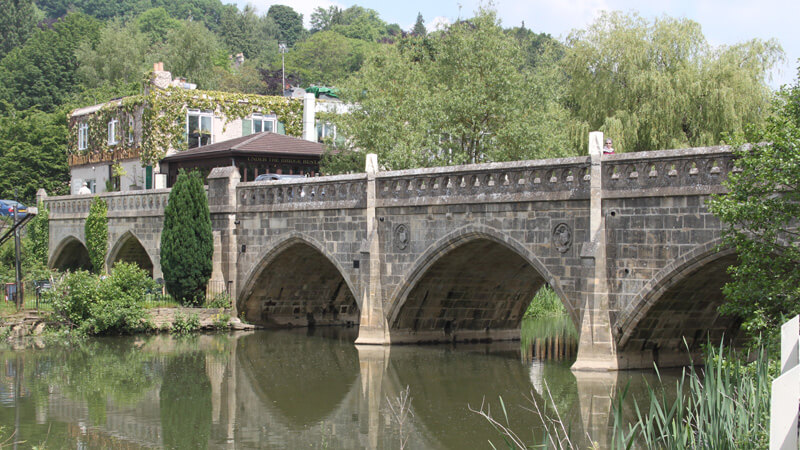
Toll cost: As of 2025, the toll is £1.20 for a standard car each way. Motorcycles are charged around 50p, and larger vehicles or vehicles towing a caravan pay roughly £1.50. (Note: The toll was 80p previously, but increased in April 2025.) Payment is required in both directions.
How to pay: Cash or card, an attendant will collect the toll as you cross. The bridge now has mobile card machines as well as a pot of change for cash, which is a welcome update (it used to be cash-only). Make sure to have at least £1.20 in UK currency if paying by cash, as prices can change and having exact change helps.
Tips: This toll bridge is optional; there are alternative free routes into Bath/Bristol that avoid it (such as staying on the A4 or A36 via Bath). However, locals use the Batheaston bridge to skip traffic jams on London Road into Bath. If you’re not in a rush, you can avoid the toll by going through Bath itself (bearing in mind city traffic). Also note the bridge’s limited hours: it may not be staffed late at night (some reports indicate it closes by 10 pm). Plan accordingly if your flight or journey is very early or late.
Blackwall and Silvertown Tunnels (East London)
Who might use them: The Blackwall Tunnel (two tunnels northbound/southbound on the A102) has long been a key Thames crossing in east London, used by drivers heading to East London destinations and even London City Airport. In April 2025, the new Silvertown Tunnel (A1026) opened parallel to Blackwall, and both tunnels are now tolled. If you’re driving between South East London and areas around Canary Wharf, Stratford, or to reach London City Airport from south of the Thames, you may go through these tunnels.
Toll cost: For cars and small vans, the charge is £4.00 per crossing during peak hours. The charge applies every day between 06:00 and 22:00. Overnight (10 pm–6 am) the tunnels are free. There is also a reduced off-peak rate (often around £1.50 for cars) in some less busy periods, but generally assume £4 at most times you’d be driving during the day. Motorcycles pay less (£2.50 peak) and larger vehicles pay more (e.g. HGVs ~£10 peak). The toll is charged in both directions, so a round-trip will incur two fees.
How to pay: There are no toll booths at Blackwall or Silvertown. Payment works like London’s congestion charge system; you must pay online or set up an Auto Pay account with Transport for London (TfL). You can pay via TfL’s website or mobile app, and you have until midnight the day after the journey to pay (or it auto-bills if you have an account). Since these tunnels are in London’s network, you might consider registering for TfL’s Auto Pay, which can cover the tunnels and congestion charge together for convenience. There is no option to pay with cash at the tunnel; if you drive through, cameras will record your number plate.
Tips: If you’re unfamiliar with London roads, be mindful that the tunnels’ signage will indicate the charge zone. Don’t assume these crossings are free (they used to be, which can confuse those who haven’t driven here recently). If you want to avoid the toll, the nearest alternative crossings are Tower Bridge or the Rotherhithe Tunnel further west (both free but often congested), or the M25 Dartford Crossing far to the east (which has its own toll). Depending on your route, it might be worth planning around the charge times, for example, travelling very early morning before 6 am or late at night after 10 pm to cross for free. Just be sure it’s safe and practical for your schedule.
Dartford Crossing (M25 Thames Crossing)
Who might use it: The Dartford Crossing is the busy bridge and tunnel system that carries the M25 orbital motorway over the River Thames east of London (bridge for southbound, tunnels for northbound). Anyone driving around the east side of the M25 (for example, heading towards London Stansted or London Gatwick Airport from the opposite side of London, or driving between Kent and Essex) is likely to use Dartford. It’s a key route on the way to several London-area airports and ports. Even some travellers to Luton or Heathrow coming from Kent might find themselves at Dartford.
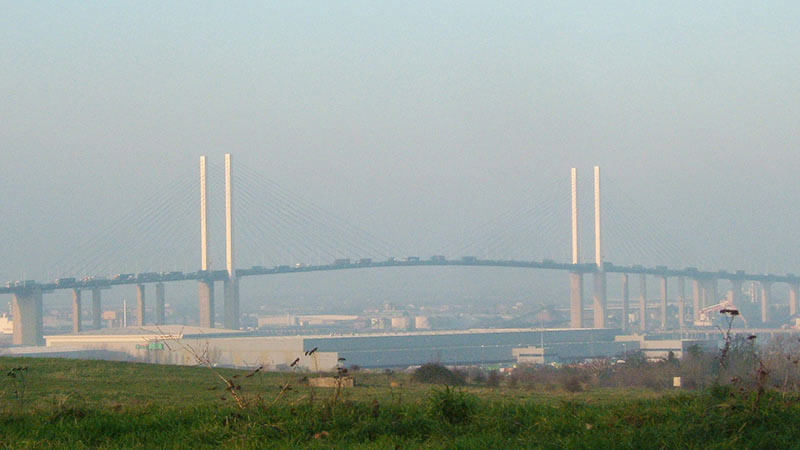
Toll cost: The standard car toll is £3.50 per crossing as of September 2025 (up from £2.50 previously). This applies between 6 am and 10 pm every day. Overnight, 22:00-06:00, the crossing is free. Other vehicle classes pay more (vans £4.20, HGVs £8.60 from 2025). Motorbikes are free. Note that the Dartford toll (often called the Dart Charge) is charged both ways; every time you use the crossing during charge hours, you must pay.
How to pay: All-electronic payment. There are no toll booths or barriers at Dartford; you drive straight through and must pay the fee by midnight the day after your crossing. Payment methods include: online via the official Dart Charge website, using the Dart Charge mobile app, by phone, or at certain PayZone retail outlets in the UK. Many drivers choose to set up a Dart Charge pre-pay account, which automatically deducts a discounted fee (currently £2.80 for cars with an account). Do not expect to pay at the crossing itself; if you haven’t paid by the deadline, a penalty (charge notice) will be issued to the vehicle’s registered owner. The fine can be up to £70–£105 if not paid promptly, so don’t forget.
Tips: Plan ahead for payment, set a phone reminder or pay as soon as you cross. If you’re renting a car, ask the hire company how Dart Charge is handled; some companies will charge your card with an added admin fee if you leave it to them. Avoid using unofficial third-party websites or apps to pay the Dartford toll; some have extra fees or could be scams. Stick to the official channels (just search “Dart Charge” on GOV.UK). Also, be aware that signage approaching the crossing isn’t very prominent about the payment system. Many tourists have mistaken the removal of toll booths as meaning it’s free; it’s not! Keep an eye out for the yellow camera signs. If you’re coming from airports like Stansted or Southend heading south, Dartford is likely on your route. Consider avoiding peak hours to miss traffic (before 7 am or after 7 pm) when both congestion and tolls can slow you down.
(Fun fact: Since going cashless in 2014, the Dartford Crossing saw a spike in fines for non-payment, simply because people were unaware of the new system. So you’re not alone, but now you know!)
Dunham Toll Bridge (Lincolnshire/Nottinghamshire)
Who might use it: Dunham Bridge carries the A57 over the River Trent, connecting Lincolnshire and Nottinghamshire. It’s on a route between Lincoln/Newark and the A1, and can be used by drivers travelling towards East Midlands Airport or Doncaster Sheffield Airport (Robin Hood Airport) from the east. If you’re driving between Lincoln and the Midlands or heading west, you might cross Dunham Bridge.
Toll cost: The toll for a car is £0.50 (50p) each way. This was increased in July 2023 from the long-standing 40p fee. Motorcycles and pedestrians/cyclists cross for free. Larger vehicles are a bit more: four-wheel vans or small buses are £1.00, and heavier lorries are around £1.67 now (previously £1.00 for a 6-wheel truck, which has likely risen). The toll is charged in both directions. Note that on Christmas Day and Boxing Day, Dunham Bridge has traditionally been free as a goodwill gesture, a nice little bonus if you’re travelling during the holidays.
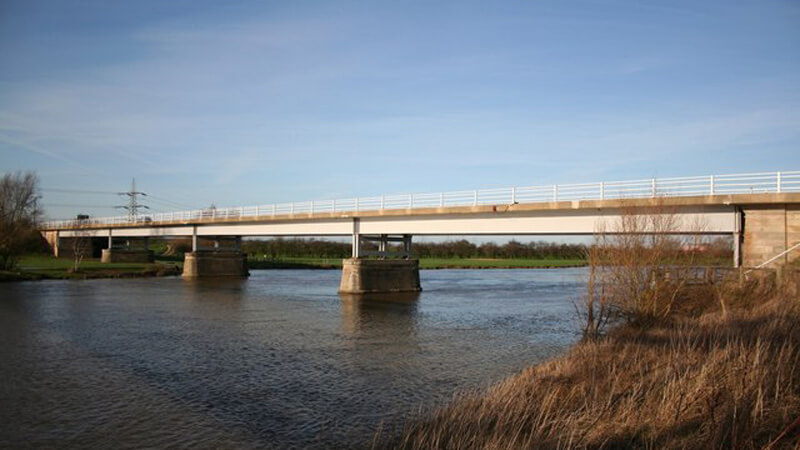
How to pay: Cash is accepted at the toll plaza. There are manned booths and also unmanned exact-change lanes. Make sure to have some coins (50p pieces or £1 coins) ready, as no change is given in the automatic lanes. However, Dunham Bridge Ltd. also offers pre-paid toll cards for regular users (you can load trips onto a card for quicker passage). There is no facility for credit/debit card payment at the toll booths, so it’s old-school cash or prepaid only. (Some local drivers use a Dunham Bridge Tag/Card. If you’re just passing through once, this likely isn’t necessary.)
Tips: If you’re coming from afar, 50p is a very small toll, but have a coin ready to avoid hassle. The closest alternative crossing is via Newark (A46 to A1133 to Cromwell Bridge), which is free but would add significant time/distance. It’s usually easier to pay the small fee at Dunham. The bridge is narrow, and there was a new toll plaza built in the 1990s to improve flow, but you still might see minor queues at busy times. Follow the speed limit and prepare to slow down on approach. Also, note the opening hours: Dunham Bridge is open 24/7, but if you plan to cross at very off-peak times, there may not be an attendant; they might use an honour system box if unstaffed. Check the official Dunham Bridge website or Twitter (@BBCRadioLincs provides local traffic updates) for any temporary closures or free passage announcements (sometimes tolls are suspended during major roadworks or flooding in the area).
Humber Bridge (East Yorkshire, Lincolnshire)
Who might use it: The Humber Bridge is a famous suspension bridge spanning the Humber Estuary, connecting Hessle (near Hull) on the north bank with Barton-upon-Humber on the south bank. It provides a handy shortcut for travellers in Eastern England, for example, those driving from Yorkshire towards Lincolnshire, or heading towards Leeds Bradford Airport or Doncaster Sheffield Airport from the south (or vice versa) might use the Humber Bridge to save a lot of miles going around the estuary. It’s also used by holidaymakers travelling to the East Coast or between the Midlands and Yorkshire.
Toll cost: Currently, the car toll is £1.50 per crossing. This toll is charged each way (you pay both northbound and southbound). There is a slight discount for using the electronic HumberTAG (prepaid account); tag users pay £1.35 for a car. Note: The Humber Bridge Board announced the first toll increase in over a decade is coming in late 2025; the standard car toll will rise to £2.00 (while the discounted tag rate stays £1.50). So, depending on when you travel, you might pay a bit more. Check the latest rates on the official Humber Bridge site. Other vehicle classes: motorbikes are free, small vans £4.00, larger lorries up to £12.00 (these too will increase to £5 and £15 respectively for non-tag users).
How to pay: The Humber Bridge toll no longer accepts cash at all. Payment is made via contactless methods or electronic accounts. You can simply drive through, and cameras will auto-deduct from your HumberTAG account if you have one, or you can pay by tapping a contactless bank card/phone at the crossing. The bridge introduced free-flow open-road tolling by the end of 2025, meaning you no longer stop at a booth to hand over coins. If you don’t have a tag, you can pay with a contactless credit/debit card or mobile pay (Apple/Google Pay) at the sensor as you pass through, or pay online after crossing. It’s best to sign up for a HumberTAG account if you’re a frequent user to get the discount and avoid any missed payments. If a crossing isn’t paid within 72 hours, a £15 admin fee is added and a notice is sent by post, so treat it similarly to Dartford in terms of prompt payment.
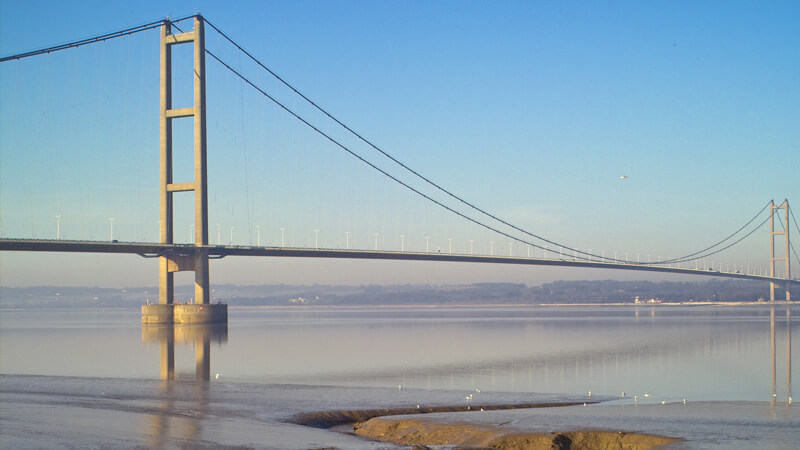
Tips: The Humber Bridge is quite long and exposed; be cautious of high winds. The bridge sometimes imposes speed restrictions or lane closures when windy. For status updates, you can follow @HumBridgeNews on X (Twitter) for real-time info. If you want to avoid the toll, the nearest alternative is via the M62/A63 (Ouse Bridge) way upstream, but that could add an hour of driving. For most journeys, paying a couple of pounds is worth the huge shortcut the Humber Bridge provides. If you’re travelling from, say, the Midlands to Hull or York, consider the time saved. Finally, note that tolls are the same 24/7 (there’s no time-based variation on Humber’s toll, unlike some other crossings). If you’re a tourist, it’s worth stopping at the viewing area/car park on either side (no charge to park for a short time) to appreciate the bridge, just don’t try to walk across if you’re on a tight schedule, it’s 2+ km long!
Itchen Bridge (Southampton)
Who might use it: The Itchen Bridge is an urban toll bridge in the city of Southampton, spanning the River Itchen and linking the city centre with the suburb of Woolston. If you’re staying in central Southampton (for example, before a flight from Southampton Airport or before a cruise departure at the port) and need to get over to the eastern side of the city (or vice versa), you may use the Itchen Bridge. It’s also an option for drivers heading to the Ferry Terminal or Cruise Terminals from the east side. Locals use it to avoid longer routes through the city.
Toll cost: For a standard car, the toll is £1.20 during peak hours (and £1.20 at off-peak as well for non-residents as of 2025). In fact, Southampton made changes in April 2025: previously it was about 80p/70p (peak/off-peak) for outsiders, but they increased the charge by 20p and extended who pays. Now, non-Southampton residents (or residents without the local smart card) pay up to £1.20 each crossing, regardless of time. Southampton residents who have a SmartCities card get a discounted rate (currently £0.40 at peak, £0.30 off-peak). Motorcycles and scooters are free. Blue Badge holders and electric vehicles can also cross for free if they’ve registered in advance with the council. The toll is charged both ways. There’s no charge on Christmas Day, and typically it’s off-peak rates on bank holidays.
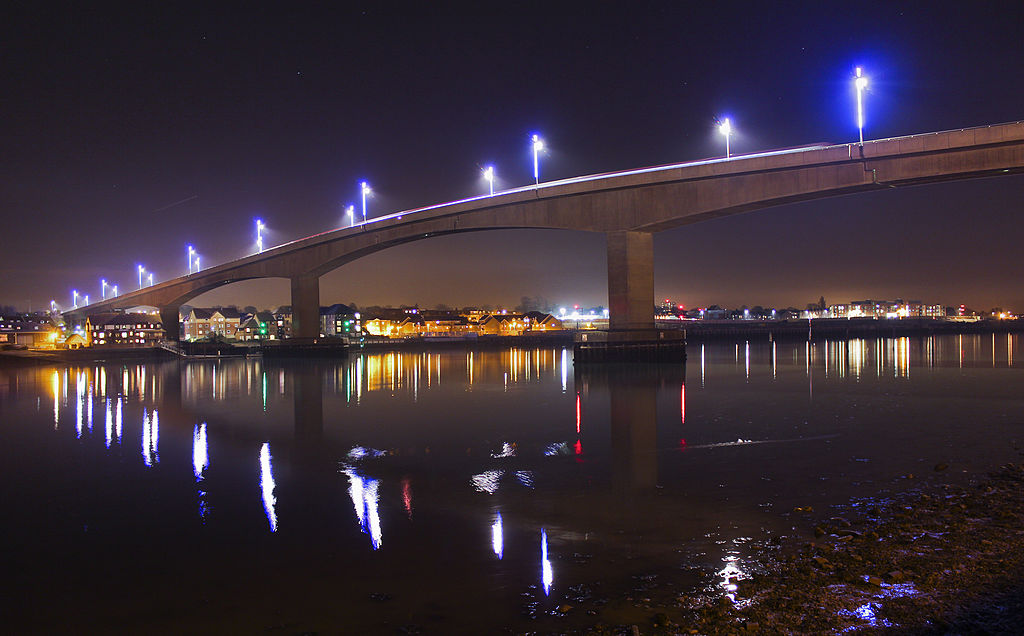
How to pay: The bridge has toll booths with automated machines. You can pay by cash (coins), accepted coins are 10p, 20p, 50p, £1, and £2. No change is given from the machines, so try to have the exact amount. As of recently, contactless card payments are also accepted at each booth. This is a new addition (introduced after public demand to modernise the system), so you can tap a credit/debit card or smartphone at the machine. Local residents typically use the SmartCities card, a pre-paid top-up card that gives them the concession rate. You might see locals waving a proximity card to pay. There are no manned toll collectors; it’s entirely automatic barriers.
Tips: When to pay off-peak: Off-peak hours (when residents get an even cheaper rate) are weekdays 9:30 am-4 pm and 6:30 pm-7 am, and all day weekends, but as a visitor, you’ll be paying the standard £1.20 regardless. However, knowing off-peak times is useful because traffic is generally lighter and you won’t queue as much. If you’re trying to avoid the toll, the alternative is to drive north and use the A3024 via Northam Bridge, which is free. This can add about 10-15 minutes of driving, but might be worth it if you don’t have change or just prefer not to pay. Navigation apps (Google Maps, etc.) can route you around tolls if you enable the “avoid tolls” option. Lastly, be aware that the Itchen Bridge can occasionally close due to strong winds (less frequently than huge bridges like the Humber, but it happens). It’s relatively low, but storm conditions have caused closures; local radio or Twitter updates (e.g., @scchighways) can provide alerts. Overall, £1 or so isn’t a hefty sum, but it’s good to know about it so you’re not searching your rental car’s glove box for coins at the last second!
M6 Toll (Midland Expressway, West Midlands)
Who might use it: The M6 Toll is the UK’s only major tolled motorway. It’s a 27-mile stretch that bypasses the most congested part of the M6 around Birmingham. If you’re driving north/south through the Midlands, for example, heading to Birmingham Airport, or going towards Manchester Airport from the south, or simply trying to skirt around Birmingham on the M6, the M6 Toll road can be a time-saver. It avoids the often-jammed M6 through Birmingham (Junctions 3 to 11). Many holidaymakers driving to the North of England or Scotland from London use it for a quicker journey, as do airport travellers who want a reliable route to catch flights from Manchester or Birmingham.
Toll cost: The cost depends on your vehicle and the time of day. For a car, the full length toll (if you travel its entire route) is around £7–£8 off-peak and up to about £10.50 at peak times (2025 rates). In fact, as of May 2025, a weekday peak full journey for a car was £10.30, and it increased to roughly £10.50 in mid-2025. Weekend or nighttime rates are a bit cheaper (e.g. overnight around £4). There are also lower tolls if you join or leave the M6 Toll partway (covering 2 toll zones instead of all 3). For simplicity, budget around £10 for a car to use the M6 Toll, and you might pay a little less if it’s off-peak or you don’t use the whole stretch. Larger vehicles pay more (a van or small coach around £12–£15 peak, HGVs up to £18+). Motorcycles cost about £3–£4. The toll is charged in both directions (each time you enter the toll road, you pay at an exit plaza).
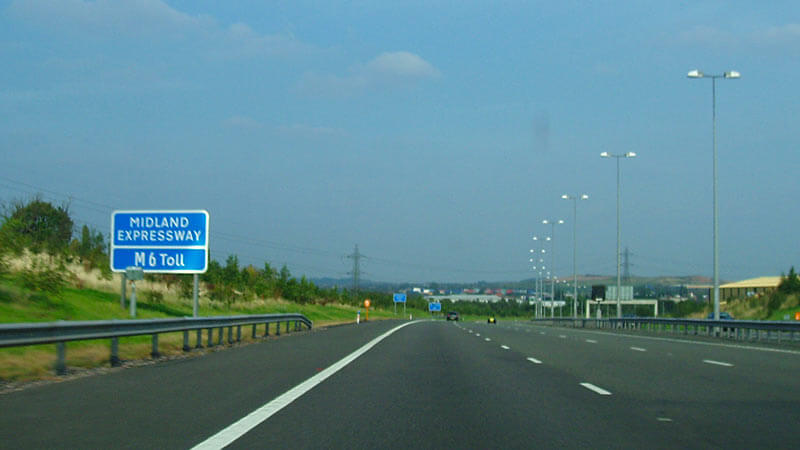
How to pay: Multiple options: at the toll plazas, you can pay by cash (GBP notes/coins), there are attended lanes that give change, or by credit/debit card (contactless or chip-and-pin at unmanned booths). They also accept some fuel cards and have an electronic TAG system (M6 Toll TAG) for frequent users. Unlike Dartford, you pay on the spot as you exit (or enter) the M6 Toll. Simply pull up to the barrier: if it’s attended, hand over payment, or if it’s automatic, insert coins or a card. Receipts are available (press the button if automatic). Note that the euro currency is accepted in cash lanes as well, but giving euros will yield change in pounds and at a less favourable rate, probably not useful for most, but it shows they cater to foreign drivers too. The M6 Toll Tag is a windshield device that lets you drive through without stopping (charging your account), mostly used by commercial drivers or commuters, not necessary for one-time travellers.
Tips: The M6 Toll can significantly cut travel time during rush hour or if there’s an accident on the M6 “through route”. However, if the M6 is clear, you might not save much time, so check traffic conditions. Some GPS apps (like Waze or Google Maps) will tell you the time difference with and without the toll. If you’re not in a hurry or want to save money, the old M6 through Birmingham is free (but often slow). For airport trips, consider the trade-off: the toll road offers a predictable journey (useful when catching a flight, so you’re less likely to be stuck in an unexpected jam). There is one service area on the M6 Toll, Norton Canes services, roughly halfway, which is a great place to rest or refuel, with usually fewer crowds than regular motorway services. Keep your ticket (if you get one at entry) safe to hand over at the exit toll. And keep in mind, the toll increases every couple of years; what was ~£5 in 2017 for a car is now about double. Always check the official M6toll website for the latest prices before setting off, especially if you’re budgeting for a long trip.
Mersey Gateway Bridge (Cheshire)
Who might use it: The Mersey Gateway is a relatively new toll bridge (opened in 2017) connecting Runcorn and Widnes across the River Mersey in Cheshire. It’s part of the A533 route. Travellers heading between North Cheshire (e.g. Chester, Warrington) and Merseyside or Greater Manchester might use it. Notably, if you’re driving from the Liverpool John Lennon Airport side towards the M6 or toward Manchester Airport, the Mersey Gateway is often on your route (instead of the older Silver Jubilee Bridge). It’s also commonly used by those heading to North Wales from the east via the M56, or vice versa, since it links up the region’s road network.
Toll cost: The car toll is £2.00 for a single crossing if you have not registered, but this increases to £2.40 from April 2025. In fact, 2025 marked the first toll hike in seven years on this bridge, approximately a 20% rise. So now an unregistered car pays £2.40 each way. If you register for their scheme (“Meresyflow”), residents or frequent users with a prepaid sticker/registration pay a bit less (£2.00 after the increase, was £1.80). Motorbikes are free. Vans and small trucks are about £6, HGVs £8 (unregistered rates, slightly cheaper if registered). The toll is charged both ways (each crossing). There’s no free time of day, it’s a 24/7 toll, unlike Dartford or London tunnels.
How to pay: Similar to Dartford, there’s no toll booth; it’s an automated free-flow system. You must pay the Mersey Gateway toll (which also covers the older Silver Jubilee Bridge) by midnight the day after you cross. Payment is done through the official Merseyflow website, phone line, or you can visit designated local paypoints (some shops) if you’re in the area. A convenient way is to set up an online account or use the Merseyflow mobile app to pay. Local commuters often register their vehicle (with a small fee) to get a sticker and an account, which gives them discounted rates automatically. For one-time users, you can do a one-off payment online. Be careful: if you forget, a Penalty Charge Notice will be issued. The fine is £20 plus the unpaid toll if paid promptly, but it can escalate to £60 or more if ignored. So treat the Mersey Gateway like you would the Dartford Crossing, don’t forget to pay.
Tips: If you’re coming from abroad or hiring a car, be aware that the rental company might get a fine if you miss a payment, and will charge your credit card an additional admin fee on top. So it’s best to pay it yourself immediately. The Mersey Gateway bridge is long and has its own traveller advisory: if you break down on the bridge, the policy is that only the bridge’s concession operator can recover you, and they charge £150 for recovery. So ensure your vehicle is in good nick before crossing, and if you feel something is wrong, maybe pull off before the bridge. For status updates or traffic news, check @merseyflow or @MerseyGateway on social media or local radio. One more thing: the old Runcorn Bridge (Silver Jubilee Bridge), parallel to the Mersey Gateway, was refurbished and is also tolled with the same system when it reopened. So there is no toll-free crossing at Runcorn/Widnes anymore; both bridges use the Merseyflow toll. To avoid paying, you’d have to go far around (either through Warrington to the east or through the Mersey Tunnels up north, neither is practical just to save a couple of pounds). Thus, most will just pay the toll for the convenience of a quick crossing.
Mersey Tunnels (Liverpool, Wirral)
Who might use them: The Mersey Tunnels are two long-standing toll tunnels under the River Mersey connecting Liverpool with the Wirral Peninsula. The Queensway Tunnel (often just called “the Birkenhead Tunnel”) runs from Liverpool city centre to Birkenhead (A41), and the Kingsway Tunnel (“Wallasey Tunnel”) runs from north Liverpool (near the docks) to Wallasey (M53 junction). If you’re driving to Liverpool John Lennon Airport from the Wirral or North Wales, you might use one of these tunnels. Likewise, someone coming from Liverpool heading towards Chester, Holyhead (ferry to Ireland), or Manchester (via M53/M56) could go through the Mersey Tunnel. Essentially, any journey where you need to get across the Mersey between Liverpool and the west (Wirral/Cheshire) likely involves these tunnels, as they are the direct routes.
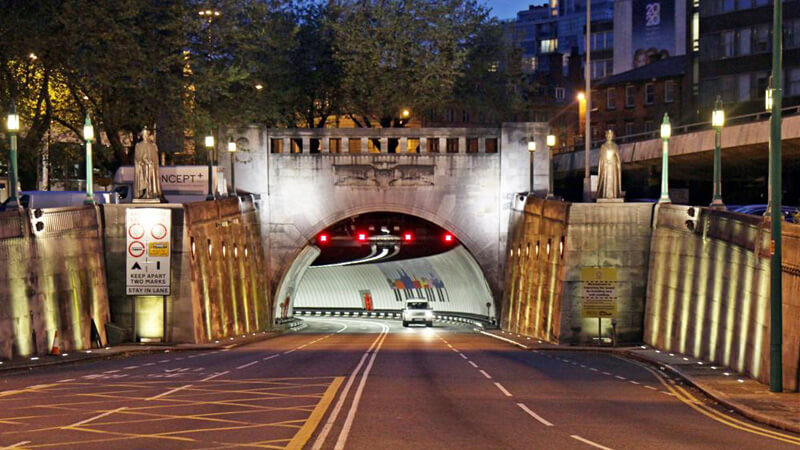
Toll cost: The toll for a car (Class 1 vehicle) is £2.30 as of 2025 for a single trip. This was increased in April 2025 by about 20p (it was £2.10 just before). With a pre-paid T-FLOW account, Liverpool City Region residents get a discounted rate of £1.50 per journey. Non-residents with a T-FLOW (essentially just an electronic prepay for convenience) now pay the same £2.30 (they removed the small discount for general prepay users in the latest update). Other classes: motorcycles are free; small goods vehicles (Class 2) £4.60; large HGVs (Class 3/4) around £6.90–£9.20. The toll is charged in both directions (each time you go through the tunnel toward Liverpool, and again going back toward Wirral). Note: The tunnels are free on Christmas Day (from 10 pm Dec 24 to 6 am Dec 26), historically, which is a local tradition.
How to pay: The Mersey Tunnels still have toll booths at the entrances. You can pay by cash (in pounds; exact change lanes are available, and manned booths can give change). As of late 2023, they introduced contactless card payment “tap and go” at all lanes to speed things up. So now you can tap a credit/debit card or smartphone at the booth without needing coins, which is great for unfamiliar drivers. However, do note that no change is given in the automatic lanes even for cash. If you must pay cash and need change, use a manned lane. Frequent users often have a T-FLOW electronic account with a windscreen tag or simply a license plate recognition, that system lets them go through an automatic lane and have the toll deducted from their pre-paid balance (and is the only way to get the resident discount). For one-time visitors, just be prepared to stop and pay at the booth. Both tunnels operate 24/7, except for occasional late-night maintenance closures (usually one tunnel at a time). If you encounter a closed tunnel, the other usually will be open two-way.
Tips: The Queensway Tunnel (Birkenhead) takes you out of Liverpool city centre and has height restrictions (lower ceiling). The Kingsway (Wallasey) is a bit newer, taller, and links to the motorway network (M53/M57) more directly. Trucks and taller vehicles should use Kingsway. From an airport perspective: For Liverpool Airport (south of the city), the Birkenhead/Queensway Tunnel is a little more direct; for going beyond Liverpool, Wallasey/Kingsway might be easier. To avoid tolls, the only other Mersey crossings are far to the south at Runcorn (which are tolled as Mersey Gateway anyway) or to the north, the first free crossing is via Warrington. Essentially, there is no practical free alternative for crossing the Mersey in this area, so factor the tunnel toll into your travel costs. One nice thing: tunnel tolls have stayed lower than the legal cap, even after rises; they’re still about £1 cheaper than the maximum allowed by law. Lastly, watch your speed and distance in the tunnels (speed limit 30mph/50kmh), they do have speed and CCTV enforcement inside. And if your vehicle is very tall or carrying hazardous goods, check restrictions beforehand. For live updates, follow @merseytravel or local traffic news, as sometimes an accident in a tunnel can cause long delays. Plan an extra few minutes cushion if heading to a flight, just in case.
Severn Bridges (M4 and M48 between England and Wales)
Who might use them: The two Severn crossings were once major toll barriers on trips between South West England and South Wales. The M4’s Prince of Wales Bridge (Second Severn Crossing) and the M48 Severn Bridge link Bristol/England, with Newport/Cardiff in Wales across the Severn Estuary. If you were travelling to Cardiff Airport or Bristol Airport from the opposite side of the Severn, you’d cross here. Holidaymakers heading into South Wales (Brecon Beacons, Pembrokeshire, etc.) or coming from Wales to London often used these bridges.
Toll status: Good news, they are now free! As of December 17, 2018, all tolls on the Severn crossings were abolished. After 52 years of charges, you can now drive from England into Wales and back without paying a penny. Previously, there was a hefty toll (around £6.70 for cars, more for trucks) westbound only. But that’s history. So if your route takes you over the Severn on the M4 or M48, there’s no charge in either direction.
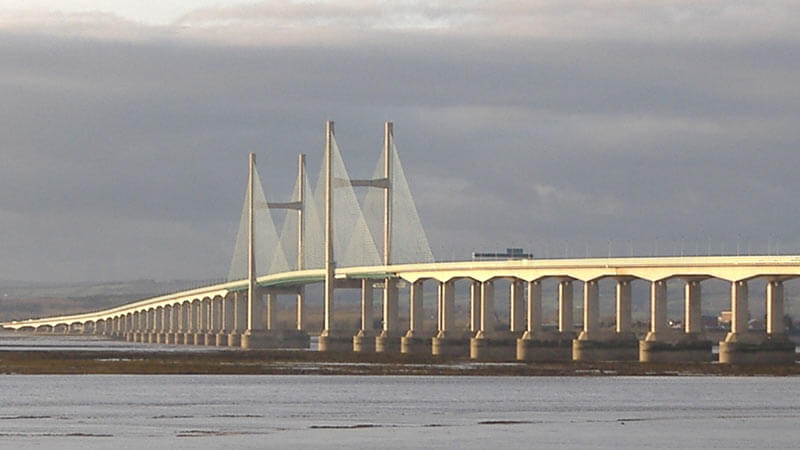
How to pay: N/A, no payment needed anymore. The toll plazas have been removed. Just drive through and enjoy the view! (The physical toll barriers were actually removed a while ago, making travel smoother.)
Travel tips: Although there’s no toll, keep an eye on traffic updates; the M4 bridge (Prince of Wales Bridge) is a crucial artery and can get congested during holiday peaks or if there’s an incident. The old M48 Severn Bridge is a smaller bridge that can sometimes be closed to high-sided vehicles in strong winds. If you’re driving a campervan or tall vehicle and it’s very windy, check if the M48 is open; if not, use the M4 bridge, which has higher wind tolerances. For airport trips (say from Cardiff to Heathrow or Bristol to Cardiff), you no longer need to factor in a toll cost or stop, which is great. Still, always verify routes because occasionally maintenance works might divert traffic between the two bridges.
(Fun fact: The Severn toll removal was big news in 2018; some local businesses even paid commuters’ last tolls in celebration. Now, crossing the border is toll-free, symbolically bringing England and Wales that bit closer for drivers.)
Tamar Bridge (Devon, Cornwall)
Who might use it: The Tamar Bridge carries the A38 across the River Tamar between Saltash (Cornwall) and Plymouth (Devon). If you’re driving into Cornwall from England (e.g., heading to a Cornwall holiday, or travelling from Exeter/Bristol down to Penzance), you’ll likely cross at Tamar Bridge. It’s also very relevant to those heading from Cornwall to Exeter Airport or beyond. The Tamar is effectively the gateway to Cornwall for most road traffic (along with the parallel Torpoint Ferry for local traffic).
Toll cost: The toll is £2.60 for a car (effective January 2023) and was further adjusted to £3.00 by late 2023 for cash/card payments. Importantly, the toll is only charged eastbound (when you’re leaving Cornwall, heading into Devon). Westbound into Cornwall is free. Motorcycles are free in both directions. If you’re towing a caravan or trailer, you pay double the car rate (so £6.00 eastbound, as it counts as two axles). Larger vehicles have higher tolls: for example, a two-axle goods vehicle over 3.5t is £7.30 (cash) eastbound. Locals can get a 50% discount by using the TamarTag electronic payment (so a car with a Tag only pays £1.50). The table in the official source shows the split: cash vs TamarTag, with TamarTag being exactly half for each category.
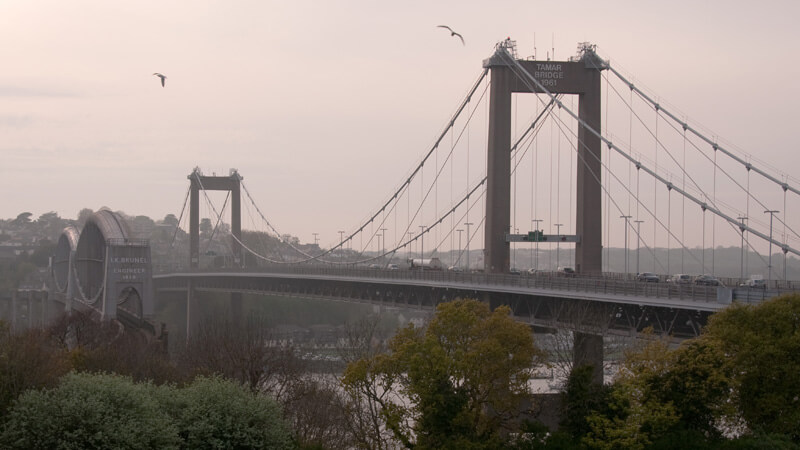
How to pay: You can pay by cash or card at the toll booths. The Tamar Bridge still has staffed toll lanes that operate 24/7, and they will give change. In recent years, they have also enabled contactless card payments at the booths, so you can tap a debit/credit card instead of handing over cash. There’s also the TamarTag system for frequent users, a prepaid electronic tag that lets you use dedicated lanes (no stopping) and charges your account at a discounted rate. Visitors likely won’t use a Tag for a short trip, but it’s good for regular commuters. If paying cash, try to have the exact change (£3) ready to keep things moving, though attendants do make change if needed. During very busy summer days, they sometimes open all lanes one-way to clear traffic (for instance, on a bank holiday Monday, more lanes for eastbound traffic leaving Cornwall). Just follow the signs/cones as they manage lane directions dynamically.
Tips: Avoiding the toll: There is really no convenient way around it, the alternative is the Torpoint Ferry (which connects Torpoint to Plymouth). The ferry, however, isn’t free for cars (it charges about £2 one-way as well) and is slower, and it only lands you in south Plymouth. For most through-travel, Tamar Bridge is the way to go. If you’re already in southeast Cornwall and heading to Plymouth city, the ferry might be a quaint experience, though (runs every 10-15 minutes). For airport trips, say from Cornwall to Exeter or Bristol, the A38 over Tamar Bridge is your main route; ensure you have a payment method ready when returning home (eastbound). Keep an ear out for traffic news: accidents on the bridge or A38 approaches can cause significant delays, and on rare occasions, the bridge might close due to high winds (though it’s less frequent than on fully exposed bridges; Tamar Bridge has only moderate height). The bridge authority provides updates on @tamarcrossing on Twitter. Finally, appreciate the view, as you cross from Cornwall, you’ll see the impressive Royal Albert Railway Bridge alongside, and the wide Tamar estuary. Just don’t get too distracted if you’re the driver!
Tyne Tunnels (Tyne & Wear)
Who might use them: The Tyne Tunnels (often referred to collectively as “the Tyne Tunnel”) are a pair of road tunnels under the River Tyne, on the A19 route near Newcastle. They connect Jarrow (south of the Tyne) with North Shields (north of the Tyne). If you’re driving up the east coast of England, for example, heading to Newcastle International Airport from the south, or travelling between Leeds/York and Northumberland/Scotland via the A19, you might take the Tyne Tunnels. They’re also used by locals to avoid driving through Newcastle city centre when going to North Tyneside or the coast. Travellers heading to the Port of Tyne (ferry terminal) or to Durham Tees Valley Airport from the north might also use the Tyne Tunnel route.
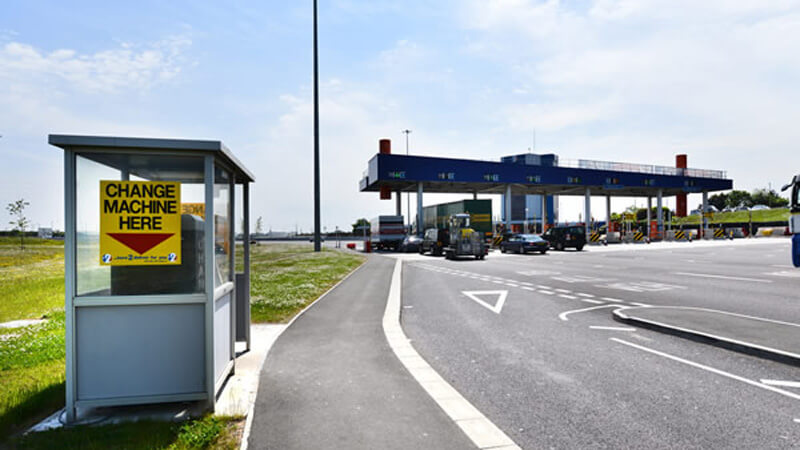
Toll cost: The toll for cars (Class 2 vehicles) is £2.50 per trip as of May 2025. This was increased from £2.40 earlier in 2025. Motorcycles and certain exempt vehicles (Blue Badge holders) are free. Large vehicles (Class 3, like HGVs or buses) pay £5.00 per trip. The charge applies each way (both tunnels have tolls; you pay going north and again going south). There are no time-of-day discounts; the fee is the same 24/7, though the operators sometimes run promotions for off-peak usage for account holders. Pre-paid account users get a 10% discount: for a car, that means £2.25 per trip with a pre-pay Tyne Tunnels account.
How to pay: The Tyne Tunnels are cashless and barrier-free now. In November 2021, they removed the toll booths and switched to an ANPR (automatic number plate recognition) system. So you do not stop when driving through; cameras read your plate. You must pay the toll by midnight the day after your journey (similar to Dartford/Mersey). Payment can be made online on the official TT2 website or via the Tyne Tunnels app, by phone through an automated line (0191 574 0030), or in person with cash at PayPoint retailers nationwide. If you’re a frequent user, setting up a prepaid account gives you the discounted rate and auto-pay convenience. No cash or card is accepted at the tunnel itself anymore. If you mistakenly drive through without paying in advance, don’t panic; you just need to go online or find a PayPoint shop to pay later that day. Failing to pay will result in a toll notice (fine) sent to the vehicle owner.
Tips: Because it’s a free-flow system, be mindful to remember your payment, maybe set an alarm or have a passenger pay via smartphone as you travel. Tourists can pre-pay on the day of travel too; you can go on the TT2 website and pay for a “single passage” by inputting your car reg number even before you reach the tunnel (the payment will be matched to your plate when you go through). The tunnels themselves have a 40 mph speed limit and are relatively short. They occasionally close one tunnel for maintenance at night, in which case the other tunnel handles traffic in both directions (signposted when this happens). For alternate routes: the nearest free alternative crossing is the Tyne Bridge or A1 western bypass through Newcastle/Gateshead, which can be quite congested. If you’re trying to avoid the toll and don’t mind city traffic, you can go that way, but generally, the A19 Tyne Tunnel route is quicker for through-travel. Also note, the Tyne Tunnels do not allow cyclists or pedestrians (there is a separate old pedestrian/cycle tunnel). For live traffic info, check @TT2Limited on Twitter. If you’re heading to Newcastle Airport from south of the Tyne, the Tyne Tunnel can save a lot of time versus going through central Newcastle; just don’t forget to pay that £2.50, which is a small price for a smoother journey in most cases.
London Congestion Charge (Central London)
What is it & who pays: The London Congestion Charge is a daily fee for driving in central London’s designated congestion zone, aimed at reducing traffic in the heart of the city. If you plan on driving into Central London, the area roughly covering the City of London and West End (up to around King’s Cross/Edgware Road in the north and Vauxhall/Elephant & Castle in the south), you will likely enter the congestion charge zone and need to pay. Tourists driving to see central attractions, or someone dropping off a hire car in central London, or if you divert through central roads on the way to Heathrow/Gatwick (not usually necessary), could all be affected. Notably, London City Airport is outside the zone, but if you stray west into Tower Hamlets or south into the city from there, you might hit the border. Always check the map of the zone, marked by a red “C” symbol on signs and road markings.
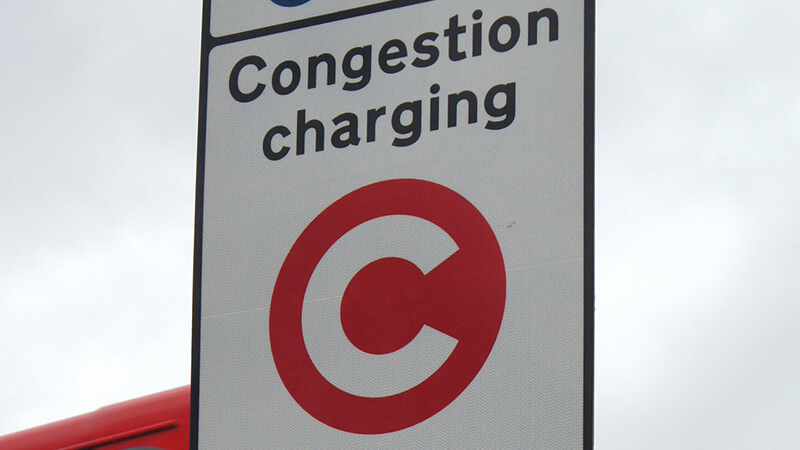
Charge details: The charge is £15 per day for most vehicles. It applies 7 days a week, with charging hours 07:00-18:00 on weekdays and 12:00-18:00 on weekends and public holidays. (Christmas Day is typically exempt). If you drive in the zone at any time during those hours, you pay once and it covers you for the rest of the day (you can enter/exit multiple times on that day for one fee). Driving only in the evening or overnight (after 6 pm on weekdays, after 6 pm on weekends, or before 7 am) is free of charge. There is no charge on December 25 (and sometimes certain days around it). Be aware: starting 2026, the charge is set to rise to £18 per day (or £21 if paid late), so keep an eye on updates, but as of 2025, it remains £15.
Certain vehicles are exempt or discounted: fully electric vehicles were exempt, but that exemption is ending from 25th Dec 2025 (after which even EVs must pay). Motorcycles, taxis, and vehicles for disabled persons (Blue Badge holders) can be exempt or have a 100% discount (registration required). Residents living inside the zone used to get a big discount, but that was phased out in recent years. Also note, London has ULEZ (Ultra Low Emission Zone) and LEZ charges, which are separate from the Congestion Charge; those are emissions-based and cover a larger area. But they are not the same; you could pay one and not the other depending on your vehicle and route. For this section, we’re focusing on the Congestion Charge specifically.
How to pay: There are no barriers or toll booths; it’s enforced by cameras and ANPR. You must pay online via TfL (Transport for London), via the official phone line, or use the Auto Pay system. The simplest way is to set up Auto Pay if you drive in regularly; it will bill you automatically each time you enter (with a £10 annual fee for the service, but it avoids forgetting, and you get charged a reduced £14 rate). Otherwise, you can make a one-off payment on the day of travel or by midnight the following charging day. If you pay by the next day, the cost is £17.50 (slightly higher); missing that deadline results in a hefty penalty notice up to £195 (reduced to £65-£130 if paid promptly). You can pay using TfL’s website or their official Pay to drive in London app. Avoid third-party “congestion charge payment” websites or unofficial apps; they often charge extra fees or could even be scams. Many visitors have been caught out by Google results that lead to non-official sites. Always ensure you’re on a TfL (tfl.gov.uk) domain or the sanctioned app. There is no phone-text payment anymore; it’s mainly online or auto-pay.
Tips: Plan your route to see if you actually need to enter the zone. Many times, the Congestion Zone can be avoided by using the orbital routings (like the Inner Ring Road, which is the zone boundary). Your sat-nav might route you through it if it’s shorter, but you can toggle “avoid tolls”, and it will likely reroute outside the zone if possible. For example, going from west to east London, you can often use the A501/A41 Ring Road without entering the zone. There are clear signs when you’re about to enter (a big red “C” and warning text). If you’re a tourist driving in London (brave choice!), consider ditching the car for central London and using public transport, not just to avoid the £15, but also parking fees and traffic are significant. However, if you must drive in central London, perhaps for heavy luggage or personal preference, then try to travel in the evening or early morning outside charging hours. Reminder: Even on weekends, you have to pay (since the trial that started in 2020, they decided to keep weekend charges, but starting at noon). One more trick: if you enter after 6 pm on a weekday, you’re fine for that night, and if you then stay until the next morning, you don’t pay until 7 am hits. But that’s only useful if your journey straddles times. For airport travellers: if you’re driving a hire car from say Heathrow into central London to drop bags at a hotel, that will incur the charge if during the day. If possible, schedule such drives at night or use the direct routes that avoid the central zone (Heathrow is outside the zone, and you can reach many outer districts without paying). Finally, be aware of other zones: London also has an Ultra Low Emission Zone (ULEZ) up to the North/South Circular roads. If you have an older car, you might get hit with a £12.50 ULEZ charge in addition to the £15 Congestion Charge. Always check your vehicle’s compliance on the TfL website to avoid surprise charges. The Congestion Charge is clearly marked and only applies in the central area. When in doubt, use the TfL journey planner or maps showing the zone, and don’t rely on “I didn’t know”; the penalties are strict.
(Handy reminder: Congestion Charge operates 7:00-18:00 weekdays and 12:00-18:00 weekends. If you drive on a weekday evening or early morning, or later evening on weekends, you’re in the clear for that piece of the journey. Plan accordingly to save ££.)
Durham Road User Charge Zone (Durham City Centre)
What is it: Durham has the distinction of having the UK’s first congestion charge zone, albeit on a very small scale. It’s officially the Durham Road User Charge Zone, covering the narrow historic streets on the peninsula where Durham Cathedral and Castle are located. The zone is basically a single road loop (around Saddler Street and Market Place) leading up to the Cathedral area. Tourists or drivers might encounter it if they try to drive up into Durham’s core heritage area. It’s not something most through-drivers will encounter unless you deliberately go into the old city centre.
Charge details: In 2025, Durham County Council significantly expanded the charging times and raised the fee. The charge is now £5 per day for any vehicle entering the zone during its operating hours. And the hours are 10:00 am all the way to 2:00 am the next morning, Monday to Sunday (7 days a week). Essentially, from late morning through the entire day and night until the early hours, if you go past the entry camera on Saddler Street, you’ll incur £5. (Originally it was only £2 and only 10 am-4 pm Mon-Sat, but those days are gone.) Now, even on Sundays, you have to pay, and the charge window is much longer (they extended it into the night to deter bar/club traffic in the peninsula). The only exceptions are Christmas Day, Boxing Day, and New Year’s Day when the charge does not apply.
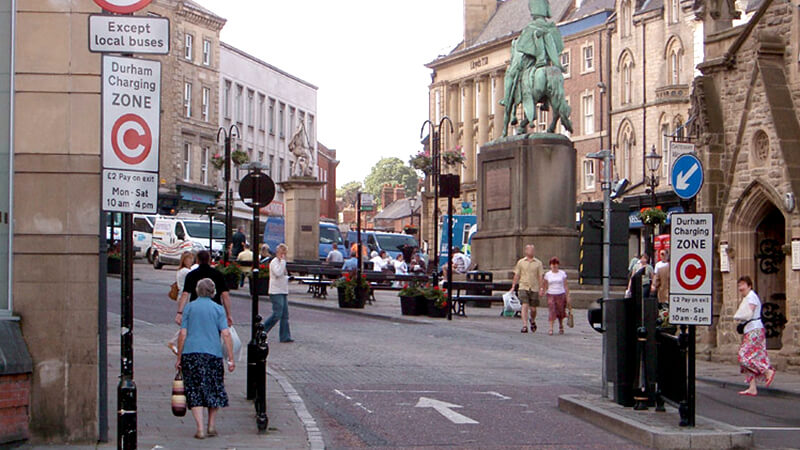
How to pay: Durham’s system uses ANPR cameras at the entry point. There are no barriers (they removed an old rising bollard system years ago). If you drive in during charge hours, you must pay by 6 pm the same day (this used to be the rule); however, with recent changes and online systems, they now allow until midnight or even the next day. According to the council, you can pay up to 24 hours after or even the next working day if the entry was on a weekend. The recommended way is to pay online. Durham County Council provides an online payment portal where you create an account (or pay as a guest) for the Road User Charge. You can also pay by phone or in person at certain places (the Parking Shop in Durham). The city has an option to pay in advance as well. You can pre-pay up to two weeks ahead if you know you’ll be entering. If you fail to pay, a Penalty Charge Notice of £50 will be issued by post (discounted to £25 if paid quickly).
For many drivers, it’s unlikely you’ll accidentally wander into this zone because Durham actively restricts traffic in the centre. There are signs on Claypath and near the Durham peninsula warning of the charge zone ahead. Locals like residents and certain permit holders (e.g. some disabled drivers, emergency vehicles, etc.) can apply for exemptions so they don’t get charged, but ordinary visitors must pay if they go in.
Tips: If you’re visiting Durham as a tourist, it’s best to avoid driving into the historic centre altogether. Park in one of the peripheral car parks or use the Park & Ride. The medieval streets are very narrow and mostly for pedestrians. Honestly, the £5 charge (and the hassle of navigating tight lanes) is meant to discourage you from taking a car up there. Unless you have mobility issues that require driving close, consider parking outside the zone. If you do need to drop someone off near the Cathedral, be aware you’ll be charged for that privilege now. Durham’s system is quite unique; it’s not about general congestion in a city, but protecting a World Heritage Site area from traffic. Thus, enforcement is strict. The entry point is at the bottom of Saddler Street by Claypath. You’ll see signage and likely a road marking. Turn around if you didn’t intend to go there. If you do cross in, make sure to pay online the same day to avoid the fine. The Peninsula (Cathedral area) is wonderful to visit on foot! So best advice: park elsewhere and walk or take the shuttle. That way, you save £5 and also avoid the headache of driving out (you’ll have to navigate out by 2 am or you might get charged again after 10 am the next day, theoretically). As of 2025, with the late-night operating hours, this also means people can’t slip in for a late dinner or pub visit without paying, since it charges until 2 am. Only between 2 am and 10 am is free, not typical tourist hours. So plan accordingly.
Finally, note that aside from London and Durham, no other UK city currently has a “congestion charge” in the same style. However, cities like Birmingham, Manchester, Bath, etc. have Clean Air Zones where charges apply to high-emission vehicles. Those are different, for example, Birmingham charges older cars in its centre, but not modern petrol/diesels. Always check if your destination city has any low-emission or clean-air charges. These schemes can feel similar to a congestion charge but are based on vehicle emissions. For the scope of this guide, we’ve focused on actual tolls and congestion charges you pay, irrespective of vehicle type (except for exemptions mentioned).
Tips for Avoiding Tolls and Charges
While tolls can save time, you might prefer to avoid them to save money or simply for a more scenic route. Here are some practical tips to avoid toll costs in the UK when possible:
- Use Navigation Apps: Apps like Google Maps, Apple Maps, or Waze have settings to “avoid toll roads.” Enable this in your route options, and the app will try to reroute you around tolled crossings. This is great for planning, for example, it might send you through central Newcastle instead of the Tyne Tunnel, or around the longer way to avoid the M6 Toll. Be aware, though, the alternative route might be slower or longer.
- Plan Off-Peak Crossings: Some tolls are free at night (Dartford, Blackwall/Silvertown between 10 pm-6 am, Humber has no time discount, but others do). If your schedule allows, crossing during those free periods can save money. For instance, if driving to catch a very early flight, you might cross Dartford after 10 pm the night before and not pay.
- Alternate Routes: Research if there’s a nearby free bridge or route. For example, to avoid the Severn Bridge toll (when it existed), people would detour via Gloucester, no longer needed since it’s free now. To avoid Itchen Bridge, you can drive an extra 3 miles through Bitterne on the A3024. To skip M6 Toll, you can use the old M6 through Birmingham (but factor in traffic). Avoiding the Dartford Crossing within Greater London is tough (the next nearest Thames crossings are also tolled or very far). But within cities, you might skirt the edge of a zone: e.g., for the London Congestion Charge, use the circular boundary route (like Marylebone Road/Euston Road) to avoid entering the zone.
- Park & Ride or Public Transport: For city congestion zones like London or Durham, consider parking outside the zone and using public transport or a Park & Ride service. Many UK cities have Park & Ride lots specifically to help drivers avoid driving into city centres. This not only saves you the charge, but also the parking hassle. In London, you could park at an outer Tube station and take the Underground in, avoiding the £15 charge entirely and probably saving time.
- Local Advice: If you’re on a road trip, ask locals or check local council websites for any toll-free tricks. For instance, locals know the Torpoint Ferry can be used instead of Tamar Bridge (but that has a fee too, albeit small and only one direction). Or that the M25 western section has no toll (Dartford in the east does). Sometimes a slightly longer scenic route is worth it, e.g., driving through the Peak District instead of taking the M6 Toll, you spend nothing and enjoy views, at the cost of a bit more time.
- Rental Cars: If using a hire car, see if they offer an option or advice to handle tolls. Some rental companies will automatically charge you for tolls (plus admin fees). If you know how to pay them yourself (like Dart Charge or Merseyflow), you can save that extra admin fee by promptly paying. Some rental GPS devices have toll avoidance set by default; double-check if you want to use a toll for speed that it’s not being avoided unintentionally.
Remember, avoiding tolls can sometimes mean much longer journeys. Always balance the value of your time and fuel against the toll cost. In many cases, UK tolls are reasonably low (a few pounds) and can save a lot of time or distance. But if you have the time and would rather keep your money, the options above give you alternatives.
FAQs: UK Toll Roads, Bridges and Congestion Charges
Most UK tolls require payment on the day of travel. For free-flow systems such as the Dartford Crossing, Mersey Gateway and Tyne Tunnels, you must pay by midnight the following day to avoid penalties. Traditional toll booths like those on the Tamar Bridge or Itchen Bridge take payment at the point of crossing.
Yes. Several crossings are free, including both Severn Bridges and many smaller crossings around the country. Motorcycles also cross free at several locations, including the Mersey Gateway, Humber Bridge and Tyne Tunnels. Always check the specific crossing before you travel.
Most navigation apps allow you to enable an “avoid tolls” option, which can reroute you around paid crossings. However, alternative routes may take longer or involve city traffic. For example, avoiding the Tyne Tunnels requires driving through central Newcastle, and bypassing the M6 Toll means using the older M6 which can be busy.
London’s Congestion Charge operates seven days a week with set charging hours, while the Durham Road User Charge applies daily from mid-morning until late at night. Clean Air Zones in other cities have different rules and usually apply based on vehicle emissions rather than congestion.
If you miss the payment deadline for a free-flow toll, a Penalty Charge Notice will be sent to the registered keeper of the vehicle. Fines vary by operator but can exceed £70 if not paid promptly. If driving a hire car, the rental company may also add an administration fee, so it is best to pay as soon as possible.
Conclusion & Disclaimer
Driving in the UK with its mix of historic roads and modern motorways can be straightforward as long as you know what to expect. Whether it’s having spare change for a rural toll bridge or setting up an app to pay an urban congestion charge, a bit of preparation goes a long way. Use this guide to plan your journey, so tolls and charges don’t catch you by surprise. Safe travels, and enjoy the journey. Sometimes, taking the slower, toll-free path can lead you to discover hidden gems and scenery off the beaten track!
Disclaimer: Toll rates, charges and policies can change, and while this guide is updated as of 2025, drivers should always check the most recent information (official websites or local authorities) before travel. Always follow current signage and instructions on the road. This guide is for general information. When in doubt about a charge or payment, verify with the official source to avoid fines or penalties. Happy driving!
You need to add the two bridges over the Mersey at Runcorn. As these are both now toll bridges.
Also please note the old suspension bridge is now closed for 12 to 18 months for urgent repairs . although pedestrians and bicycles can continue to use it as neither are allowed over the new Mersey gateway bridge.