
How to Make Sure Your Hotel’s Safety is Really Secure (Q&A Guide for UK Travellers)
Hotel room safes are a convenient way to store valuables, such as passports, cash, and jewellery, during your holiday. However, many travellers overlook a simple security flaw, the safe’s factory-set override code. If this master code hasn’t been changed by hotel staff, anyone can open the safe in seconds using a default passcode. The good news is it’s easy to check and fix: in this Q&A guide, we explain how UK holidaymakers (including those staying in airport hotels) can quickly test their hotel safe, what to do if it isn’t secure, and how to talk to hotel staff to ensure your belongings stay safe on your well-earned break.
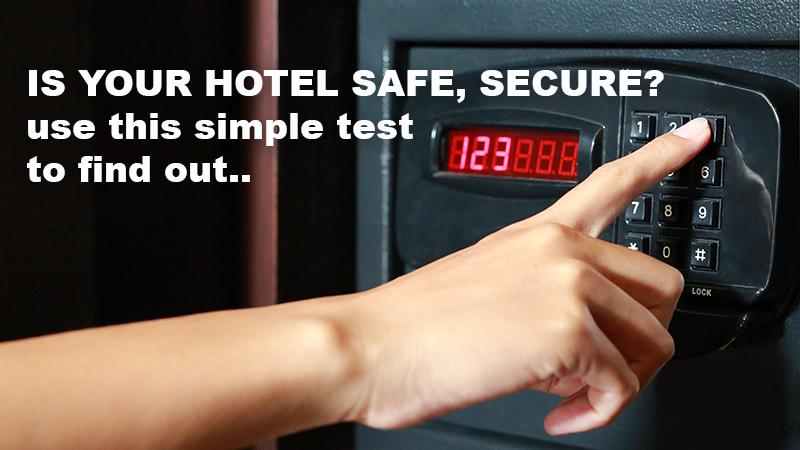
A traveller enters a PIN into an in-room hotel safe, but is it truly secure? Checking for default override codes can prevent an unpleasant surprise.
What is the problem with using a hotel room safe?
There’s nothing inherently wrong with the safe in your hotel room. In fact, modern electronic safes are quite secure in design. The potential problem is whether hotel staff have changed certain default settings after installing the safe. Most travellers feel confident after setting their own PIN, but if the safe’s factory override code was never updated, a thief (or anyone with that generic code) could open the safe in under 30 seconds. In other words, the safe might open for everyone if a crucial installation step was skipped. This oversight could leave your passports, gadgets, and holiday money vulnerable while you’re out enjoying your trip.
What are the changes?
When a safe is first installed, hotel staff are supposed to change the manufacturer’s default override code to a new, unique code. This override or “master” code is like a backup key that lets staff open the safe if a guest forgets their personal PIN. The problem lies in whether this code was changed from its factory setting. Many basic hotel safes come with a standard code out of the box (e.g. 000000 or 123456), and if the hotel hasn’t updated it, that default code will still unlock the safe. In short, the safe itself works fine, but a default master code that’s left unchanged can completely undermine its security.
What is the override code?
The override code (sometimes called a master code) is a pre-set numerical passcode provided by the safe’s manufacturer. It’s essentially an all-access code that allows hotel management to open the safe without your PIN, useful if you forget your code or when resetting the safe for the next guest. Think of it as the electronic equivalent of a master key. Only authorised staff should know this code, and ideally, it should be changed from the factory default to a hotel-specific number after installation. If it’s left at the default, however, that code is often well-known (or easily guessable) to anyone familiar with the safe’s make and model.
Why is the override code a problem?
If the override code remains at its factory-default setting, it becomes a glaring security loophole. Default master codes are typically very simple sequences, for example 000000, 111111, 123456 for six-digit safes, or 0000, 1111, 1234 for four-digit models. These generic codes are public knowledge (even a quick internet search or YouTube video will reveal them). That means a thief who gains access to your room could try a common default code and open the safe in one quick attempt. All the carefulness you put into setting your own PIN would be wasted if the backdoor code is wide open. Unfortunately, many hotels inadvertently skip changing these factory codes, often due to oversight or assuming the installer did it. This leaves guests’ valuables at risk.
Imagine the consequences: someone could walk in and use a default code to instantly grab your passport, cash, jewellery, even your car keys if you’re staying at an airport hotel before a flight. In fact, hotel employees or maintenance staff themselves typically have access to master codes or keys to assist guests. While the vast majority of hotel staff are trustworthy (and you’re unlikely to be robbed by an employee), if the default code is not changed, anyone who knows that default code could exploit it. It’s an oversight that turns a secure safe into an unlocked box for anyone in the know.
What should I do?
Before leaving any valuables in a hotel safe, take a minute to test that the override code isn’t still the default. You can do this easily and discreetly with the following steps:
- Lock the safe using a new PIN of your choice. Place a test item (or even just close the empty safe) and set a code you will remember. For example, set a random 4 or 6-digit PIN and ensure the safe locks are used as usual.
- Enter the safe’s override (super-user) mode. On many safes, you do this by holding down the “Lock” or “Close” button and the number “0” at the same time. (You can often find model-specific instructions on a sticker inside the safe or in a hotel info booklet. If unsure, skip to step 3.)
- Try the common factory codes. Now, input the typical default override codes one by one: for example
000000or999999for six-digit safes, and0000,1234, or9999for four-digit safes. (These are the kinds of codes many manufacturers use by default.) After entering each code, see if the safe unlocks. - Assess the result. If none of the default codes work, that’s a good sign, the hotel has likely changed the master code, and your safe should be secure. However, if the safe does open with any of those common codes, then the factory-set override code is still active. In this case, do not leave your valuables in that safe! It’s as insecure as if you’d left it set to “0000.”
Most of the time, this quick test will confirm everything is fine. If the safe didn’t pop open with a generic code, you can feel more confident storing your passport, electronics and holiday money inside. Always remember to scramble the display or cover your hand when entering your personal PIN, just as an extra precaution against prying eyes (or hidden cameras), especially in public areas or shared rooms.
If you’re not comfortable performing this test yourself or the safe model is confusing, you have two options: First, ask the hotel manager or reception staff to confirm that the safe’s master code has been changed from the default. Better yet, you could request that a staff member demonstrate the safe’s security in front of you. This is a reasonable request, and any good hotel should be happy to ensure you feel safe using the room facilities.
What next?
So, what should you do if you discover the override code hasn’t been reset (i.e. your safe opened with a default code)? Don’t panic, but don’t use that safe for your valuables until the issue is resolved. Here are your next steps:
- Notify the hotel management immediately. Politely explain that you found the safe’s master code is still set to the factory default, and thus the safe isn’t secure. In many cases, a manager or technician can reset the code within minutes. It’s usually a quick fix (often just a matter of reprogramming the safe with a new code). For your peace of mind, you might request to be present when they change it or have them test it again after resetting.
- Ask for an alternative if needed. If, for some reason, the staff cannot change the override code promptly (or don’t know how), ask about alternative secure options. Most hotels, especially larger or airport hotels, have a main hotel safe or safety deposit box at reception. Use that for your passports, cash, and other valuables if your in-room safe isn’t trustworthy. The front-desk safe is typically more secure and only accessible under dual control (e.g. with a manager’s key and a log of access).
- Use other security measures temporarily. In a pinch, you can secure items in your locked suitcase as a makeshift safe. For example, put your laptop or spare money in your bag, lock it with a travel padlock, and stash it out of sight (like in the closet or a quiet corner of the room). This isn’t foolproof, but it deters opportunistic theft until the safe is fixed. If you have a portable travel safe or anti-theft bag, you could also use that, tethered to a heavy piece of furniture.
Importantly, be proactive and persistent (but polite) with the hotel. You have every right to expect a working, secure, safe environment, especially if it’s an advertised room feature. Often, hotel staff might simply be unaware that the override code was never changed, your bringing it up can help them improve security for everyone. A good hotel will appreciate the feedback and act quickly. If they dismiss your concerns and refuse to help, you might consider storing valuables elsewhere or, if it’s a long stay, even requesting a room with a functioning safe. Fortunately, such extreme cases are rare. In most scenarios, the hotel will correct the issue, and you can relax knowing your important items are locked away properly.
Are there other tips for using hotel safes securely?
Yes, beyond the override code issue, keep these extra tips in mind to get the most security from your hotel safe:
- Choose a strong PIN: When you set your personal safe code, avoid obvious numbers like
1234,0000, or your birth year. Treat it like a bank PIN, use a random, hard-to-guess combination. Never use details that someone could glean from your luggage tags or documents (for example, don’t use your room number or travel dates as the code). - Check the safe’s installation: A safe is only secure if it can’t be removed. Before use, verify that the safe is bolted to the wall, floor, or a solid piece of furniture. If you can slide or lift it, a thief could literally carry it off. In such cases, it’s safer to use the hotel’s main safe or keep valuables with you.
- Use the safe selectively: Even in a perfectly secure safe, try not to store everything in one place. Keep some emergency cash and a photocopy of your passport separate (perhaps in your wallet or hidden in your luggage) as a backup. This way, if something did happen, you haven’t lost all your essentials at once. Likewise, extremely valuable or sentimentally irreplaceable items (expensive jewellery, family heirlooms) might be better kept on your person or left at home if possible.
- Double-check upon departure: Before you check out of the hotel (or leave your airport hotel to catch that flight), make sure you empty the safe completely. It sounds obvious, but in the rush of packing it’s easy to forget items inside. Many travellers have accidentally left passports or money behind in safes. Set a reminder or place a visible note in your suitcase so you won’t leave without your belongings.
By following these tips and being aware of the override code issue, you can significantly enhance the security of your valuables during your holiday. The key takeaway for UK travellers is this: a hotel safe is a helpful security feature, but it’s not infallible. A quick conversation with hotel staff and a simple test when you arrive can ensure that your in-room safe is truly as secure as it’s meant to be. With that peace of mind, you can head out to explore or relax by the pool, confident that your important items are well protected, exactly what you need for a stress-free holiday. Safe travels!