

What Happens If You Get Flashed by a Speed Camera in the UK?
On your way to the airport, you’re in a rush and driving on unfamiliar roads. Suddenly, a flash goes off in your rear-view mirror. You know you shouldn’t have been speeding, but it’s easy to make mistakes when you’re under time pressure. Now you’re left wondering: will that speed camera flash turn into a speeding ticket? In this guide, we’ll explain exactly what happens after the flash, from legal timelines to fines and points, and even the different types of speed cameras used on UK roads. We’ll also share practical tips for motorists (especially if you’re driving to catch a flight) on how to avoid that dreaded ticket in the first place.

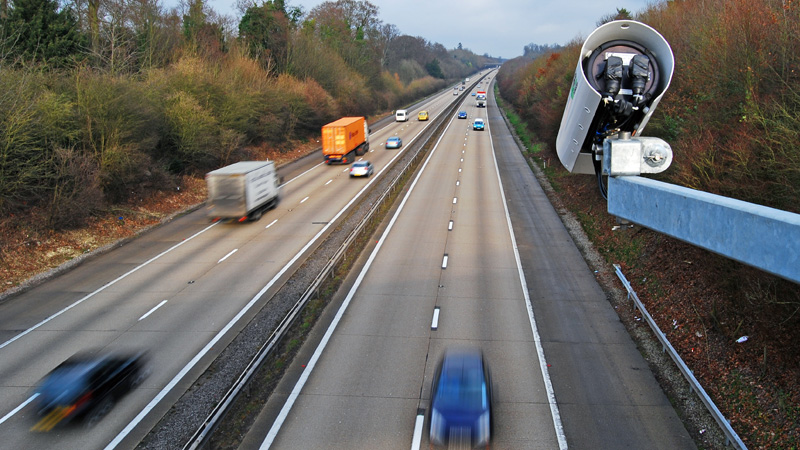
What Does a Speed Camera Flash Mean?
A speed camera flash is a clear sign that a camera has detected a vehicle exceeding the speed limit and taken a photo of the offending vehicle. In most cases, fixed speed cameras like the classic Gatso units will emit a bright double-flash as they capture your vehicle’s registration plate. However, a flash is not a 100% guarantee of a ticket, and conversely, no flash doesn’t mean you’re in the clear:
- Flash but no ticket? It’s possible (though not common) that you might see a flash and never receive a ticket. Older cameras using film can run out, and some flashes are test flashes. That said, most modern cameras are digital and always ready. Essentially, if you were genuinely speeding over the threshold, assume the camera caught you, unless you’re very lucky. The real determinant is what happens next: whether a Notice of Intended Prosecution is issued (more on the 14-day rule below).
- No flash doesn’t mean no ticket. Many newer speed enforcement systems don’t use a visible flash at all. Infrared and digital cameras can capture your speed and number plate without alerting you at the time. For example, average speed cameras (the ones that monitor your speed over a stretch of road) use infrared/night vision, so there’s usually no flash in sight. Likewise, forward-facing Truvelo cameras use an infrared flash that isn’t as obvious as the traditional bright burst. The first sign you’ve been caught might be the letter that arrives later, rather than anything you see in your mirror.
In short, treat any instance of being caught by a camera, flash or not, as serious. The next sections explain the process that follows and what to expect in the days and weeks after.
Will I Get a Ticket? Understanding the 14-Day Rule
Legally, if a speed camera has evidence of your vehicle speeding, the police must serve a Notice of Intended Prosecution (NIP) to the vehicle’s registered keeper within 14 days of the alleged offence. This rule is in place to ensure timely notification. Here’s what it means for you:
- NIP within 14 days: In practice, if you are the registered keeper of the vehicle and your address details with the DVLA are up to date, you should receive a NIP (by post) within 14 days of the camera flash. Typically, it arrives much sooner (often within a week or two). The notice will usually include details of the offence (date, time, location, recorded speed, speed limit, etc.) and a request to identify the driver (a Section 172 notice).
- If no NIP arrives: If 14 days (plus a few days for postage) have passed since the incident and no notice has come through your letterbox, you might breathe a sigh of relief, but with caution. By law, failing to serve the NIP in 14 days may void the prosecution, meaning you cannot be convicted for that offence. In other words, if no ticket arrives within two weeks, you’re likely off the hook. However, and this is important, there are exceptions and nuances:
- If you recently changed address or bought the car and haven’t updated your V5C logbook, the notice could have been sent to your old address or the previous owner within 14 days. In that case, the law considers the NIP served, even if you personally see it late. An out-of-date address is a common reason people think the 14-day rule was broken when it wasn’t.
- If the vehicle is a company car, rental car, or otherwise not registered in your name, the first NIP will go to the registered keeper (the leasing company, employer, etc.) within 14 days. That entity then nominates you as the driver, and a second NIP is issued to you. This often means you receive your notice well after 14 days, but it was still legally issued on time to the vehicle’s keeper. So don’t assume you’re safe just because two weeks passed, consider whether someone else received that first notice.
- There are rare scenarios (postal delays, errors) where a valid NIP might arrive after 14 days. If you’re certain the NIP was late and your details were correct, you could technically challenge it. But proceed with care and consider legal advice, it can be tricky to prove, and the stakes are high if you miscalculate.
In summary, the 14-day rule is a helpful guideline: most speeding tickets will be issued within a fortnight if they’re coming at all. If you’re the registered owner and more than 14 days have passed with no mail from the police, you likely avoided a ticket. Just double-check that your address is correct and that you haven’t missed any notices (sometimes called a “Notice of Intended Prosecution”). If in doubt, you can contact the local police unit for camera enforcement to inquire if any offence is recorded against your vehicle. Never assume a ticket won’t arrive simply because you didn’t see a flash or because you hope the camera wasn’t working.
What Happens After You’re Caught? (The Process Explained)
Let’s assume the worst has happened: you were speeding and a camera (or police officer) caught you. What next? Here’s a step-by-step walkthrough of the speeding ticket process in the UK:
- Notice of Intended Prosecution (NIP) & Section 172 Notice, Identification of Driver: If caught by a camera, the first thing you’ll receive is a letter in the post, typically within 14 days as noted. This contains the NIP (a formal notice stating that you’re going to be prosecuted for the speeding offence) and a Section 172 notice. The Section 172 notice is essentially a form asking “Who was driving the vehicle at the time?”. By law, you are required to respond to this and identify the driver.
- If it was you driving, you fill in your details. If someone else was driving (with your permission), you must provide their name and address. You have 28 days to return this notice with the driver information. Failing to respond is a serious offence in itself, punishable by a hefty fine and 6 points on your licence (an MS90 endorsement for “failing to furnish driver details”). In short, do not ignore the NIP/Section 172 paperwork, even if you think the ticket is unfair. Not responding will make things far worse.
- If you were not the driver or there’s a genuine reason you can’t say who was (for instance, if your car was stolen or you honestly have no idea who was driving), you should still respond explaining the situation. Keep copies and proof of postage. You may need to convince a court that you exercised “reasonable diligence” in trying to identify the driver if it comes to that. But simply ignoring the notice is never the right move.
- The Conditional Offer / Decision: After you’ve returned the driver identification, the authorities will decide how to deal with your case. There are a few possible outcomes:
- Option A: Speed Awareness Course Offer. For lower-level offences, and if you haven’t attended a speed awareness course in the last 3 years, you might be offered a course instead of a fine and points. This usually applies if your speed was only modestly over the limit (for example, up to about +10% + 9mph over the limit, though thresholds vary by police force). The course is optional but highly recommended to avoid points. If you accept and complete the course, you won’t receive any points or a fine, effectively no “ticket” on your record. The catch is you have to pay for the course itself (typically around £80-100 fee) and invest half a day of your time in attendance. Courses are educational workshops intended to improve your driving habits. Once completed, that’s the end of the matter, the offence is recorded as dealt with by a course, and you won’t have a conviction or endorsement on your licence. (Important: you only get this chance if offered, you can’t demand a course. It’s at the discretion of the police and depends on the speed and circumstances.)
- Option B: Fixed Penalty Notice (FPN). This is the most common outcome for clear-cut speeding offences that aren’t severe enough for court. You’ll receive a Fixed Penalty Notice, essentially a conditional offer of a penalty without prosecution. The standard fixed penalty for speeding is £100 fine and 3 penalty points on your driving licence. The FPN letter will explain how to pay the fine (usually online or by post) and how to submit your driving licence for endorsement. You typically have 28 days to accept the FPN (i.e. pay the fine and send in your licence). If you do so, the matter is settled out of court. The points (usually code SP30 for speeding on a public road) will be put on your licence. These points are active for 3 years (meaning they count towards the totting-up limit), and remain on your record for 4 years. By paying the fixed fine and taking the points, you are admitting guilt (pleading guilty). There is no further action needed after that, just be aware of your new points total for insurance and future driving.
- Option C: Court Summons/Referral to Court. If your speeding was serious (far above the limit) or if you have other complicating factors (like already a lot of points on your licence), you will be ordered to attend a magistrates’ court rather than given a fixed penalty. In this case, you’ll receive a court summons or a letter telling you to go to court. You will need to plead guilty or not guilty in front of magistrates.
For example, doing 50mph in a 30mph zone, or 100+ on a motorway, will likely land you in court rather than a fixed £100 fine.
If you’re summoned to court, the penalties are decided by the magistrates within guidelines. They will consider how much over the limit you were, and any mitigating or aggravating factors. Fines in court are higher, often calculated as a percentage of your weekly income (the UK uses Band A, B, C sentencing bands for speeding). For instance:
- Minor excess (Band A) might be around 50% of weekly income (plus costs) and 3 points.
- Moderate excess (Band B) might be 100% of weekly income, 4–6 points or possibly a brief disqualification.
- Major excess (Band C) can mean 150% of weekly income (up to a statutory maximum), and either 6 points or a driving ban.
The maximum fine for speeding is £1,000 on normal roads, rising to £2,500 for motorway offences. In extreme cases, you could also be disqualified from driving for a period instead of (or in addition to) points. The magistrates will also impose court costs and a victim surcharge on top of the fine.
If you intend to plead not guilty, you’ll have a trial on a later date, which could involve legal fees and the risk of a higher penalty if you lose. Generally, unless you believe you have a strong defence or there’s an error in the evidence, it’s wise to accept a fixed penalty if offered. Contesting a speeding charge and being found guilty can result in larger fines and more points than the original offer.
- Special Case, Pulled Over by Police: Note that everything above assumes a camera caught you. If you were stopped by a police officer at the roadside, the process can be a bit different. The officer might issue a verbal warning and let you go, or hand you a Fixed Penalty on the spot, or in serious instances, report you for summons to court. In any case, you won’t get the 14-day NIP by post because being stopped and informed in person counts as notification. The outcome (course, FPN, or court) will depend on the officer’s decision and your speed, similar to the camera outcomes described.
- Aftermath, Endorsements and Licence Points: If you receive points on your licence, they will stay on your driving record for a while. For speeding offences (endorsement codes SP30, SP50, etc.), the points are active for 3 years from the date of the offence (for totting-up purposes), but they remain printed on your licence for 4 years in total. Points can affect your insurance premiums, so drive carefully once you have them. Remember, accumulating 12 or more points within 3 years can lead to a 6-month driving ban under the totting-up rules. And if you’re a new driver (licence held for under 2 years), just 6 points will get your licence revoked, effectively you’d have to reapply and re-test as a learner.
As you can see, the aftermath of a speed camera flash can range from no action at all to expensive fines, mandatory re-training, or even losing your licence, depending on the circumstances. Next, we’ll look at what kinds of cameras are out there watching your speed, since different cameras operate in different ways.
Types of Speed Cameras in the UK (and How They Work)
There are numerous types of speed enforcement cameras on UK roads, each with its own technology and quirks. Knowing a bit about them can help you understand what might have caught you and how likely it is to result in a ticket. Here are the main categories of speed cameras UK motorists may encounter:
- Gatso speed cameras: The classic yellow-box speed cameras you see by the road are often Gatso units. Gatso (short for Gatsometer) cameras have been around since the early 1990s and are still widely used. What they are: A Gatso uses radar to measure your speed and, if you’re over the threshold, it takes two photos (with a visible flash) of your vehicle from behind. The photos are timed half a second apart and use the painted white lines on the road to calculate your speed as a secondary proof. Key features: Gatsos are rear-facing, they always photograph the back of your cart This is by design: the bright twin flashes aren’t firing directly in drivers’ faces (preventing blinding glare). So if you see a Gatso flash in your mirror, it’s probably capturing the car behind you (since it faces forward relative to you). In reality, Gatsos catch you as you’ve just passed them. Where you find them: Common on A-roads and busy routes, at accident hotspots, and occasionally on motorways (though many motorway Gatsos have been replaced with digital systems). Some Gatso installations are now digital, but historically they used film that needed to be manually loaded and retrieved. This led to the notorious idea that “some Gatsos have no film”, which might be true occasionally, but you should never count on that! Assume every Gatso is operational and loaded; many areas have upgraded to digital units that are always on. If a Gatso flashes you, and you were speeding, there’s a good chance a Notice of Intended Prosecution is on its way.
- Truvelo (and Truvelo D-Cam) cameras: These are another type of fixed roadside camera, and they function a bit differently from Gatso. What they are: Truvelo cameras are typically forward-facing devices that use sensors (either electromagnetic loops or piezo strips) in the road to measure speed. When triggered, a Truvelo takes a single photograph of the front of the vehicle. They use a special infra-red flash (often with a magenta filter) which is much less blinding than a Gatso’s flash, so it can face oncoming traffic without dazzling drivers. Key features: Because they face the front, Truvelo cameras can potentially capture the driver’s face as well as the number plate, though the primary aim is the plate. They only flash once (and you might not even notice it, especially in daylight). Where you find them: Truvelos are less common than Gatsos but have been adopted by many councils. They are often found where authorities want front-facing enforcement, for example, on roads where identifying the driver is useful, or where rear-facing isn’t feasible. In some areas, you’ll see distinctive smaller grey or yellow Truvelo D-Cam digital units. Counties such as Northamptonshire and Hampshire were early adopters of Truvelo cameras, but they’re now used in various locations around the country. If a Truvelo captures you, you might not realize it at the time (no obvious flash), but the ticket process will be the same as any other automated camera capture.
- SPECS average speed cameras: SPECS is a brand name commonly used to refer to average speed camera systems. You’ll know these from the pairs (or networks) of cameras mounted on gantries or poles, often on stretches of roadworks or long roads with speed restrictions. What they are: Instead of measuring your speed at a single point, SPECS (and other average systems like Vector or Hikvision cameras) monitor your average speed between two or more points. Each camera set uses Automatic Number Plate Recognition (ANPR) to record your plate as you pass, along with a timestamp. Later down the road, another camera does the same; the system computes your average speed over the distance. If it’s above the limit, you’ve got yourself a ticket. Key features: There is no flash, these cameras use IR illumination and digital sensors, working day and night without alerting drivers. You won’t notice anything when you pass them (aside from the camera hardware itself). This means drivers sometimes don’t realize they’re caught until the NIP arrives in the mail. Where you find them: Commonly at highway roadworks, on smart motorways (sections like the M1, M25, etc., to enforce lower temporary limits), and increasingly on A-road corridors to enforce steady speeds (for example, on routes with a history of accidents). The cameras are usually mounted high up and painted yellow, though some are small and grey. The best advice is to assume any average speed check zone is actively enforcing, they are highly effective and there’s essentially zero margin for sneaking through if you average over the limit. Bear in mind, speed averaging means you must keep your speed at or below the posted limit for the entire stretch, racing between cameras and slowing down for each one won’t fool the system. Many drivers get caught by forgetting an average check is in place after the first camera.
- Mobile speed cameras: Not all speed traps are fixed installations; many are mobile units operated by police or safety camera partnerships. What they are: Mobile cameras can take several forms, the most recognizable are the camera vans parked at the roadside or on overpasses, often marked in high-vis with “Safety Camera” or police markings. Inside is either a laser camera or radar device that measures speed and captures videos or photos of vehicles. There are also handheld laser devices (speed guns) used by officers, and other portable setups like tripod-mounted cameras. Some mobile units use similar technology to Gatso or Truvelo but in portable form (even a mini-Gatso exists for temporary use). Key features: Mobile cameras usually don’t flash visibly. The operator targets your vehicle, and if you’re speeding, they record the evidence. You might notice a van with a dark window or an officer pointing a device at traffic, but you won’t get an obvious flash. Often, you won’t know you’ve been caught until weeks later when a NIP arrives, since you might not even see the camera. Where you find them: Anywhere! Mobile units are deployed to speeding hot spots, school zones, rural roads, and motorways, wherever there’s a concern about speeding or a history of collisions. They often rotate locations. Many police forces publish where mobile cameras might be each week (to encourage compliance), but they can also appear unannounced. Modern mobile cameras can capture cars from long distances (the latest “Long Ranger” devices can pick up a car’s speed over 1,000 meters away). There are reportedly over 15 different types of mobile speed enforcement devices used across the UK, so drivers should assume that any time you’re speeding, even if you don’t see a camera, you could be spotted by a mobile unit.
- Motorway speed cameras (HADECS 3 and variable limit cameras): Our fastest roads have their own monitoring systems. On smart motorways or controlled motorway sections, you’ll often see overhead cameras on gantries. What they are: One common type is HADECS 3 (Highways Agency Digital Enforcement Camera System 3), a digital camera often mounted on the side of gantries by the speed limit signs. These enforce variable speed limits (and the national speed limit when no lower limit is set). Key features: HADECS cameras are small, gray, and use radar/inductive loops; they also use infrared flash at night. They can often enforce multiple lanes at once. Many drivers don’t notice them, especially as they’re not always painted yellow (some have a small yellow front, others are grey). If you see a sudden bright flash on a smart motorway, it could be one of these cameras capturing someone (possibly you) exceeding a displayed limit. Where you find them: Major motorways with variable limits (M25, M1, M6, M42, etc.) have these systems. They can ticket thousands of drivers when a lower speed limit is active (like 50mph during congestion). Important: even if the overhead signs are not displaying a lower limit (i.e., national speed limit applies), the cameras may still enforce the 70mph limit. Treat them as live at all times. Additionally, some older motorway cameras were basically Gatso cameras mounted on gantries (with the classic flash), many of those have been replaced by digital ones now.


In summary, there are many different mechanisms, but all speed cameras serve the same purpose: to catch speeding drivers. Some are more visible than others, but as technology advances (digital, infrared, long-range lasers), the margin for error shrinks. The best approach is not to gamble on what type of camera it is, stick to the speed limit. Next, we’ll conclude with some practical tips to help avoid getting caught out, especially when you’re driving in unfamiliar areas or heading to time-critical destinations like the airport.
Tips to Avoid Speeding Fines (Practical Advice for Motorists)
No one wants to come home from a trip to find a nasty surprise in the mail. The simplest way to avoid speeding tickets is, of course, don’t speed. That said, here are some practical tips to help you stay within the law and keep your licence clean:
- Plan ahead and give yourself time. Speeding often happens when we’re running late or under pressure. If you’re driving somewhere time-sensitive, like heading off on holiday or driving on your way to the airport, build in extra travel time so you’re not tempted to speed. Consider setting off early or, if it’s a very early flight, think about staying at an airport hotel the night before. (For example, you can combine an overnight stay with parking with an airport hotel and parking package to avoid a dawn rush.) A relaxed drive is not only safer but also less stressful.
- Use technology to your advantage. Most modern sat-navs or map apps will warn you of the current speed limit and even alert you of known fixed speed camera locations. While we should never rely solely on these (mobile cameras and new cameras might not be in the database), they can be a helpful reminder. Additionally, some cars have speed limiters or cruise control, using these can prevent unintentional creep over the limit, especially on long motorway drives.
- Stay observant for signs and cameras. Always watch for speed limit signs, especially when transitioning from one road type to another or entering areas like villages, work zones, or city centers. Assume there may be enforcement around. Those yellow boxes, grey poles, camera vans, or even police officers in the distance are cues to check your speed. But remember, the absence of a visible camera doesn’t mean you can speed, unmarked police cars and average speed zones are silent watchers.
- Know the common limits and thresholds. In the UK, common default speed limits (when unsigned) are 30mph in built-up areas, 60mph on single carriageways, and 70mph on dual carriageways/motorways. Familiarize yourself with the typical tolerance used by many forces: a guideline often cited is “10% + 2mph” over the limit (e.g. 35 in a 30) as a threshold for action. This is not a hard rule, it’s just guidance, you can be booked for 31 in a 30 in theory. But knowing this unofficial buffer can help you set your cruising speed with a bit of cushion. Don’t push your luck; that extra 5 minutes saved by speeding isn’t worth the fine and points.
- Take breaks and avoid fatigue. Tired drivers can miss speed limit changes or fail to notice their own speed. If you’re on a long journey, especially after a long flight or late at night, be extra cautious. Plan rest stops. If you’ve just landed and picked up your car from airport parking after a trip, you might be jet-lagged, take it steady and don’t hurry home at an excessive pace.
- Keep your car’s details updated. This isn’t about avoiding a ticket per se, but it can save you legal trouble. Always update your address on your driving licence and V5C logbook when you move house. Many people have ended up with bigger fines and even court convictions simply because a speeding ticket or NIP went to an old address and they never received it. This can spiral into a “failing to respond” charge. Keeping details current ensures that if you ever do get caught, you can deal with it properly and on time.
Finally, a mindset tip: treat speed cameras and limits as allies for safer driving, not just sneaky revenue devices. They are placed where there’s a history of crashes or risks, like dangerous junctions, roadwork zones where workers are present, or areas with pedestrians. By respecting them, you’re not just avoiding a ticket, you’re reducing the chance of an accident.
In conclusion, if you’ve been flashed by a speed camera, don’t panic, but do stay alert for that letter in the post. Most UK speeding tickets will arrive within two weeks if you’re going to get one. Should it come, follow the instructions promptly, identify the driver, and then choose the course or accept the fixed penalty if eligible (these are usually the quickest and least painful resolutions). Learn from the experience and adjust your driving habits.
At APH, we’re all about smooth and safe journeys for UK motorists. Whether you’re driving to catch a flight or just the daily commute, keeping to the speed limit will ensure you arrive safely and avoid fines or points. If you’re planning a trip, we’re here to help with the travel side, from secure airport parking to convenient airport hotel bookings, so you can set off early and drive at a relaxed pace, knowing everything’s sorted. Safe driving, and enjoy the journey!
FAQs
A speed camera flash is a visual indication that a vehicle’s speed has been captured by a speed camera. It is not a guarantee that a speeding ticket will be issued, but it is a warning that the vehicle’s speed has been recorded.
A speed camera flash will typically be a bright flash of light, similar to that of a camera flash. However, not all speed cameras use a flash. Some cameras may use infrared technology to capture a vehicle’s speed without emitting a visible flash.
If you get flashed by a speed camera, it means your vehicle’s speed has been recorded. The authorities will review the footage and determine if a speeding ticket will be issued.
The time frame for receiving a speeding ticket can vary depending on the location and the specific camera that captured your speed. Typically, you can expect to receive a ticket within a few weeks after being flashed.
Yes, a speed camera flash can be mistaken for a camera flash. Some speed cameras use a bright flash to capture a vehicle’s speed, similar to that of a camera flash.
No, a speed camera flash is not a speed trap. A speed trap is when a law enforcement officer uses a radar or laser device to measure a vehicle’s speed, while a speed camera flash is a visual indication that a vehicle’s speed has been captured by a speed camera.
Yes, you can contest a speeding ticket issued from a speed camera flash. You will typically need to provide evidence that the speed camera was not functioning correctly or that there were extenuating circumstances that led to your vehicle’s speed being recorded above the posted limit.
Yes, there are different types of speed cameras. Some use radar or laser technology to measure a vehicle’s speed, while others use cameras to capture images of a vehicle’s license plate and the driver’s face.
Yes, you can be ticketed for speeding on a motorway or A-road. Speed limits are posted on these roads, and if you exceed the posted limit, you may be issued a ticket.
Yes, there are typically warning signs indicating the presence of a speed camera. These signs may be posted before or after the camera location and may include the words “speed camera ahead” or a symbol indicating the presence of a camera.