

Car parks rarely make headlines – but these ten defy every expectation. From a robot-staffed tower in Germany to an artificial island in Tokyo Bay, architects and engineers around the world have transformed something as everyday as car parking into genuine landmarks. Here’s our pick of the most extraordinary.
1. The Cheesegrater – Sheffield, UK
Sheffield’s most lovably nicknamed structure sits on Charles Street in the city centre. This 10-storey, 520-space multi-storey car park was designed by Allies and Morrison as part of the Heart of the City regeneration project – the same scheme that gave Sheffield its Peace Gardens, Winter Garden and Millennium Gallery.
Its distinctive cube-shaped metal exterior punches light and shadow across the facade at different times of day, earning it the “cheesegrater” nickname from locals who’ve clearly spent time in the kitchen.

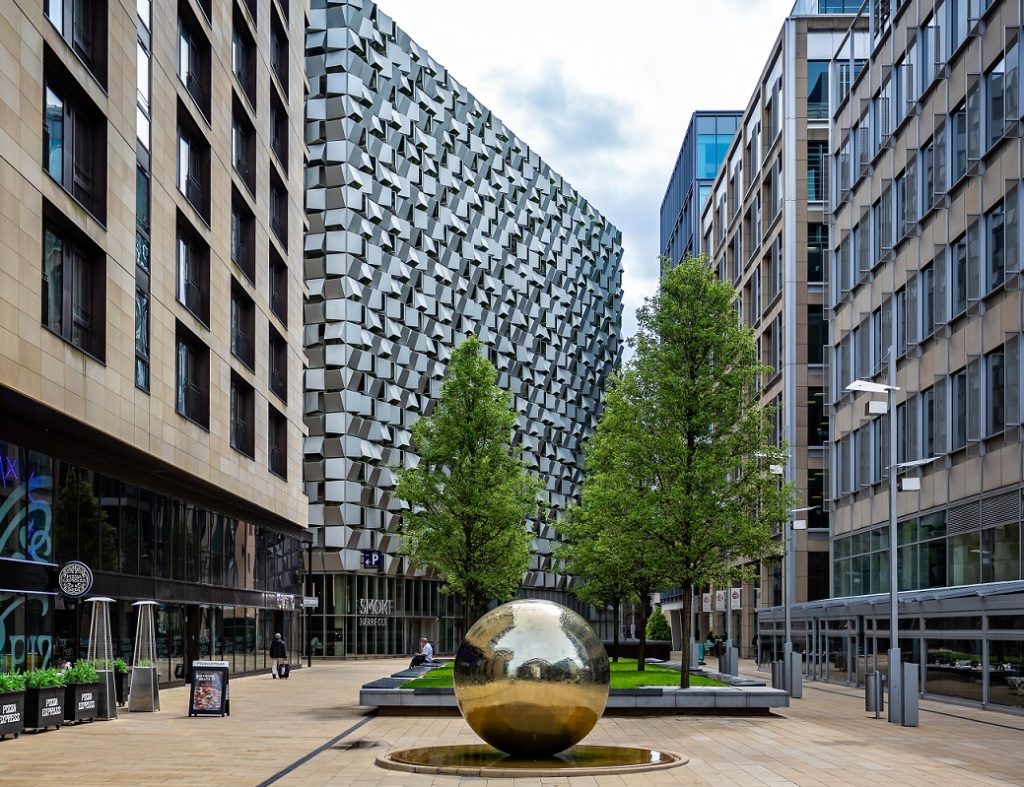
Key facts: 10 levels · 520 spaces · Designed by Allies and Morrison · Part of the Heart of the City project
2. Volkswagen Autostadt Car Towers – Wolfsburg, Germany
These twin glass-and-steel cylinders are one of the most iconic industrial structures in Europe. Located next to Volkswagen’s main manufacturing plant in Wolfsburg, the Autostadt Car Towers are purpose-built to store brand-new vehicles fresh off the production line.
Cars are transported in via a robotic pallet system mounted on rails. When a customer collects their new vehicle, a car shuttle retrieves it automatically – turning what could be a mundane handover into something closer to a theatre performance. It’s the ultimate expression of meet-and-greet parking taken to an industrial extreme.

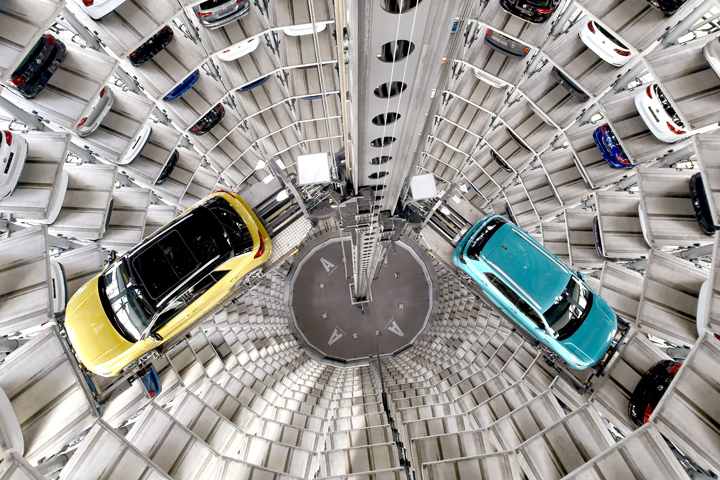
Key facts: Two towers · Fully automated robotic retrieval · Adjacent to Volkswagen factory, Wolfsburg
3. Umihotaru – Tokyo Bay, Japan
Japan’s “floating car park” is unlike anything else on this list. Umihotaru is an artificial island sitting in the middle of Tokyo Bay, and it’s the world’s only highway rest stop built on water. Designed to resemble a cruise ship from above, it forms part of the Tokyo Bay Aqua-Line – a combined bridge and tunnel route connecting the cities of Kawasaki and Kisarazu.
Drivers can pull in to stretch their legs and take in panoramic views of the bay, or continue straight through to the tunnel entrance that runs beneath the water to the other shore. It’s as much a destination as it is a pit stop.

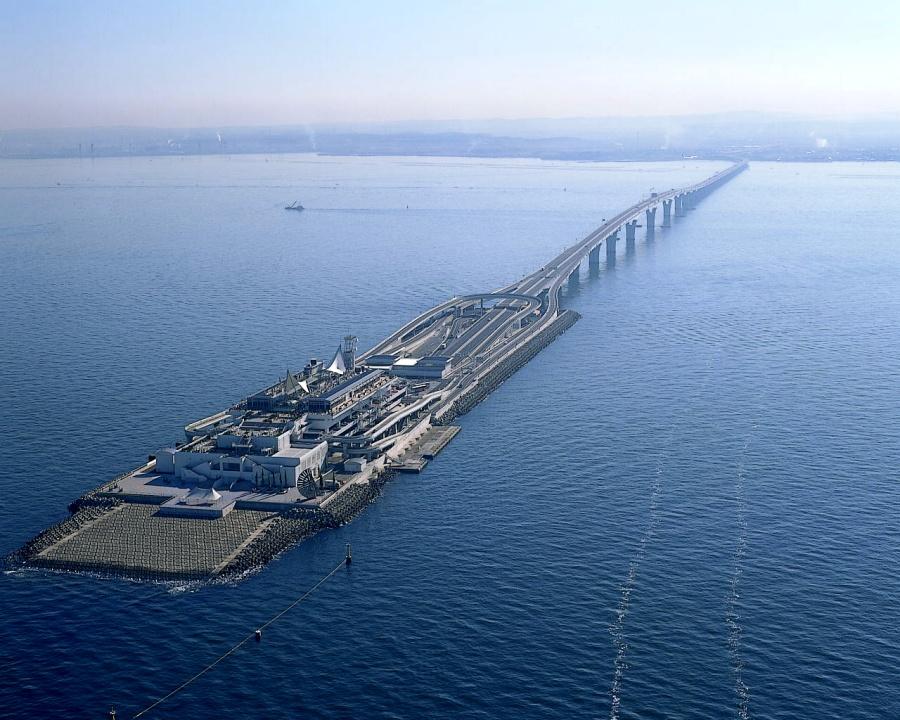
Key facts: Artificial island · Part of the Tokyo Bay Aqua-Line · Only waterborne highway rest stop in the world
4. SAIT Polytechnic Parkade – Calgary, Alberta, Canada
This underground car park at the Southern Alberta Institute of Technology (SAIT) does something unexpected with its exposed upper facade: it turns it into a living artwork. Designed by Revery Architecture, thousands of precisely punched holes in a metal screen create a pixelated mural that shifts throughout the day.
As the sun moves across the sky, the changing light produces a moving image of clouds and sky on the wall – a clever trick that makes the building feel dynamic from the street even when it’s entirely static.

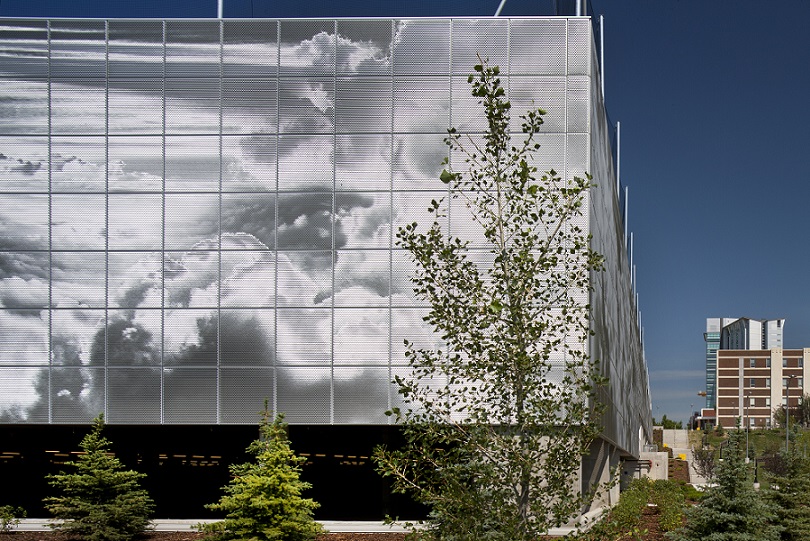
Key facts: Underground structure · Perforated screen mural by Revery Architecture · Sun-reactive pixel art effect
5. City Hall Automated Parking Garage – West Hollywood, California, USA
No circling levels. No searching for a space. At the West Hollywood City Hall, drivers simply pull up and let Unitronics’ robotic lifts and shuttles take over — whisking the vehicle away to one of 200 available spaces with minimal driver input required.
Automated parking systems like this have a meaningful sustainability advantage too: because the machines are optimised for space, the building itself can be significantly smaller than a conventional car park, reducing the overall environmental footprint of the structure.

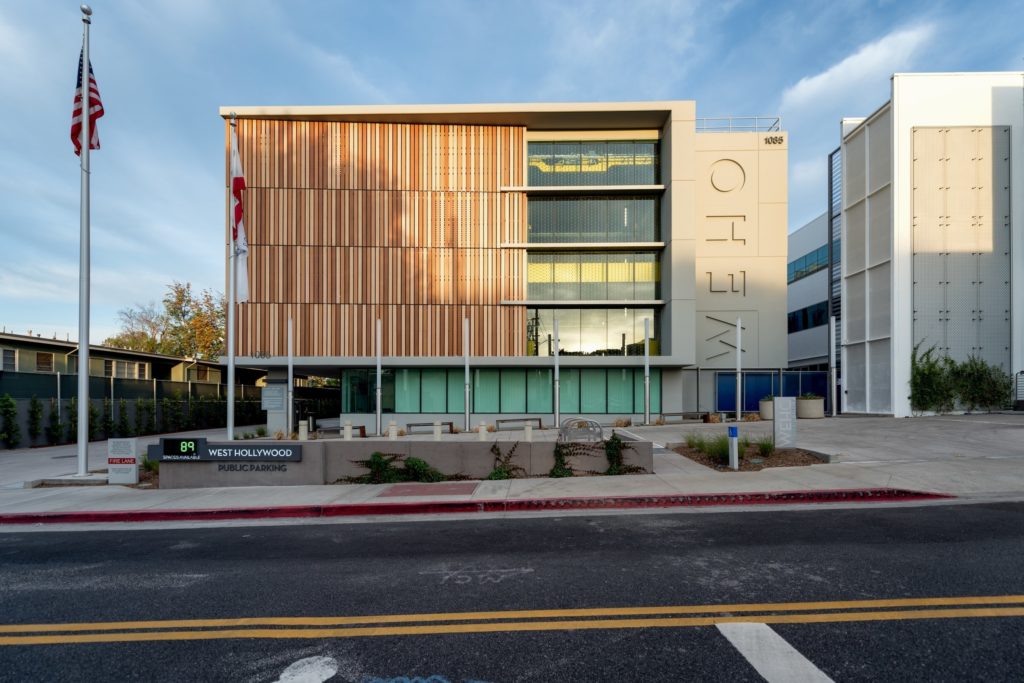
Key facts: 200 spaces · Unitronics robotic system · More space-efficient and eco-friendly than conventional structures
6. Ballet Valet Parking Garage – Miami Beach, Florida, USA
South Beach is known for its art deco architecture, and this parking garage leans all the way into that legacy. Designers Arquitectonica incorporated a 650-space garage into and above a preserved historic art deco block, maintaining the street-level facade while adding a dramatic vertical green wall above.
Three varieties of plants in different shades of green climb the exterior, creating what the designers describe as an urban sanctuary for birds — an unusual but genuinely beautiful solution to the challenge of inserting a multi-storey car park into a protected streetscape.

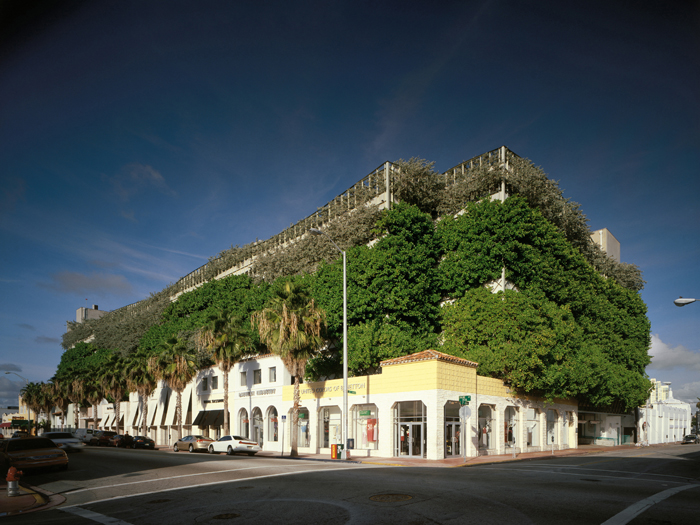
Key facts: 650 spaces · Designed by Arquitectonica · Historic art deco facade preserved · Vertical living green wall
7. Automated Parking System – Emirates Financial Towers, Dubai, UAE
Dubai doesn’t do anything by halves, and its approach to car parking is no exception. The automated system at the Emirates Financial Towers handles up to 1,191 vehicles, all managed by a computerised parking management system that removes the need for human attendants entirely.
The standout feature, though, is the system’s learning capability. Over time it analyses a driver’s parking history and automatically repositions their car closer to the exit in the minutes before their usual departure time. It’s the kind of AI-assisted service that makes valet parking look old-fashioned.

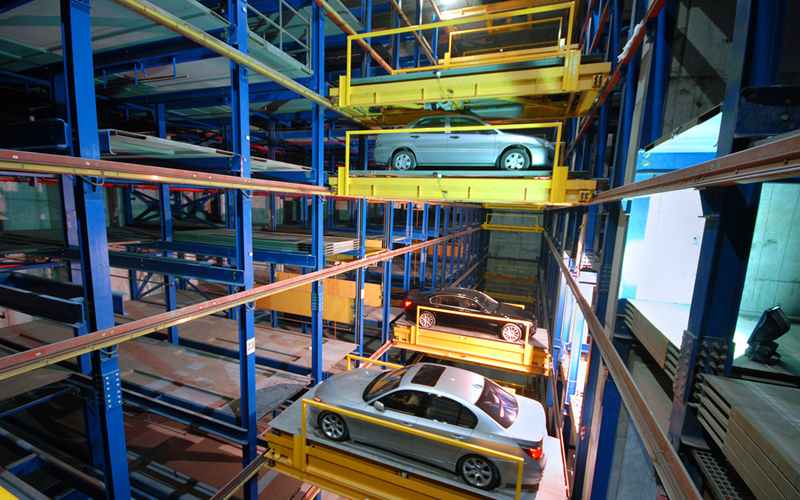
Key facts: 1,191 spaces · Fully computerised management · Machine-learning departure prediction
8. Garagenatelier Car Park – Herdern, Switzerland
At the opposite end of the scale from Dubai’s AI-powered megastructure is this intimate gem in the Swiss countryside. Architect Peter Kunz embedded five concrete parking cubes directly into the hillside at Herdern, each fitted with a large glass pane that frames the surrounding landscape like a picture window.
With space for just eight cars in total, this is arguably the world’s most scenic car park – a place where the act of parking is itself an architectural experience.

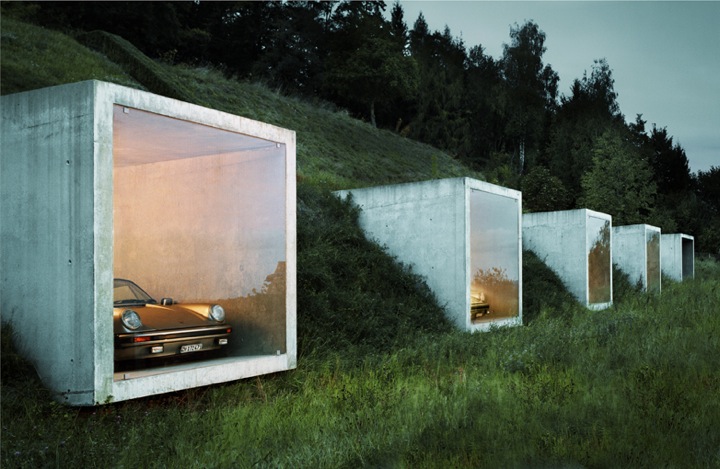
Key facts: 8 spaces · 5 concrete cubes embedded in hillside · Glass-fronted with panoramic landscape views · Designed by Peter Kunz Architects
9. Eureka Parking – Melbourne, Australia
The Eureka Tower is Melbourne’s tallest building, so it’s fitting that its car park is also a little extraordinary. The emerystudio design team applied a 3D chalk-drawing technique throughout the interior, using painted forms and large directional keywords – in, out, up – that are rendered in both two and three dimensions.
At crossroad junctions within the car park the graphics snap into perfect alignment, giving drivers clear visual cues while also turning the whole structure into an immersive piece of public art. Functional and beautiful.

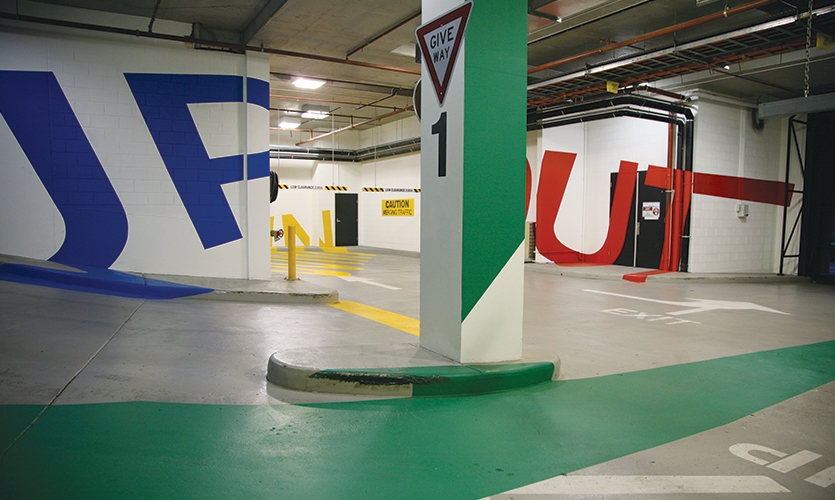
Key facts: Located at Eureka Tower, Melbourne’s tallest building · 3D chalk-drawing wayfinding art · Designed by emerystudio
10. Rheinauhafen Parking Tunnel – Cologne, Germany
Nearly 2.5 miles long with just three entrances, the Rheinauhafen Parking Tunnel in Cologne is one of the longest parking structures anywhere in the world. Built alongside the River Rhine, it provides residents and visitors with a vast underground parking resource — but it has a second, equally important role.
The tunnel was engineered to act as a flood barrier, capable of withstanding up to 37 feet of floodwater. When the Rhine threatens to break its banks, this underground car park quietly becomes a critical piece of the city’s flood defence infrastructure.

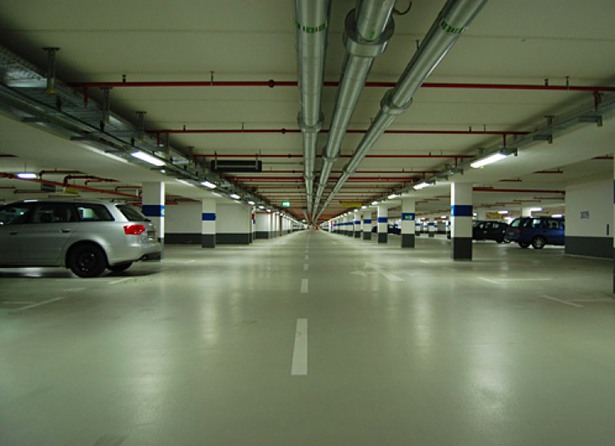
Key facts: ~2.5 miles long · 3 entrances · Doubles as Rhine flood protection · Withstands up to 37 ft of floodwater
Looking for parking closer to home?
These remarkable structures prove that car parking can be so much more than a grey concrete box. If you’re after great-value, stress-free airport parking for your next trip, APH has you covered — from meet and greet to multi-storey options at airports across the UK.