

The Dartford Crossing, which includes the Dartford Tunnel (northbound) and the Queen Elizabeth II Bridge (southbound) on the M25, is one of the busiest road crossings in the UK. Around 40–50 million vehicles use it each year. Since 2003, drivers must pay a toll known as the Dart Charge to use the crossing. There are no pay booths on site (these were removed in 2014 to ease congestion), so all payments are made electronically. This guide explains how to pay the Dart Charge, how much it costs, and what to do if you forget to pay, all in a clear, up-to-date way. We’ll also cover tips to avoid fines, how to appeal penalties, and other useful info for using the Dartford Crossing.
Key reminder: You must pay the Dart Charge by midnight the day after you use the crossing (unless you’ve paid in advance). If you don’t pay on time, you’ll receive a fine (Penalty Charge Notice), but don’t worry, we’ll explain how those work and how to avoid them. Read on for everything you need to know to cross the Dartford Crossing smoothly and without any unwelcome surprises.
How Much Does the Dartford Crossing Cost?
The cost of using the Dartford Crossing depends on your vehicle type. As of 2024, the Dart Charge toll for a single crossing (either direction) is:
- Cars, motorhomes, passenger vans (<=9 seats): £2.50 (or £2.00 with a Dart Charge account)
- Two-axle goods vehicles (vans, small trucks): £3.00 (or £2.63 with an account)
- Multi-axle HGVs (large trucks, coaches): £6.00 (or £5.19 with an account)
- Motorcycles, mopeds: Free (no charge)
- Bicycles: Free (cyclists cannot ride through; see the section on cyclists below)
Dartford Crossing operating hours: The Dart Charge applies every day from 6 am to 10 pm (including weekends and bank holidays). The crossing is free to use overnight between 10 pm and 6 am, so journeys during those hours do not incur any toll.
Local resident discount: Residents of Dartford and Thurrock can get a Local Residents Discount (previously Dart-Tag) for the crossing. Locals can use the crossing an unlimited number of times for £20 a year, or up to 50 crossings a year for £10. This scheme is for people living in specific areas near the crossing, you can apply through the official Dart Charge service to get the discount.
Upcoming price changes: Note that the Dart Charge rates are set to increase from 1 September 2025. For example, the standard car fee will rise to £3.50 (or £2.80 with a pre-pay account), two-axle goods vehicles to £4.20 (£3.60 with account), and HGVs to £8.40 (£7.20 with account). Motorbikes will remain free. These changes aim to manage congestion, as the current charges haven’t changed since 2014. Always check the official Dart Charge website for the latest prices before you travel.
How to Pay the Dart Charge (Dartford Crossing Toll)
There are several convenient ways to pay the Dartford Crossing charge. You can pay in advance (up to 12 months before your trip) or by midnight the day after crossing at the latest. If you’re a frequent user, setting up an account can save you money. Here are the payment methods available:
1. Set Up a Pre-pay Dart Charge Account
A Dart Charge pre-pay account is the cheapest and easiest way to pay if you use the crossing regularly. You put credit in your account and each crossing is then deducted automatically. Benefits of a pre-pay account include a discounted rate for cars (£2.00 instead of £2.50 per crossing) and convenient automatic payment.
- How it works: You must register in advance on the official Dart Charge website and make an initial top-up (minimum £10). You can enable auto top-up or manually add funds. Each time your vehicle uses the crossing, the fee is taken from your account balance (at the reduced rate).
- Why choose pre-pay: It offers the biggest discount on the toll and helps avoid fines since your crossings are paid automatically. It’s great for commuters or frequent travellers.
- Keep in mind: Make sure to maintain enough balance. If your account runs out of credit and you cross without payment, you could still get fined. Also note that pre-pay accounts won’t retroactively cover any crossings taken before account setup, it only works moving forward.
Setting up a pre-pay account is easy: visit the official gov.uk Dart Charge website and follow the instructions to create an account. You’ll need your vehicle details and a payment method for top-ups.
2. One-Off Payment Online (Pay As You Go, Without an Account)
If you’re an occasional user or just making a single trip, you can pay the Dart Charge online as a one-off without creating a pre-paid account. This is essentially a “pay as you go” option for individual crossings.
- How to pay online: Go to the official Dart Charge payment page (gov.uk). You can pay for a crossing up to 12 months in advance, or on the day of travel, or by midnight of the day after your crossing at the latest. Simply enter your vehicle registration number and payment details to cover the toll.
- Pay As You Go account: Alternatively, the Dart Charge system offers a Pay-as-you-go account option. This lets you register a payment card and vehicle so that each time you use the crossing, the system will automatically charge your card (without you needing to pre-load funds). Unlike the pre-pay account, this does not give a discounted rate, you’ll pay the full £2.50 (for a car) each time, but it saves you from forgetting to pay, since it auto-charges your card after each crossing. It’s a good choice for occasional users who don’t want to keep a balance on account. You can sign up for this on the official website as well. (Foreign-registered vehicles can also use this service, it’s open to everyone.)
Tip: If you use the one-off online payment, consider setting a reminder or paying as soon as you can on the same day. It’s easy to forget once your journey is over, and missing the deadline will lead to a fine. Paying online is quick and you’ll receive a confirmation email, always save your payment confirmation until you’re sure everything is processed (in case you need proof later).
3. Pay by Phone
You can pay the Dart Charge over the phone, which is handy if you don’t have internet access. Telephone payments are accepted by the official Dart Charge helpline.
- Number to call: 0300 300 0120. This is the Dart Charge payment line.
- When to call: You must call by midnight the day after your crossing at the latest (just like the online deadline). It’s wise to call as soon as possible on the day of travel to avoid forgetting.
- What to expect: Have your vehicle registration and payment details ready. The automated system or an operator will guide you through making a payment. Keep note of any reference number or confirmation they give you.
- Heads up: The phone lines can get busy, especially near the payment deadline. Don’t wait until the last minute at 11:50 pm, you might experience long hold times. Try to call during the day or use another payment method if you can’t get through quickly.
4. Pay in Advance (Up to 1 Year Ahead, or with Your Booking)
If you know your travel plans in advance (for example, you’re driving to the airport next month via Dartford Crossing), you can pay ahead of time for peace of mind. Advance payment can be made up to 12 months before your trip for a specific date.
- How to pay in advance: On the official Dart Charge website, you have the option to schedule a payment for a future date. Simply specify the date of the crossing when making the payment. The system will hold your payment and apply it once you’ve made the crossing on that date. This way, you won’t have to remember to pay while you’re traveling or busy.
- Through travel partners: If you’re booking travel with certain companies (like bridge/tunnel ticket agents or parking services), they might offer to handle the Dart Charge for you. For example, APH customers can pay the Dart Charge at the same time as booking airport parking, this can be a convenient add-on so you don’t forget to pay later. If using such a service, be sure to also book the return crossing if your trip will bring you back through Dartford.
- Why pay early: This option is great for infrequent crossings or holiday trips. By paying when you plan your journey, you remove one more thing to worry about during your travels. Just don’t forget you’ve paid, it can help to print the confirmation or make a note, so you don’t accidentally pay twice.
5. Pay at a Payzone Retail Outlet
If you prefer to pay by cash or in person, you can do so at Payzone outlets. Payzone is a network of shops (newsagents, convenience stores, gas stations, etc.) where you can make bill payments, including the Dartford Crossing toll.
- How to find a Payzone location: Look for the Payzone logo at local stores, or use the Payzone store locator online. In the locator, choose the category for “Transport and ticketing” and then select “Dart Charge” to filter outlets that take Dartford toll payments. Enter your town or postcode to find the nearest one.
- What to do: Visit the selected Payzone retailer and tell them you want to pay the Dartford Crossing charge. You’ll need to provide your vehicle registration number and the payment (cash or sometimes card, depending on the store). They will process it and give you a receipt.
- When to pay: Just like other methods, this must be done by midnight the day after your crossing at the latest. If you’re passing near a Payzone shop on your journey, you could even stop and pay on the same day. Otherwise, do it first thing the next morning. Keep the receipt as proof of payment.
6. Pay by Post (Mail a Cheque in Advance)
For those who aren’t fans of electronic payments, there is an option to pay by post using a cheque. This method is only for advance payments, you cannot post a payment after you’ve already crossed, because it wouldn’t arrive in time.
- How to pay by post: Mail a cheque (payable to “Dart Charge”) for the crossing fee to the Dart Charge office before you travel. Include a letter with details of your vehicle registration, the date of the intended crossing(s), and your contact information.
- Postal address:
Dart Charge Customer Services
PO Box 842
Leeds LS1 9QF - Timing: Make sure you send your cheque well in advance of your trip so that it’s received and processed. It’s recommended to allow plenty of mailing time (at least a week or more). If your trip is imminent, choose a faster payment method to be safe.
- Note: Paying by post is quite slow and only suitable if you’re planning far ahead. You won’t get immediate confirmation, so if you need assurance that your payment was received, you might have to call the Dart Charge helpline to verify.
By using any of the methods above, you can settle the Dart Charge and avoid any fines. If you set up an account (pre-pay or pay-as-you-go), the system will handle payments automatically for you. If you choose manual one-off payments, just remember that deadline: midnight the next day after crossing.
Dart Charge FAQs (Frequently Asked Questions)
Still have questions about using the Dartford Crossing and the Dart Charge system? Here are answers to common queries and concerns:
Yes, a few categories of vehicles can use the Dartford Crossing without paying the toll. Notably, motorcycles (including mopeds) and bicycles are completely free, they do not have to pay the Dart Charge. Also, certain specialized vehicles and situations are exempt, such as:
Vehicles used by disabled persons that are exempt from vehicle tax (VED) due to disability. If you have a vehicle that’s in the “Disabled” tax class with the DVLA, you won’t have to pay the Dart Charge. (Blue Badge alone doesn’t grant exemption; it’s tied to the vehicle’s tax class, so double-check with the DVLA if you think you qualify.)
Emergency service vehicles and authorities’ vehicles (police, fire engines, ambulances, military vehicles) are exempt when on duty.
Local buses registered in certain categories and some passenger transport services may be exempt.
For most regular drivers, unless your vehicle is specifically exempt by law, you should assume you need to pay the toll. If you believe your vehicle is exempt (for example, due to disability tax status), you can contact the DVLA or Dart Charge support to confirm and ensure your vehicle is registered correctly to avoid mistaken fines.
Yes. The Dartford Crossing is free to use between 10:00 pm and 6:00 am every day. If you cross during those hours, you do not need to pay the Dart Charge. This nighttime free period applies in both directions and includes all vehicle types.
Many drivers aren’t aware of this, but it can be useful. For instance, if you’re planning a trip and timing is flexible, traveling very early in the morning or late at night could save you the toll fee (and usually you’ll face less traffic too!). Just keep in mind that 6:00 am means from 6 onwards you pay, so if you pass through at 5:50 am, it’s free, but at 6:05 am, you’ll be charged.
The old toll booths at Dartford (where drivers stopped to pay cash) were removed in late 2014 when the Dart Charge system was introduced. The official reason was to create a “free-flowing” traffic system to reduce congestion. The stop-and-go of toll plazas was causing big traffic jams on the M25 approach. By using cameras and online payments, vehicles no longer need to stop at the crossing, which in theory keeps traffic moving more smoothly.
In practice, while it did remove the immediate bottleneck at the bridge/tunnel, the crossing and approach roads still experience heavy traffic (it’s a busy section of the M25). Additionally, some critics point out that the new system ended up generating a lot of money from penalty fines when drivers forget to pay. Millions of pounds in fines have been issued each year since the change. So, while traffic flow improved at the toll site, drivers unfamiliar with the system sometimes miss the payment, leading to revenue in penalties. The government maintains that the scheme is about managing demand and congestion, and any surplus revenue goes back into transport projects.
If you forget to pay by the deadline, don’t panic, but do act quickly. The Dart Charge system will issue a Penalty Charge Notice (PCN) to the vehicle’s registered keeper for non-payment. Here’s what to expect:
Penalty timeline: Failing to pay by midnight the day after your crossing triggers a fine of £70 per crossing. This PCN (fine notice) is usually mailed to the address of the vehicle’s registered owner (from the DVLA records). If you pay that £70 penalty within 14 days, it’s reduced to £35 (essentially a 50% early payment discount). However, if you ignore the notice and let 28 days pass without payment, the fine increases to £105. In addition, you’ll still have to pay the original crossing charge on top of the fine. Each crossing you didn’t pay for will get its own penalty, so missing a round trip can mean two fines.
Enforcement: The system uses Automatic Number Plate Recognition (ANPR) cameras to record your vehicle. There’s virtually no escaping it, even if your car is foreign-registered, they track it and can pursue fines across borders in many cases. The Dart Charge enforcement agency will send debt recovery after persistent evaders.
What to do when you realize you forgot: If it’s within the first day or so after the trip, pay immediately, you might get it in before the deadline. If the deadline has passed and a PCN is issued, you’ll have instructions on how to pay the fine. In some cases, if you genuinely forgot and it’s your first ever offense, the Dart Charge may offer a one-time grace period: they sometimes allow first-time forgetters an extra 14 days from the notice date to just pay the original £2.50 toll instead of the hefty fine. This is not guaranteed (policy can change), but historically they’ve given this concession. The penalty notice letter will clarify if that option applies. So read it carefully.
Don’t ignore the notice: Even if you feel it’s unfair, it’s important to either pay or formally appeal it, do not simply ignore a PCN. Ignoring will lead to increased fines and enforcement action.
In short, forgetting to pay will cost you, but acting quickly and responsibly can minimize the damage. In the next sections, we’ll cover how to avoid these fines in the first place and how to appeal if you think you’ve been wrongly fined.
Tips to Avoid Dart Charge Penalties (and What to Do If You Get One)
Nobody wants to receive a £70 fine for a £2.50 toll. Here are some practical tips to help you avoid getting a Dart Charge penalty, and steps to take if you’ve already gotten a fine:

- Use the crossing during free hours if possible: A simple way to avoid any charge is to plan your travel between 10 pm and 6 am when the crossing is free. Of course, this isn’t always practical, but if you’re an occasional user and timing is flexible (say, driving late to catch a red-eye flight), it can save worry and money. Night crossings = no toll, no fine.
- Remember it’s each way: This catches some people off guard. The Dart Charge applies in both directions. If you cross going south and then come back later, that’s two crossings, you need to pay for each. There’s no “return ticket”, each single crossing is charged. So if you paid once and later get a penalty, double-check if you perhaps forgot the second crossing.
- Set up a Dart Charge account (pre-pay or pay-as-you-go): As described earlier, having an account is one of the best safeguards. A pre-pay account not only saves you money per crossing, it also means you’re automatically covered whenever you use the crossing (as long as your account has funds). Likewise, the pay-as-you-go auto-charge option will automatically bill your card. These prevent the “I forgot to pay” scenario completely. Just remember that accounts must be opened before you travel; you can’t open an account after crossing and have it cover that past trip. It only kicks in for future crossings.
- Pay in advance for planned trips: If you know you’ll be using the Dartford Crossing (for example, driving to the airport for a holiday or a one-off journey), pay for it in advance. You can do this up to a year early. Many people intend to pay later and then forget in the post-trip busy-ness. By paying when you arrange your travel plans, you won’t forget. Also, if you’re booking a hire car or an airport parking package, see if you can add the Dart Charge payment to your booking, some services (like APH) allow you to take care of the toll at the same time, so it’s all sorted before you even start your journey.
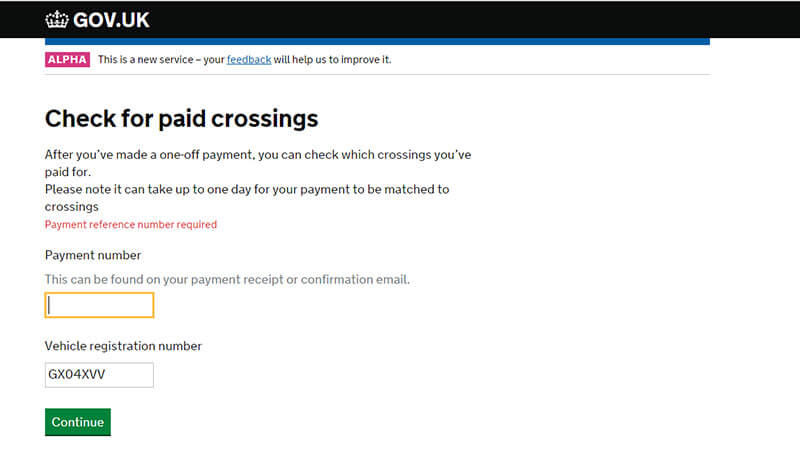
- Double-check your payment went through: Occasionally, technology glitches happen, payments might not register correctly even if you paid on time, leading to an unjust fine. Luckily, there’s a way to verify your payment. Whenever you make a one-off payment (online or by phone), make a note of the payment reference number you receive. Then, you can use the official tool to check for paid crossings on the Dart Charge system.
- Screenshot of the official “Check for paid crossings” tool on the gov.uk Dart Charge site. This online service (marked as an “alpha” test by GOV.UK) lets you enter your payment reference and vehicle registration to confirm which crossings have been paid for. It’s a handy way to ensure your payment was applied correctly to your vehicle and date. If the tool shows your crossing wasn’t paid despite you having a receipt, you should contact Dart Charge support immediately with your proof of payment to sort it out before any fine is issued.
- Take advantage of first-time leniency: If despite best efforts you do get a penalty notice and it’s the first time ever, look for any mention of a 14-day grace period in the letter. As noted, first-time offenders are often given the chance to just pay the original toll (e.g. £2.50) within 14 days instead of the fine. This is essentially a warning system. Pay it right away if you get this offer, it’s a get-out-of-jail-cheap card that you won’t get twice! It will also cover the crossing so you won’t owe anything more.
- If you get a PCN, pay promptly (if you’re not appealing): Should you have no grounds to contest a fine, your best bet is to pay it within 14 days to only pay half (£35 instead of £70). Yes, it hurts to pay a fine, but it’ll hurt a lot more if you delay and it becomes £105 after 28 days. Mark the deadlines on your calendar. However, do wait to receive the official PCN letter before paying, in case you were a first-timer as mentioned above, because if you were, the letter will invite you to pay just the £2.50 toll within 14 days instead of £35. You don’t want to accidentally pay £35 when you didn’t have to. So read the notice carefully, then pay the lowest amount you’re eligible for, as quickly as you can.
- Language help for foreign visitors: If English isn’t your or your friends/family’s first language, be aware there’s a multi-lingual Dart Charge information leaflet available. It covers instructions in French, Spanish, German, Polish, and many other languages on how to pay and avoid fines. You can find this leaflet on the AA’s website or via the Dart Charge site. It might be useful to send to any overseas relatives driving in through Dartford so they don’t miss the payment.
By following these tips, planning ahead, using the available accounts, and staying aware, you can greatly reduce the risk of getting caught out by a Dart Charge penalty. Next, let’s look at what you can do if you believe you were fined unfairly and want to challenge a penalty.
How to Appeal a Dart Charge Penalty (PCN)
If you receive a Penalty Charge Notice from Dart Charge and you think it’s wrong or unfair, you have the right to appeal. Perhaps you did pay on time but the system didn’t register it, or maybe you never received the original notice in the post. The good news is a large majority of Dart Charge appeals are successful, over 80% of appeals were upheld in the first six months of the system’s operation!
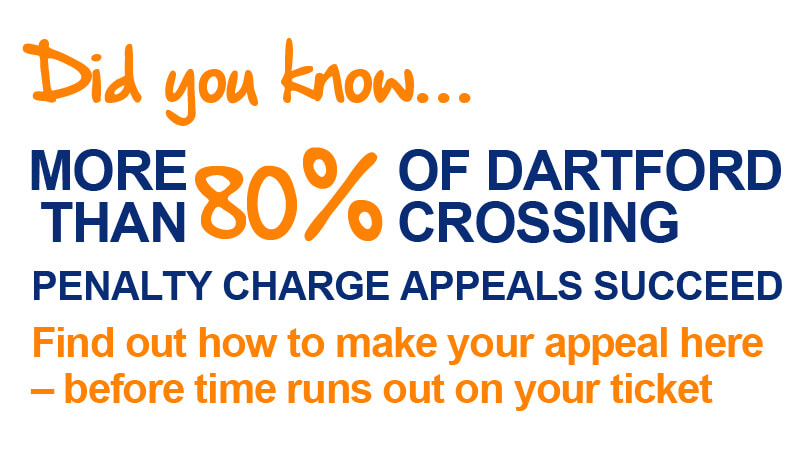
Over 80% of Dartford Crossing penalty charge appeals succeed, according to Highways England data. This means if you have a legitimate case, there’s a strong chance you can get the fine cancelled.
Here’s how the appeals process works:
- Act within 28 days: From the date the PCN was served (the letter’s date), you typically have 28 days to lodge an appeal (often called a “representation”) to the issuing authority (Highways England / Dart Charge). Instructions on how to appeal are usually provided on the notice. You may need to submit your appeal online or in writing. Do not ignore the PCN, if 28 days pass without payment or appeal, the fine escalates.
- What to include in your appeal: You’ll need to provide your penalty charge notice number and vehicle registration. Clearly explain why you believe the charge is wrong. Provide any evidence you have. For example, if you paid online and got fined, include your payment receipt or reference number. If you were not the owner or were out of the country, explain and provide proof. Stick to factual, valid reasons.
- Valid reasons for appeal: Officially, there are specific grounds on which an appeal may be accepted. Some common valid reasons include:
- You were not the registered keeper of the vehicle at the time (e.g., you sold the car before the crossing date, or it wasn’t your car).
- The vehicle was stolen or taken without consent when the crossing happened.
- The vehicle was a hire/rental, and the hire company has passed liability to the hirer (with proper documentation).
- You paid the Dart Charge on time as required, but the system failed to record it (you’ll need proof of payment).
- No charge was payable, for instance, your vehicle is exempt (e.g., exempt disabled class) or it was during free hours but somehow misrecorded.
- The penalty amount is wrong or more than it should be (e.g., you paid the toll but were still charged the full fine instead of the reduced amount during discount period).
- There was a procedural error by the charging authority (for example, the PCN was sent late or to the wrong address, or required information was missing).
- Other compelling reasons, this is a bit of a catch-all for exceptional cases. For instance, if you have mitigating circumstances (hospital emergency, etc.), you can explain them. While not guaranteed, sometimes authorities show leniency if there’s a good reason.
- The initial appeal (representation): Submit your appeal to Dart Charge following the notice instructions. They will review it and respond. If they accept your representation, the PCN will be cancelled and you won’t have to pay. If they reject it, they’ll send a Notice of Rejection.
- Appeal to the independent adjudicator: If your first appeal is rejected and you still believe you’re in the right, you can escalate to an independent tribunal, in this case, the Traffic Penalty Tribunal (for England). The rejection letter will tell you how to appeal to the tribunal. You typically have 28 days from the rejection to file this second-stage appeal. The Traffic Penalty Tribunal is an impartial body that will review the case. You can usually do this online or by mail. They will consider your evidence and the authority’s evidence and make a binding decision. This service is free for the appellant. Commonly, if you have clear proof or a strong case, the tribunal may side with you, as noted, a lot of Dart Charge cases have been won by drivers.
- While appealing: If you’ve filed an appeal, the enforcement on the penalty is typically put on hold until a decision is made. You don’t have to pay while it’s being adjudicated. Do note, however, if the final outcome is not in your favour, you’ll have to pay the full amount (you usually lose the right to the 50% discount once it goes to the tribunal, except in cases where the authority re-offers it). But if you’re appealing, you likely believe you shouldn’t have to pay at all.
- Where to get more info or start an appeal: You can start your appeal by following the instructions on your PCN or by visiting the Traffic Penalty Tribunal’s website for Dart Charge appeals. They have an online portal to guide you through submitting a case.
Appealing can take some effort, but given the high success rate, it’s absolutely worth doing if you have a valid reason. Many drivers have been issued fines due to technical errors (like misread number plates or payment website issues), and these are the types of cases that often get overturned on appeal. Be clear and concise in your correspondence, and stick to the facts.
Making a Complaint (Non-Appeal Issues)
What if your issue isn’t about a fine, but rather something like poor signage, website problems, or other feedback about the Dart Charge system? In that case, you might want to lodge a complaint rather than an appeal. Complaints won’t cancel a PCN (appeal is the route for that), but they can raise awareness of issues.
For general complaints about Dartford Crossing tolls, such as confusing signs, customer service troubles, etc., you can use the Dart Charge complaints form (available on the official website). This will send your feedback to Highways England’s Dart Charge team. They do review complaints and, over time, if enough people highlight the same issue, it could lead to improvements (for example, better signage or clearer instructions).
Keep complaints separate from appeals: if you have a specific PCN, handle that through the appeals process first. Use the complaint route for broader issues or after your fine issue is resolved, to voice your experience.
Additional Notes and Warnings for Dartford Crossing Users
Using the Dartford Crossing is straightforward once you know the system, but here are a few extra pieces of advice and warnings gleaned from other drivers’ experiences:
Car rental customers often face extra “admin” fees from hire companies if they rely on the rental company to pay the Dart Charge. If you’re driving a hire car or rental vehicle, be aware of how the Dart Charge is handled. Many car rental companies will automatically charge your credit card for the Dartford Crossing toll if you incur one, plus an additional administration fee. We’ve heard reports of admin fees of £35 or more added on top of the £2.50 toll! This can happen if the rental firm pays the toll on your behalf or if they get the penalty notice because you forgot to pay, they’ll pay it and then bill you with a markup.
How to avoid nasty surprises in hire cars: Ideally, pay the Dart Charge yourself using one of the methods above, rather than waiting for the rental company to do it. If you know your rental car’s registration (sometimes provided in advance, or you can pay after you pick up the car but before crossing), you can treat it like your own and pay online or by phone. If that’s not possible, at least ask the rental company at the desk about their Dart Charge policy. Request them to clarify any admin fee and see if you can pre-authorize paying it yourself. Some companies might allow or even require you to pay it; others will do it and bill you. Choose rental companies known for transparent fees, larger ones like Hertz, Enterprise or Sixt often have clearer policies and responsive customer service if issues arise. And always check your credit card statements after, to ensure you haven’t been overcharged for tolls. A bit of diligence can save you from a £37.50 bill for a £2.50 crossing.
The Dart Charge uses a red “C” symbol similar to London’s Congestion Charge, which can mislead drivers. Don’t confuse the Dart Charge with the London Congestion Charge! This is a quirky but costly mistake some drivers have made. The signage approaching the Dartford Crossing says things like “Dart Charge, find us online, pay by midnight tomorrow” and uses a big red C (the symbol for congestion charge) on a blue road sign. There’s no web address listed on these signs, just an instruction to search online. Many well-meaning drivers have done a quick Google search and ended up on the London Congestion Charge payment page (which also has a red C)! They pay £15 or so, thinking they’ve settled the Dartford toll, when in fact they’ve paid the wrong charge to Transport for London. Later, they get a Dart Charge fine because, of course, their Dartford toll wasn’t actually paid. This confusion has been reported frequently.
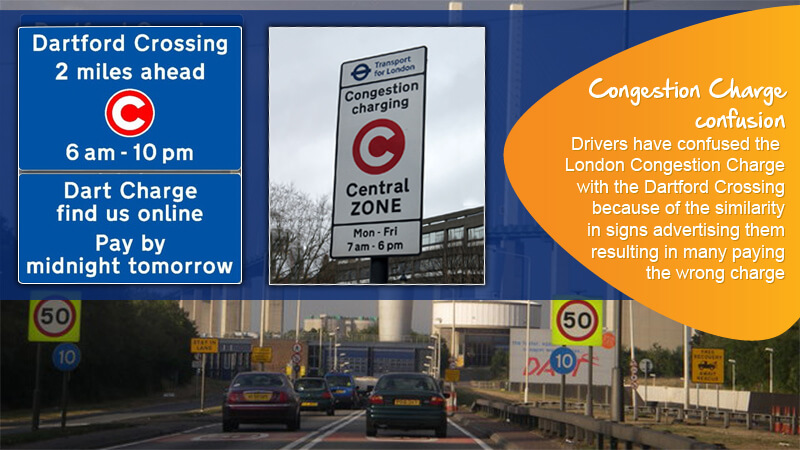
The result of this mix-up can be serious: you pay five times more than needed (the London congestion toll) and still get hit with a £70 Dartford fine, ouch. To avoid this: always ensure you’re paying the right charge to the right place. The official Dart Charge site is a gov.uk website (or use the phone/Payzone methods). The London Congestion Charge is completely separate and only applies to central London. If you see a red C for Dartford, don’t automatically assume any “C” payment will do, double-check you’re on the Dart Charge page. (Some unofficial third-party sites also use misleading names or ads, we cover that next.) Bottom line: Dartford Crossing toll = Dart Charge (gov.uk), not the London congestion zone.
Check Your Bank Statement for Duplicate Charges
It’s wise to verify your Dart Charge payments after the fact. There have been past instances where drivers paying online discovered they were charged twice for a single crossing. This was reported a few years back, and the AA (Automobile Association) even commented on it, noting that some glitches in the new system had caused duplicate transactions. Highways England acknowledged that with the volume of transactions, occasional errors could happen and apologised when they did.
While the system has likely improved, it’s still a good habit to glance at your card or bank statement after paying the toll. Make sure only the correct amount was taken. If you spot a double charge, contact Dart Charge customer service at 0300 300 0120 to request a refund of the extra payment. They have processes to verify and refund such errors. Don’t pay for the crossing more than you have to!
WARNING: Avoid Unofficial Payment Websites
When paying the Dart Charge online, use the official website only. Unfortunately, some unofficial websites have sprung up that offer to process the Dartford Crossing payment for you, at a hefty markup. These sites often look serviceable and may even appear in search engine ads or results above the official site. They’ll take your details, pay the Dart Charge on your behalf, but charge an extra “service fee” (sometimes 50-60% more expensive than the normal toll).
These third-party sites are not illegal per se, but they are not authorised and can be misleading. They usually do not make it clear that they are not the official Dart Charge portal. For example, one known site (with a name like DartfordCrossingCharges.co.uk) was charging an extra admin fee without prominently disclosing it. They also often have flaws: some don’t even ask for your vehicle type or correct info, which means they might not properly confirm your payment against your vehicle, potentially causing you to overpay or not pay correctly. By contrast, the official gov.uk Dart Charge site will confirm your vehicle make/model when you pay, giving you confidence that the payment is correctly assigned.
How to identify the official site: The genuine payment site is on the Government’s domain (gov.uk). A correct URL is something like www.gov.uk/pay-dartford-crossing-charge. If you’re on any site that isn’t the official gov.uk one (or a known service like the authorized telephone line or Payzone), be cautious. Some unofficial sites try to mimic the look of the official page but will have a different URL and often an extra fee buried in the terms.
Using an unofficial site can result in: spending more money than necessary (why pay £4 for a £2.50 toll?), getting no official receipt, and having no real recourse if something goes wrong (since the transaction wasn’t directly with Dart Charge). In the worst case, if that site fails to pay the Dart Charge on time, you would still be liable for the fine because the responsibility ultimately lies with the driver.
Bottom line: Only trust official channels for payment. The Dart Charge is straightforward to pay via gov.uk, phone, etc., so there’s no need to involve a middleman. If you’re ever unsure, you can find the official link through the main Gov.uk site or even the UK government directory. Paying through the right channel ensures you get an official receipt and means of appeal if anything goes awry.
(For awareness: Since the cashless system started, nearly 3.5 million fines were issued in the first few years, not just due to intentional avoidance, but often because drivers were confused about how to pay. Poor signage like “search Dart Charge online” without a URL contributed to this. We and other organisations have been urging better information to prevent drivers from accidentally falling into these traps. Always make sure you’re informed, share this knowledge with friends who might use the crossing!)
Dartford Crossing and Cyclists: All You Need to Know
What if you’re a cyclist wanting to cross the Thames at Dartford? Bicycles are not allowed to ride through the Dartford tunnels or over the QEII bridge (for obvious safety reasons on a fast, limited-access motorway). However, there is a way for cyclists to cross, and it’s free of charge.
Shuttle service for cyclists: Highways England provides a special pickup service to transport cyclists (and their bikes) through the crossing. You don’t need to book it in advance; it operates on demand during set hours. Here’s how it works:
- Go to the pickup point on your side: There are designated meeting points called Kent Point (on the south side in Kent) and Essex Point (on the north side in Essex). These are basically at the ends of the crossing.
- Kent Point address: Crossing Offices Roundabout, South Orbital Road, Dartford, Kent, DA1 5PR.
- Essex Point address: 859 London Road, Grays, Essex, RM20 3AT. (There’s also access to the Essex Point via the cycle path next to the junction 31 entry slip road of the M25 clockwise.)
Just cycle to the point closest to you. There will be signs directing cyclists to a yellow telephone at these locations.
- Use the free phone at the point: You’ll find a yellow phone box/hatch that connects directly to the Dart Charge control. Lift the phone and it will ring the staff. Simply request the cycle crossing transport service. You don’t need to dial a number, it’s a direct line.
- Wait in the designated area: There will be a signed waiting area for cyclists. After you’ve called, wait there with your bike.
- Get picked up: A vehicle (usually a small van or truck) specially operated for this purpose will arrive to pick you and your bicycle up. They typically carry a bike rack or have space for a few bikes. They will then drive you through the tunnel/over the bridge to the other side.
- Continue your journey: Once dropped off at the corresponding point on the other side, you can resume cycling on your way!
Service hours: Cyclists can use this service 7 days a week, but it’s not 24-hour continuous. The service operates in blocks of time throughout the day and night:
- Open from 3:00 am to 9:00 am
- Closed from 9:00 am to 10:30 am (short break)
- Open from 10:30 am to 2:00 pm
- Closed from 2:00 pm to 3:00 pm (break)
- Open from 3:00 pm to 9:00 pm
- Closed from 9:00 pm to 10:30 pm (break)
- Open from 10:30 pm to 2:00 am
- Closed from 2:00 am to 3:00 am (and then it repeats for 3:00 am opening)
So essentially, it’s available most of the day, with four short off-duty periods in each 24-hour cycle. If you arrive right at a closed period, you might have to wait until the next start time (for example, a cyclist arriving at 9:05 am will wait until 10:30 am for service to resume). Most cyclists won’t encounter the wee hours closures, but do note the midday break around lunch and the evening break.
How long will you wait? Typically, after you call, the vehicle will come within about 15 minutes. It could be a bit longer during very busy times or if they’re temporarily shorthanded, but generally the wait isn’t too bad. It’s a free service, so sometimes there might be multiple cyclists waiting; they might group a few together if possible.
Capacity: If you’re cycling in a large group (more than 3 cyclists), it’s polite to give them a heads-up. The service can only take a few bikes at a time. For big groups or if you have an unusual bicycle (like a tandem, cargo bike, or one with a trailer that might not fit on a standard rack), it’s recommended to contact Connect Plus (the operator) in advance to let them know your plans. They might be able to accommodate better or advise on timing.
Cost: The service is completely free. There’s no toll for bikes and no charge for the pickup. Enjoy the unique “ferry” across the Thames at no cost!
This shuttle is a great solution that ensures cyclists have a safe way across the river at Dartford. Just remember: you cannot cycle on the bridge or in the tunnels under your own power, always use this service.
Travel Tips: Save Money & Stress When Using the Dartford Crossing
Using the Dartford Crossing is often part of a longer journey, perhaps heading on holiday or a business trip. Here are a couple of extra tips to make your travel smoother and maybe even save a bit of cash:
- Plan for traffic: The Dartford Crossing area can be a traffic hotspot, especially during rush hours. If you’re catching a flight or have a schedule, allow extra time to get through this section of the M25. The last thing you want is to miss check-in because of an unexpected jam at Dartford. If you can travel during off-peak times (late evening or early morning), that’s ideal, not only will traffic be lighter, but as mentioned, you might avoid the toll if it’s overnight.
- Consider an airport hotel + parking package:
- If you’re heading off on a big trip via one of the London airports and plan to drive via Dartford, one trick to reduce stress is booking an airport hotel with parking for the night before your flight. For example, if you have a morning flight from Gatwick or Stansted and would normally drive early through the Dartford Crossing, you could instead drive the night before, stay at a nearby hotel, and leave your car in secure parking while you’re away (companies like APH offer combined hotel+parking deals). This way, you can cross late at night (potentially toll-free), get a good night’s rest, and not worry about traffic on flight day. It also gives you time to calmly pay the Dart Charge (since you won’t be rushing through airport routines and possibly forgetting). You’ll likely save yourself a lot of pre-flight anxiety, and often the package deals are cheaper than parking alone plus you get a hotel stay out of it. It’s a win-win for a comfortable start to your trip.
- Share this guide to save others from fines: If you know friends or family who occasionally use the Dartford Crossing, consider sharing these tips with them. So many infrequent users get caught out simply because they aren’t aware of the cashless system or they forget. A quick heads-up could save them a £70+ fine.
Safe travels and enjoy the journey! With the information in this guide, you should be well prepared to use the Dartford Crossing like a pro, paying the Dart Charge on time, taking advantage of discounts, and steering clear of those pesky fines. Have a great trip, and don’t forget to set that reminder for your Dart Charge if you need to!
Disclaimer:
All information in this guide is correct at the time of publishing and is based on publicly available data from official sources, including GOV.UK and Dart Charge. Charges, payment methods, exemptions, and policies may change over time. We recommend checking the official Dart Charge website for the latest updates before your journey.