

Whether you need to change your address with the DVLA, check your penalty points, renew your photo, or drive abroad, this guide covers everything in one place. Below you will find plain-English answers on how to renew your UK driving licence, update your details, exchange a paper or foreign licence, and use the new GOV.UK Wallet, plus how to avoid the common mistakes that lead to fines or scam fees. All fees and rules are correct as of 2026.
Quick answers
- Renewing your photocard costs £14 online, £17 by post, or £21.50 at a Post Office. It is free if you are 70 or over.
- Photocards must be renewed every 10 years. Check the expiry date at section 4b on the front of your card.
- Changing your address or name is free. Driving with the wrong details risks a fine of up to £1,000.
- Replacing a lost, stolen or damaged licence costs £20.
- Hiring a car? Generate a DVLA check code before you travel. It lasts 21 days and can be used once.
- Always use GOV.UK. The DVLA never texts or emails asking for bank details.
On this page
- Changing your name or address
- How to renew your driving licence
- Updating your licence photo
- Adding or removing entitlements
- Exchanging a paper or foreign licence
- The digital driving licence and GOV.UK Wallet
- Driving abroad and International Driving Permits
- Sharing your DVLA check code for car hire
- Common mistakes to avoid
- Driving licence FAQs

Avoid scams: Always use official DVLA services on GOV.UK for any licence change. Third-party sites can charge for tasks that are free or cheap, and the DVLA will never text or email asking for your bank details. If a message claims otherwise, treat it as a scam and forward it to report@phishing.gov.uk.
Changing the Name or Address on Your Driving Licence
If you move house or change your name after marriage, divorce or a deed poll, you must update your driving licence. It is free to change your name or address, and failing to keep your details current can lead to a fine of up to £1,000. The process is straightforward and is handled entirely through the DVLA.
- Change of address: Update it online through the DVLA service on GOV.UK, or by post using the D1 application form. Online is quickest. You will need your driving licence number, National Insurance number and new address. By post, send the completed D1 form (from a Post Office, or ordered from the DVLA) with your photocard. There is no fee either way, and your updated licence usually arrives within one to three weeks. Driving with an out-of-date address is an offence and can bring a fine of up to £1,000, so update it as soon as you move.
- Change of name: You currently cannot change your name online, so you apply by post. Complete form D1 and send it with your photocard and the original documents proving the change, such as a marriage certificate or deed poll. This is free of charge. The DVLA sends a new photocard with your updated name. You are required by law to notify the DVLA of a name change, just as with an address change.
Here is a summary of the fees for changing your licence details.
| What you are changing | Online fee | By post fee |
| Address | Free | Free |
| Name | Not available online | Free |
| Photo (renewing your photo) | £14 | £17 |
| Photo and name together | Not available online | £17 |
| Photo and address together | £14 | £17 |
Because updating your address or name costs nothing, there is no reason to delay. Keeping your details current keeps you legal and makes sure you receive DVLA reminders, including your photocard renewal notice.
How to Renew Your UK Driving Licence
Photocard licences are valid for 10 years. Check the date shown at section 4b on the front of your card, next to your photo, which is the expiry date. After that you must renew the licence and update your photo. The DVLA usually sends a reminder before your photo is due, but it is your responsibility to renew on time even if no reminder arrives. Driving on an expired photocard can bring a fine of up to £1,000, and it may also affect your insurance.

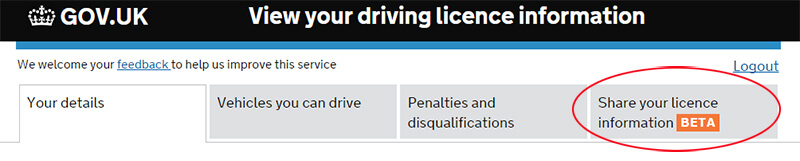
You can renew online, by post, or in person at selected Post Office branches. The fee depends on the method.
- Online (£14): Usually the fastest and cheapest route, at gov.uk/renew-driving-licence. You will need your photocard, a valid UK passport for the photo, and a card to pay. If you have a passport, the DVLA can reuse that photo, so there is no need for new pictures. Most online applications are processed within about a week. You must send your old photocard back to the DVLA once the new one arrives.
- By post (£17): Get a D1 pack from a Post Office or the DVLA. Send the completed form with a recent printed passport-style photo (do not sign the back) and a cheque or postal order for £17 payable to DVLA. This can take up to three weeks.
- At a Post Office (£21.50): Selected branches help you apply digitally and take your photo for you. This is useful if you prefer in-person help. The branch submits your application electronically and your new licence arrives by post. Note that you cannot renew at a Post Office if your name has changed.
Here are the renewal fees at a glance.
| Reason for renewal | Online | By post | Post Office |
| Standard 10-year photocard renewal | £14 | £17 | £21.50 |
| You are 70 or over (or will be within 90 days) | Free | Free | Not applicable |
| Short-term medical licence renewal | Free if eligible | Free | Not applicable |
| Lost, stolen or damaged replacement | £20 | £20 | Not applicable |
A standard renewal costs £14 online or £17 by post, while renewals for drivers aged 70 and over are free. Short-term medical licences (issued for one, two or three years) are also free to renew. If you simply need a replacement because your licence was lost or stolen, that is a separate £20 application.
Renewing your licence at 70 or over
Your licence does not expire automatically at 70, but you must renew it and then renew every three years to keep driving. Renewal at 70 and over is free. You can apply up to 90 days before your 70th birthday, online or by post. The DVLA usually sends a D46P reminder before your birthday, but you do not have to wait for it. Use the free “Renew at 70” service on GOV.UK. When you renew, you self-declare that you meet the medical standards for driving. Avoid any website that tries to charge for an over-70 renewal, as it is free through GOV.UK and any premium site is likely a scam.
Can you drive while waiting for your new licence?
In many cases, yes. If the DVLA has received your correct renewal application, your licence was not revoked or refused for medical reasons, and your doctor has not advised against driving, you can usually keep driving while you wait. This is known as Section 88 entitlement under the Road Traffic Act. It is not printed on any document, it applies automatically when the conditions are met. If you declared a medical condition as part of your renewal, the position is less clear-cut, so confirm with the DVLA before continuing to drive.
How to Update Your Driving Licence Photo
Updating your photo is done by renewing your licence. You cannot simply submit a new photo and keep the old expiry date. Each photo update issues a new licence with a fresh 10-year validity (unless you hold a short-term or age-limited licence). There are three ways to do it.
- Online (£14, recommended): Use the DVLA online renewal service and pay by debit or credit card. If you have a valid UK passport, you can let the DVLA reuse that photo, so no separate picture is needed. If you prefer a different image, you can upload a suitable digital photo. Your new licence usually arrives within about a week, and you must cut up and dispose of the old one.
- By post (£17): Complete form D1 and enclose a new passport-style photograph (45 by 35mm) printed on photo paper, plus a cheque or postal order. This method typically takes up to three weeks.
- At a Post Office (£21.50): Selected branches complete the form digitally and take your photo on the spot, then submit it electronically. Handy if you want to avoid uploading a photo yourself.
When your new photocard arrives, check that your name, address and photo are correct. The card shows a new issue date at 4a and an expiry date at 4b, 10 years from issue. Destroy your old photocard, as it is invalid once the new one is issued. At £14 online, updating your photo costs far less than the fine for letting it lapse.
Adding or Removing Driving Entitlements
Your licence lists the vehicle categories you are allowed to drive. For most people, category B (car) is enough. If you want to drive a bus, coach or lorry, or ride a motorcycle, you add those entitlements by passing the relevant tests. Some drivers also choose to give up an entitlement voluntarily, for example an HGV category they no longer need.
- Adding a higher category: Pass the required theory and practical tests first. The DVLA then issues an updated licence at no charge for the category itself. Your costs are for training and testing, not the licence update. This is done by post through the test process, not online.
- Renewing a vocational entitlement: Bus and lorry (Group 2) entitlements usually renew every five years, and annually after 65, with a medical check. The DVLA does not charge to reissue the licence, though your medical exam is paid to your doctor.
- Removing an entitlement: You can surrender a category by notifying the DVLA. This is free, and the DVLA issues a new licence without that category.
In short, adding, renewing and removing entitlements are all free for the licence itself. If you update your photo at the same time as an entitlement change, the standard £17 photo fee applies, so it can make sense to line up an entitlement change with your 10-year photo renewal. Always check the back of your new photocard to confirm every category you expect is listed, since driving without the correct entitlement can bring fines, points or leave you uninsured.
Exchanging a Paper or Foreign Driving Licence
If you still hold an old paper licence, or you have moved to the UK with a foreign licence, you may need or want to exchange it for a UK photocard. The rules differ depending on which you hold.
Exchanging a paper licence for a photocard
Old green or pink paper licences remain valid in the UK until they expire, usually at 70, as long as your details are up to date. You are not required to switch to a photocard if nothing has changed. However, many people exchange for convenience, since a photocard is more widely accepted as photo ID. If you need to change your address or name on a paper licence, the DVLA will issue a photocard because paper licences are no longer produced.
- It is free to exchange a paper licence for a photocard if you are changing your address or name at the same time. Treat it as a change of details and there is no charge.
- If you want to swap a valid paper licence with no change to your details, there is a £20 fee, as this counts as a duplicate photocard.
- Use form D1, tick the box for exchanging a paper licence, and send in your paper licence with a passport-quality photo and any name-change documents. The DVLA returns a new photocard.
Once you have a photocard you can use the DVLA online services, such as View Driving Licence, that paper holders cannot easily access. Remember that a photocard needs renewing every 10 years, whereas the old paper licence had no photo expiry, so note the renewal date. A full UK paper licence is still accepted for driving in many countries, though some car hire firms are unfamiliar with the format and may ask for extra proof, so it is often easier to switch to a photocard before you travel.
Exchanging an EU or foreign licence for a UK licence
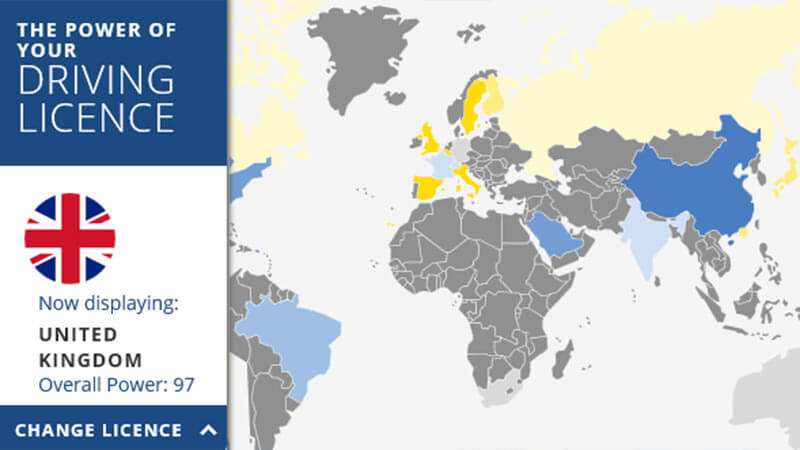
If you have moved to the UK with a licence from another country, whether you can exchange it depends on where it was issued. All exchanges are made by post using form D1 sent to the DVLA in Swansea, as there is currently no online exchange service.
- EU and EEA licences: You can drive in Great Britain on an EU or EEA licence until you are 70, or for three years after becoming resident if you were 67 or over on arrival, provided it stays valid. Exchanging an EU or EEA licence for a UK one is free. If you obtained your EU licence by swapping a non-EU one, it is only valid here for 12 months, after which you must exchange it.
- Designated countries: The UK has exchange agreements with a set list of countries and territories, including Australia, Canada, New Zealand, Japan, South Korea, Singapore, Hong Kong, Switzerland, South Africa, the UAE and others (Moldova joined in 2025). You can drive for up to 12 months after becoming resident, then exchange without a test, within five years of becoming resident, for a £43 fee.
- Non-designated countries: If your licence is from a country not on the list, such as the USA, India, Pakistan, China or Nigeria, you cannot exchange it. You can drive for up to 12 months, then you must pass the UK theory and practical tests. Your existing experience still counts, so many drivers pass after only a few refresher lessons.
- Northern Ireland licences: These are fully exchangeable with Great Britain for free. Include both the photocard and the paper counterpart when you exchange.
| Licence being exchanged | Fee | How |
| Paper UK licence to photocard (with detail change) | Free | Online or post |
| Paper UK licence to photocard (no changes) | £20 | Online or post |
| Northern Ireland licence to GB licence | Free | Post only |
| EU, EEA or designated foreign licence (held a GB licence before) | Free | Post only |
| EU or EEA licence (no previous GB licence) | Free | Post only |
| Designated foreign licence (no previous GB licence) | £43 | Post only |
In every case, make sure you meet the UK medical and legal standards, especially for bus or lorry categories. Exchanges usually take around three weeks. Plan ahead, because in most non-EU cases you cannot drive while the exchange is being processed if your foreign licence is no longer valid here.

The Digital Driving Licence and GOV.UK Wallet
The biggest change on the horizon is the digital driving licence, a phone-based version of your photocard held in the GOV.UK Wallet inside the GOV.UK One Login app. It will show your photo, licence number, expiry date and driving entitlements, and will let you prove your age or identity without carrying the plastic card.
Where things stand in 2026: The digital driving licence is not yet available to the public. It is in testing ahead of a wider rollout across England, Scotland and Wales during 2026. For now, the only credential live in the GOV.UK Wallet is the HM Armed Forces Veteran Card. Physical photocards remain fully valid and will continue to be issued and accepted, expected until at least 2030. The digital version will be optional, not compulsory.
When it launches, the digital licence is designed to be more secure than plastic, using your phone’s biometric lock and encryption, similar to mobile banking. A useful feature is selective disclosure, which lets you prove a single fact such as being over 18 without sharing your full address or date of birth. Any change you make with the DVLA should update automatically in the app. Until it is widely available, stick with your physical photocard and the official DVLA services on GOV.UK, and be wary of any unofficial app claiming to offer a digital licence today.
Driving Abroad: Do You Need an International Driving Permit?
An International Driving Permit (IDP) is a translation of your licence recognised worldwide under international conventions. Whether you need one depends on where you are going.
- Within the EU and EEA: A UK photocard is accepted for tourism and short stays without an IDP, and this remains the case after Brexit. If you only hold an older paper licence, some EU countries and hire firms may ask for a 1968 IDP, so it is worth getting one to be safe.
- Outside the EU: Many countries require an IDP alongside your UK licence. Japan, for example, requires one, and hire companies in the USA, Australia and New Zealand often prefer it. Always check the destination’s rules on GOV.UK before you travel.
- Crown dependency licences: If your licence is from Gibraltar, Jersey, Guernsey or the Isle of Man, an IDP may be needed in some EU countries where a mainland GB photocard is not.
Since April 2024, IDPs are no longer issued at Post Office counters. You now get them in person from selected shops with PayPoint. You must be 18 or over, a UK resident, and hold a full UK licence. Each IDP costs £5.50 and you bring a passport-size photo and your licence. There are three types (1926, 1949 and 1968 conventions), and which you need depends on the country. A 1949 IDP lasts one year and a 1968 IDP lasts three years, or until your UK licence expires if sooner.
An IDP is only valid alongside your original licence, so you must carry both, and it is never a substitute for a valid UK licence. If your UK licence is expired or suspended, the IDP is invalid too. Given the low cost, it is often worth getting one for peace of mind for any trip beyond Europe.
Hiring a Car Abroad: Sharing Your DVLA Check Code
The paper counterpart that used to show penalty points was abolished in June 2015. Hire companies still need to check your record, and that is where the DVLA check code comes in. If you plan to hire a car abroad, or with some UK firms, you will usually need to generate a share code before you go.
The check code is a single-use alphanumeric code from the DVLA that gives a hire company or employer temporary access to view your driving entitlements and any endorsements. Here is how to get one.
- Go to the DVLA “View or share your driving licence” service on GOV.UK before your trip. Sign in with your driving licence number, National Insurance number and the postcode on your licence.
- Select the option to share your licence information. The DVLA generates a case-sensitive check code.
- Note the code and the last eight digits of your licence number, since the hire company usually needs both. The code is valid for 21 days and can be used only once.
- Give the code and matching licence digits to the rental desk at pickup so they can check your record online.
If you forget, you can call the DVLA to get a code by phone, within UK office hours, or print a PDF of your driving record from the same service, though not every hire company accepts the printout. The safest option is a valid share code generated a few days before pickup, so it stays within the 21-day window. There is no limit on how many codes you can create, but each is single-use.
Do not get caught out: Many hire companies will refuse to release a car if they cannot verify your record. Put “get DVLA licence share code” on your pre-travel checklist. It is free and takes two minutes online. If you have points, tell the company in advance, as some restrict rentals for serious or multiple endorsements.
Common Driving Licence Mistakes to Avoid
- Not updating your details: Always update your address and name promptly. It is free, and driving with the wrong details risks a fine of up to £1,000. Use the official DVLA service or form D1, and never pay a third party for this free task.
- Letting your licence expire: Many drivers forget the 10-year photocard renewal. Note the expiry at section 4b and set your own reminder a month or two ahead, as a missing reminder is not a valid excuse. Driving on an expired photocard can bring a fine of up to £1,000 and penalty points.
- Ignoring medical conditions: You must tell the DVLA about notifiable conditions that could affect safe driving, such as epilepsy, certain heart conditions or vision problems. Failing to disclose can lead to prosecution and can invalidate your insurance. Check the notifiable conditions list on GOV.UK or ask your doctor if unsure.
- Using unofficial websites: Some sites charge premium fees for tasks that are free or £14 on GOV.UK. Make sure the URL is on gov.uk. Never share photos of your licence on social media, and treat any text or email claiming to be from the DVLA about fines or refunds as a likely scam. Forward suspicious emails to report@phishing.gov.uk.
- Forgetting the hire car code: Generate your DVLA share code before travelling. It lasts 21 days, so a week or two ahead is ideal. Without it, you could be left without a car at the rental desk.
- Falling for fake digital licence apps: The official digital licence is not yet publicly available. Until it launches through the GOV.UK Wallet, any app offering a digital UK licence is unofficial. Keep your physical photocard.
Key Takeaways
Keeping your licence up to date keeps you legal, avoids fines, and saves stress when you need to prove your identity or hire a car. To recap the essentials.
- Renewals: Renew your photocard every 10 years, for £14 online. It is free and required every three years once you are 70.
- Updating details: Change your address or name for free, and do not delay, as outdated details risk a £1,000 fine.
- Driving abroad: Check if you need an IDP (usually not for the EU with a photocard), and get a DVLA check code within 21 days of pickup if you are hiring a car.
- Exchanging licences: Paper and foreign exchanges are often free, or £43 for a designated country. Switching to a photocard is worth it, especially if you travel.
- Going digital: A digital driving licence is coming to the GOV.UK Wallet during 2026, but physical cards remain valid and the digital version is optional.
- Avoiding scams: Use GOV.UK for everything, and be sceptical of any unsolicited message claiming to be from the DVLA.
Always carry your licence when driving. Abroad it is often legally required, and in the UK you may be asked to produce it. Keep it current, keep it safe, and enjoy the drive.
Driving Licence FAQs
Renewing online costs £14, by post £17, and at a Post Office £21.50 (which includes the photo service). Drivers aged 70 and over renew for free, as do short-term medical licence holders.
Photocards must be renewed every 10 years to keep the photo up to date. Once you turn 70 you renew every three years, which is free. Check your expiry date at section 4b on the front of the card.
Driving with an expired photocard or out-of-date photo is an offence that can bring a fine of up to £1,000 and penalty points, and it may affect your insurance. There is no separate late fee, so just renew online for £14, by post for £17, or at a Post Office for £21.50.
Yes, both are free. You can change your address online or by post, but a name change must be done by post with documents proving the change. Update your details promptly, as driving with the wrong details risks a fine of up to £1,000.
Usually yes. If the DVLA has your correct application, your licence was not revoked for medical reasons, and your doctor has not advised against driving, you can drive while you wait under Section 88. If you declared a medical condition, check with the DVLA first.
Yes, green or pink paper licences remain valid in the UK until you turn 70, as long as the details are correct. If you update your details, the DVLA replaces it with a photocard. Some hire firms prefer a photocard, so it is often easier to exchange before travelling.
Exchanging an EU or EEA licence is free. Exchanging a licence from a designated country such as Australia, Canada or Japan costs £43 and must be done by post using form D1, within five years of becoming resident. Northern Ireland licences are exchanged for free.
For most European countries a UK photocard is accepted without an IDP. Some non-EU destinations such as Japan and parts of the USA require one, and paper licence holders may be asked for one in the EU. IDPs cost £5.50 and are now issued from PayPoint shops, not Post Office counters.
Generate a DVLA check code on GOV.UK by entering your licence number, National Insurance number and postcode. The code is valid for 21 days and can be used once. Give it, plus the last eight digits of your licence number, to the hire desk. Without it a company may refuse the car.
Not yet for the public. As of 2026 the digital driving licence is in testing ahead of a wider rollout during the year through the GOV.UK Wallet in the GOV.UK One Login app. Physical photocards remain valid, expected until at least 2030, and the digital version will be optional.
Replacing a lost, stolen, damaged or destroyed photocard costs £20, online or by post. If your licence was stolen, report it to the police first. If you later find the old one, you are legally required to return it to the DVLA.