

Britain’s airports are more than transport hubs – they’re also home to some of the country’s most important aviation landmarks. From the world’s first integrated airport terminals to Art Deco control towers that helped shape modern air travel, these listed buildings preserve nearly a century of aviation history. APH analysed Historic England records to identify ten protected heritage assets located at or near UK airports.
APH reviewed Historic England’s National Heritage List for England to identify listed buildings located within airport boundaries or directly associated with operational and former UK airports. Listing grades, construction dates and current uses were taken from Historic England records current at the time of publication.
UK airports with listed buildings at a glance
| Airport | Listed building | Grade | Date built | Current use |
|---|---|---|---|---|
| Croydon Airport | Airport House | Grade II* | 1926-1928 | Offices |
| Croydon Airport | Former Gate Lodge | Grade II | Not stated | Not stated |
| Gatwick Airport | The Beehive | Grade II* | 1934-1936 | Offices |
| Liverpool John Lennon Airport | Former control tower and terminal | Grade II* | 1937-1940 | Hotel |
| Liverpool John Lennon Airport | Four entrance gate piers | Grade II | c.1940 | Historic entrance |
| Liverpool John Lennon Airport | Liverpool Airport Hangar No. 2 | Grade II* | 1941 | Commercial premises |
| APH Manchester, Northenden | Wythenshawe Bus Depot | Grade II* | 1939-1942 | Storage and ancillary building |
| Manchester Barton Aerodrome | Original airport office building | Grade II | c.1930 | Not stated |
| Manchester Barton Aerodrome | Main hangar and workshops | Grade II | 1930 | Aircraft hangar and engineering facilities |
| Manchester Barton Aerodrome | Control tower | Grade II | c.1937 | Operational control tower |
1. Airport House, Croydon Airport
Listing: Grade II*
Built: 1926-1928
Current use: Offices
Airport House was the former terminal of Britain’s first international airport. It is also recognised as one of the world’s earliest integrated airport terminal and control tower buildings.
The building represents an important stage in the development of international passenger aviation and remains one of the most significant surviving structures from Croydon Airport.
View the official Historic England listing.
2. Former Gate Lodge, Croydon Airport
Listing: Grade II
Date built: Not stated by Historic England
Current use: Not stated by Historic England
The former lodge stands near Croydon Airport’s historic terminal complex. It survives as an important part of the original airport entrance and provides a visible link to the site’s pioneering aviation history.
View the official Historic England listing.
3. The Beehive, Gatwick Airport
Listing: Grade II*
Built: 1934-1936
Current use: Offices
The Beehive was Gatwick Airport’s former terminal and control tower. Its distinctive circular design made it important not only in British aviation history, but also in the development of airport design around the world.
Now used as office space, the building remains one of the UK’s most recognisable surviving early airport terminals.
View the official Historic England listing.
4. Former Liverpool Airport Control Tower and Terminal
Listing: Grade II*
Built: 1937-1940
Current use: Crowne Plaza Liverpool John Lennon Airport hotel
Designed by E. H. Bloomfield, the former Liverpool Airport terminal and control tower is a well-preserved example of a major 1930s airport building.
The Art Deco structure has since been converted into a hotel, allowing visitors to stay inside one of Britain’s most important surviving historic airport terminals.
View the official Historic England listing.
5. Four Gate Piers at Liverpool Speke Airport
Listing: Grade II
Built: Around 1940
Current use: Historic entrance gate piers
These four entrance gate piers were designed by E. H. Bloomfield for Liverpool Speke Airport. They survive as a reminder of the airport’s original entrance and its pre-war architectural identity.
View the official Historic England listing.
6. Liverpool Airport Hangar No. 2
Listing: Grade II*
Built: 1941
Current use: Commercial and business premises
Liverpool Airport Hangar No. 2 was originally built as an aircraft hangar. It was later adapted for use as an international terminal before being converted into commercial premises.
Its changing role demonstrates how major aviation buildings can be successfully adapted while retaining their historic character.
View the official Historic England listing.
7. Wythenshawe Bus Depot near Manchester Airport
Listing: Grade II*
Built: 1939-1942
Current use: Storage and ancillary building on the APH Manchester site
Located on the APH Manchester site in Northenden, Wythenshawe Bus Depot is notable for its pioneering concrete shell roof.
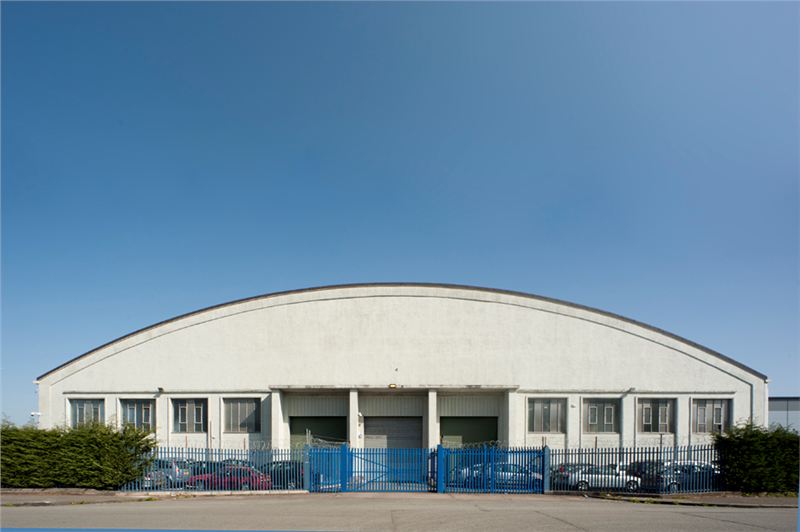
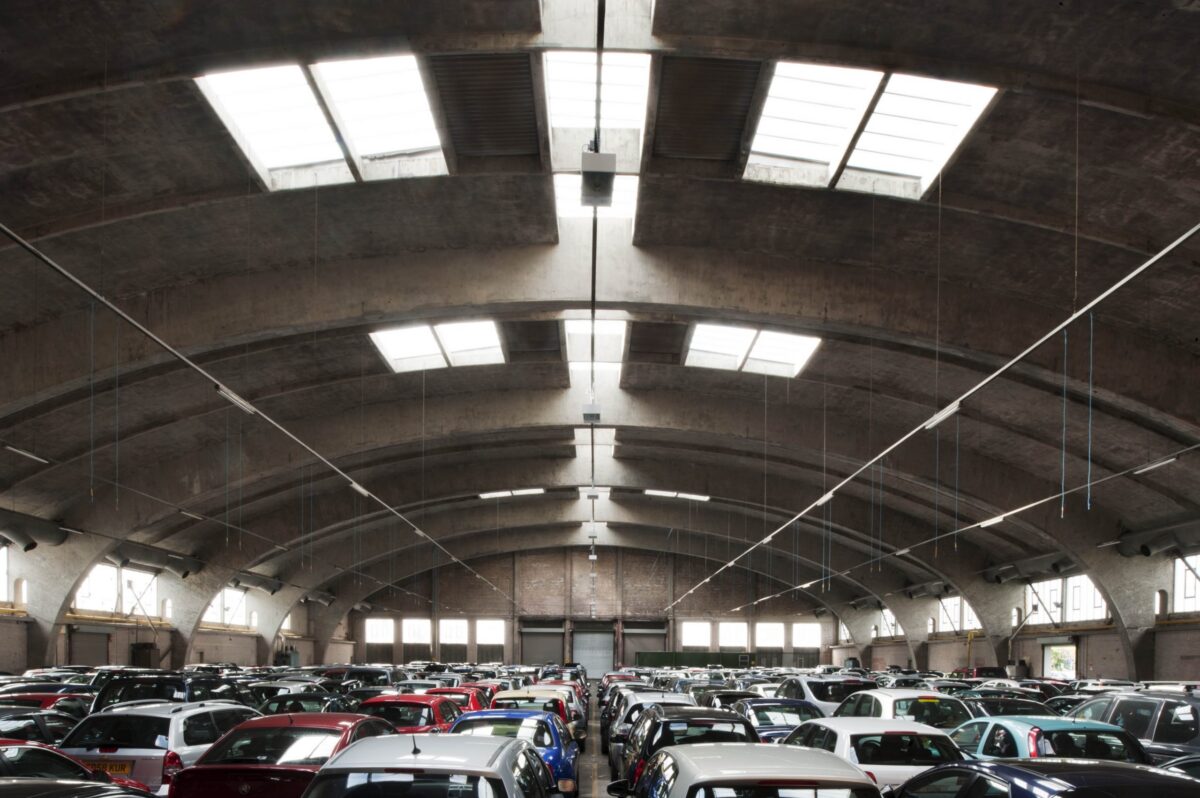
The building is considered a rare surviving example of early concrete engineering and architectural design. It was also used during the Second World War for aircraft production, including work connected with Lancaster bombers.
View the official Historic England listing.
8. Original Airport Office Building at Barton Aerodrome
Listing: Grade II
Built: Around 1930
Current use: Not stated by Historic England
The original office building at Barton Aerodrome is regarded as the earliest municipal airport passenger terminal building in England.
It represents the growth of local authority-supported civil aviation during the early development of commercial air travel.
View the official Historic England listing.
9. Main Hangar and Workshops at Barton Aerodrome
Listing: Grade II
Built: 1930
Current use: Aircraft hangar and engineering facilities
The main hangar and workshops at Barton Aerodrome are recognised as the earliest civil aviation aircraft hangar in England.
The building continues to support aircraft and engineering activities, maintaining a direct connection between its historic purpose and present-day use.
View the official Historic England listing.
10. Control Tower at Barton Aerodrome
Listing: Grade II
Built: Around 1937
Current use: Operational aerodrome control tower
Barton Aerodrome’s control tower was reported in the press in 1937 as “the first air traffic control station”.
It remains in operational use, making it a particularly significant example of a historic aviation building that continues to perform its original function.
View the official Historic England listing.
Which UK airport has the highest number of listed historic buildings?
Based on the buildings included in this research, Liverpool John Lennon Airport and Manchester Barton Aerodrome each have three listed aviation-related structures.
Croydon Airport has two listed buildings, while Gatwick Airport and the APH Manchester site each have one included in the research.
Why are listed airport buildings important?
Listed airport buildings preserve important parts of Britain’s transport, engineering and architectural history. They document the development of passenger aviation, airport design, air traffic control and wartime aircraft production.
Many have also found new uses as offices, hotels, commercial premises and operational aviation facilities. This allows the buildings to remain useful while their historic features are protected.
Frequently asked questions
What is a listed building?
A listed building is a structure recognised for its special architectural or historic interest. Listed status provides legal protection and means that changes affecting the building’s character may require consent.
What does Grade II* listed mean?
Grade II* buildings are particularly important buildings of more than special interest. They receive a higher level of recognition than Grade II buildings.
Which is the oldest airport terminal in this list?
Airport House at Croydon Airport was built between 1926 and 1928, making it the earliest purpose-built airport terminal included in this research.
Are any of these historic airport buildings still operational?
Yes. Barton Aerodrome’s control tower remains operational, while its main hangar and workshops continue to support aircraft and engineering activities.
Can you stay in a listed airport terminal?
Yes. The former terminal and control tower at Liverpool John Lennon Airport has been converted into the Crowne Plaza Liverpool John Lennon Airport hotel.
Research compiled by APH using information from Historic England’s National Heritage List for England. Building uses and listing details may change over time.