

Driving in Paris now comes with an extra bit of paperwork, or rather, a small round sticker on your windscreen. France’s Crit’Air anti-pollution sticker system is designed to categorise vehicles by emissions and keep the most polluting ones off city roads at peak times. If you’re a British driver (expat, tourist, or even hiring a car) planning a trip to Paris, this guide will walk you through everything you need to know. We’ll cover what Crit’Air is, who needs it, how to get it, costs, timing, placement, fines, hire car issues, disabled exemptions, and real tips from fellow drivers. Let’s make sure you’re street-legal in Paris’s low-emission zones and avoid any unwelcome fines or surprises on your trip!

What is the Crit’Air Sticker?
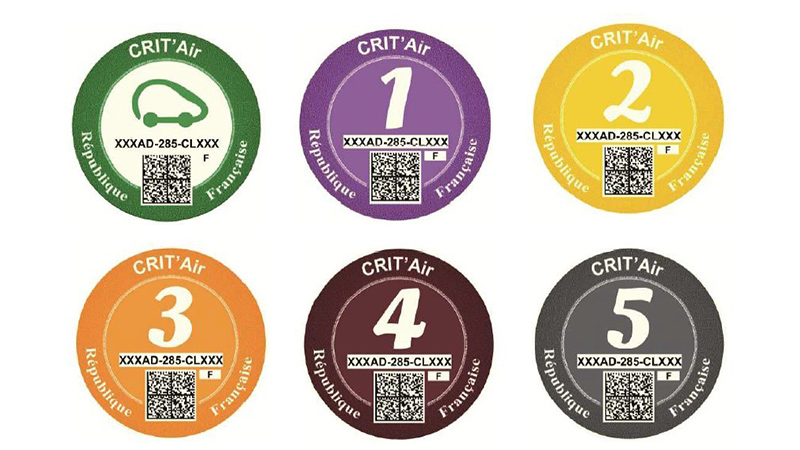
The Crit’Air sticker (Certificat Air) is an official air-quality vignette, a round, colour-coded sticker that indicates how polluting your vehicle is. The system covers all motor vehicles (cars, motorbikes, buses, etc.), including those registered abroad. The sticker categories range from “0” (green) for the cleanest vehicles to “5” (grey) for the highest-emission vehicles. There are six categories in total (plus a special 0 category for electrics), each with its colour:


- Crit’Air 0 (Green): 100% electric or hydrogen vehicles (zero emission).
- Crit’Air 1 (Purple): Newer petrol cars meeting Euro 5 or Euro 6 standards (generally first registered 2011 onwards), and plug-in hybrids.
- Crit’Air 2 (Yellow): Euro 4 petrol cars (circa 2006–2010) and Euro 5 & 6 diesel cars (2011 onwards).
- Crit’Air 3 (Orange): Petrol cars Euro 2 or 3 (1997–2005) and Diesel Euro 4 (2006–2010).
- Crit’Air 4 (Brown): Diesel cars Euro 3 (2001–2005).
- Crit’Air 5 (Grey): Diesel cars Euro 2 (1997–2000).
Vehicles older than these categories (petrol pre-1997 or diesel pre-1997) are unclassified; they cannot get a sticker at all, effectively banning them from the zones during restricted periods. In short, if your car is too old to qualify for any Crit’Air category, it cannot legally be driven in Paris during the times the restrictions are active (more on that below).
Why does Crit’Air exist? It was introduced to improve air quality in major French cities by encouraging cleaner vehicles and restricting high-polluters. Paris launched the scheme in 2017 as the first city, and many others have followed. The sticker system replaced earlier ad-hoc measures like odd/even number plate driving bans, creating a more permanent low-emission zone policy. Once you’ve obtained a sticker, it’s valid for the entire life of your vehicle; you don’t need to renew it annually or anything. (It’s linked to the vehicle’s registration, not to you as a driver, so if you get a new car, you’d need a new sticker for that car.)
An overview of the Crit’Air sticker system in France, showing why it was introduced, which vehicles need it, and key rules like costs and fines.
In summary, Crit’Air is a small sticker with a big role: it signals your car’s emission category and determines whether (and when) you’re allowed into low-emission zones. Next, we’ll see when and where you need this sticker in Paris.
Who Needs a Crit’Air Sticker, and When?
If you plan to drive in Paris or its suburbs, you likely need a Crit’Air sticker. The requirement applies to all vehicles, French or foreign (yes, British cars too), entering designated Low Emission Zones. In Paris, the entire city and surrounding area inside the A86 ring road is a permanent low-emission zone. This means roughly all of central Paris and most inner suburbs are included (see map below).
However, the Crit’Air rule is time-specific: in Paris, the sticker is mandatory on weekdays (Monday–Friday) from 8:00 a.m. to 8:00 p.m., excluding public holidays. During these times, you must display a valid Crit’Air sticker to drive or even park on public roads within the zone. Outside of those hours (overnight) and on weekends, the restrictions are not in effect for cars and motorcycles, meaning you technically wouldn’t be fined for not having a sticker at those times. If you’re only driving through Paris late at night or on a Sunday, you might not need the sticker then. That said, it’s strongly recommended to have one anyway, in case plans change or if there’s an unexpected pollution emergency when restrictions can be activated at short notice.
Map of the Paris Crit’Air zone: the shaded orange area shows the Low-Emission Zone covering Paris and 77 surrounding municipalities (inside the A86 motorway, outlined in blue). The A86 itself and certain connecting routes (marked in red) are exceptions where a sticker isn’t required if you don’t exit the highway. In practice, if your destination is anywhere inside the A86 boundary, you’ll need a Crit’Air sticker.

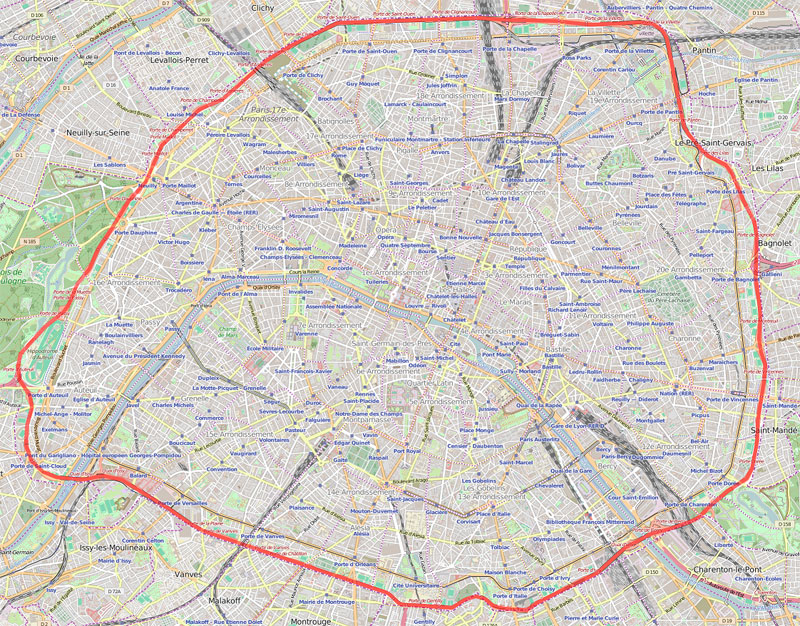
Who must have a sticker? Essentially, any driver entering Paris’s zone during restricted hours needs one, except certain exempt vehicles (like emergency services and those with disability placards, more on that later). This includes foreign-registered cars, so UK vehicles are covered. Even if you’re just passing through Paris, say on the way to the south of France, if you use roads that go inside the A86 perimeter during weekdays, you’re supposed to have the sticker. (Notably, the Boulevard Périphérique (Paris’s inner ring road) is inside the A86 zone. The A86 ring itself forms the boundary and is generally exempt if you stay on it without venturing into the city proper. But any detour inward means you’re in the zone.)
Who cannot drive even with a sticker? Here’s a crucial point: having a sticker doesn’t guarantee you can drive your vehicle in Paris; it depends on the sticker category and the city’s rules at the time. Paris has been progressively banning the oldest, most polluting vehicles during the restricted hours. For example, any car that is too old to qualify for a sticker (pre-1997 petrol or pre-2001 diesel) is outright banned on weekdays in the zone (you can’t legally drive it there at all between 8 am-8 pm). Initially, vehicles with a Crit’Air 5 (worst category) sticker were also banned on weekdays (diesel cars from 1997-2000). As of 2024, Paris also bans Crit’Air 4 vehicles (diesel 2001–2005) during the restricted hours. And starting January 2025, the plan (delayed several times but set to begin) is to ban Crit’Air 3 vehicles as well on weekdays. That means diesel cars from before 2011, and petrol cars from before 2006 will no longer be allowed in Paris, 8 am-8 pm Mon-Fri. (There may be some local exemptions or “day passes” for occasional use, e.g., Paris is introducing a scheme allowing up to 24 day-passes per year for Crit’Air 3 drivers, but in general, the rules are tightening.)

Bottom line: If your British car is relatively modern (Euro 4, 5, 6, etc.), you just need to get the appropriate sticker, and you can drive in Paris when your category is permitted. If you have a very old car, say a classic car from the 80s/90s, be aware you won’t be allowed to drive it in Paris during daytime hours at all (no sticker available). Check your vehicle’s Euro emissions standard or registration date against the categories above to know where you stand. And even if you’re only visiting Paris briefly, it’s wise to get the sticker because authorities do enforce the rule during pollution restrictions, and you risk fines if caught without one.
(Fun fact: Disneyland Paris itself is outside the A86 zone, so if you’re driving only to Disneyland and not going into the city or inner suburbs, you technically don’t enter the Crit’Air zone. However, many routes from Calais or the Channel Tunnel towards Paris might clip the edge of the zone, or you might decide to pop into the city, so it’s still safest to have a sticker just in case.)
Where and How to Buy a Crit’Air Sticker (Avoiding Scams)
Luckily, getting a Crit’Air vignette is a straightforward online process, but you need to do it before you travel (you can’t buy these stickers in person at the ferry port or in a French shop). Here’s how to get yours and save money by avoiding third-party scams:
- Order directly from the official French government website: The only authorised place to buy a Crit’Air sticker is the French Ministry of Environment site at certificat-air.gouv.fr. There is an English version of the site available. When you go there, you can switch the language to English, which helps a lot. Do not be tempted to Google “Crit Air sticker” and click the first link without checking; unfortunately, a number of unofficial websites target foreign drivers and charge hefty mark-ups for the same sticker. These sites aren’t illegal, but they’ll charge you €20 or even €30 for something that costs only around €5 via the official channel!
- Beware of lookalike sites and premium phone lines: Some websites have URLs resembling the official one and might offer to “handle” the application for a big fee, or even suggest calling an information hotline that charges extortionate rates per minute. Avoid these. The French media reported scams where drivers were urged to call a premium-rate 118 number for Crit’Air info (costing €2.99/min), absolutely unnecessary. The official info line is a normal-rate number (or toll-free) listed on the government site. In short, stick to the official website and you’ll be fine. On that site, you’ll pay only the standard fee (around €4-€5) and nothing more.
- Information you’ll need to provide: The online form will ask for details from your vehicle registration (V5C log book for UK drivers). You’ll need to enter your number plate, date of first registration, vehicle type, Euro emission standard, etc. Most of this is on your V5C. Tip: Enter your license plate exactly as it appears on the V5 (with the same spacing and letters/numbers). The system might be picky, especially for personalised plates. If a valid UK plate format isn’t accepted, double-check input and case, and if that fails, the site provides a contact form for support.
- Upload a copy of your V5C: You are required to upload a scan or photo of your vehicle’s registration document as proof. This can be a PDF or an image. Make sure the file is clear and under 400 KB in size (the site has an upload size limit, which was increased to 400 KB from 200 KB, but it’s still quite small). If your scan is too large, you may need to shrink it using an image optimiser tool. The site will guide you through this. Also, note that when you first submit your application, you’ll get a confirmation email, and then a second email to activate your account/upload documents. Some users found that this second email can take a day or two to arrive. Be patient and check your spam folder if needed.
- Payment: You pay online by credit or debit card. The official cost is only a few euros (we’ll detail the cost in the next section). If you’re charged something like €30, you’re on the wrong site! Once payment is made, you should receive an email receipt. (Non-French cards are accepted; you might see a small foreign transaction fee from your bank, but nothing major, given the low cost.)
- Delivery address: When applying, you can specify the delivery address for the sticker. For UK applicants, it’s best to put your home address (or wherever you can receive mail reliably). The site notes that stickers for foreign addresses might take a bit longer, but they will send them. If you’re applying for a lease or company car, don’t worry, you can put your address for delivery. One user reported that even though the website said it would send it to the registered keeper’s address, in practice, their sticker arrived at their specified address (home) just fine. So make sure you fill in the address where you want the sticker to come.
Remember: Only buy through the official channel. To emphasise, the sticker’s official price is about €3.70 + postage (around €1.50), roughly €4.80 total (≈£4). Unofficial “service” sites might show up in ads or search results and can charge anywhere from €10 to €30 for the same thing. Don’t get caught out, save your money for a croissant in Paris instead, not a needless admin fee!
How Much Does it Cost?
The Crit’Air sticker is deliberately inexpensive; the fee is set just to cover production and admin costs, not to generate profit or tax drivers. As of 2025, the official cost for a sticker is €3.70 (for the sticker itself) plus postage. For orders delivered to the UK (or any non-French address), the postage is a bit higher than domestic, so in practice you’ll pay around €4.61 in total (which is roughly £4). This can fluctuate by a few cents with postage rates, but it’s on the order of €4-€5 maximum for one vehicle.
To put it in perspective, when the scheme launched, it cost €4.18, and in 2018, the price was actually reduced to €3.62 (including UK shipping) to ensure it only covered costs. So France has kept it cheap; it truly is not meant to soak motorists, just to get the stickers out there.
One sticker = lifetime of vehicle: You only pay this fee once per vehicle. The sticker doesn’t expire (unless laws change or emissions categories are updated years down the line, but currently it’s valid indefinitely. So even if you make multiple trips to France, that one sticker covers you every time. (If you sell the car, the sticker stays with the car, of course, since it’s tied to the reg number and emissions of that vehicle.)
Pro tip: If you have multiple cars (say, your family has two cars you might take abroad), you’ll need to apply and pay separately for each. And if by chance you lose the sticker or replace your windscreen (and thus destroy the sticker), you’ll have to order a new one at a new fee. There isn’t a free replacement program, so treat the sticker carefully once you get it. (We’ll talk later about sticker placement and what happens if you need a new one.)
Finally, be wary of anyone charging more than a fiver for a Crit’Air, as mentioned, third-party sellers mark up the price. One notorious site was charging €29.65 for it! The official price including postage is under €5, and that’s all you should have to pay.
How Long Does It Take to Arrive, and What If It Doesn’t?
Officially, the French government estimates about 5 to 10 working days for your Crit’Air sticker to be delivered after you order. In many cases, UK drivers have reported pretty speedy service; some have received their sticker in around a week or two by post. However, it can vary, and delays happen, so it’s safest to allow plenty of time.
Most veteran travellers suggest you apply at least a month before your trip if possible. The application processing itself might take a few days (you often get a confirmation email within 1-2 days, and an invoice email within about a week), and then mailing to the UK can be another week or more. While many have seen quick turnarounds, others have waited close to the 2-3 week mark. In a worst-case scenario, it could be 30 days until it arrives, so earlier is better.
What if your trip is coming up and you still don’t have the sticker in hand? Don’t panic. When your application is processed and approved, you’ll receive an official confirmation/invoice by email, which includes your Air Quality Certificate number and category. In fact, the email often has a PDF attachment, essentially a temporary certificate or receipt showing your vehicle’s details and the Crit’Air category you’ve been assigned. Print this out and keep it with you. While it’s not the formal sticker, it serves as proof that you’ve complied and ordered one. French authorities have indicated that showing this proof should be acceptable if you are stopped, as long as the actual sticker is on the way. Many users have travelled with just the email printout and had no issues, since it shows the vehicle is registered in the system.
Still, as soon as you get the real sticker, you should affix it to your car (the printout is only a stopgap). If the sticker never arrives at all (lost in the mail), you might contact the official Crit’Air support, but it may be simpler to reapply. Instances of non-delivery are rare, though.
Delivery quirks: The sticker envelope often looks like junk mail (small and plain). Keep an eye on your post. Also, as mentioned earlier, if you applied with a different mailing address than what’s on your V5C, don’t worry, it will go to whatever address you specified. One UK driver with a leased car was pleased to find the vignette was sent directly to his home address (not to the leasing company’s address on the V5).
In short: order early to be safe. But if time is short, still apply; you can use the emailed document as proof in France if the sticker doesn’t arrive before you leave. The authorities are used to foreign drivers having this issue, and the key is showing you made a good-faith effort.
Where to Display the Sticker on Your Windscreen (Especially for RHD Cars)
So you’ve got your Crit’Air sticker, where do you stick it? The official guidance (geared toward French cars) says to **affix the sticker on the inside of your windscreen, in the lower right-hand corner (as viewed from the driver’s seat). In a left-hand-drive car (like those in France), the lower right corner of the windscreen is the passenger side, bottom corner, which keeps it out of the driver’s direct line of sight but visible to police checking from the curb. The sticker is designed to be stuck permanently; it’s a decal with strong adhesive, meant not to be removed regularly.

However, British cars are right-hand-drive, which flips this dynamic. If a UK driver puts the sticker in the “lower right corner” of the windscreen as instructed, that corner is actually right in front of the driver (and typically within the wiper-swept area). Not only could that slightly impede your view, but UK MOT rules say nothing should be in the critical vision area of the windscreen; a sticker there could even cause an MOT test failure back home. In fact, some UK drivers learned this the hard way: one reported that his garage peeled off the Crit’Air sticker before an MOT, ruining it, and he had to order a new one. Others noted that on many modern RHD cars, the wipers sweep right down into that bottom-right corner, leaving no unswept spot to put a sticker without risking MOT issues.
The good news: French authorities are aware of this RHD conundrum. The official Crit’Air service has confirmed that for right-hand-drive vehicles, it is acceptable to place the sticker on the other side, i.e., the lower left-hand side of your windscreen. In other words, UK cars can stick the vignette on the passenger side (lower left from the inside) so that it’s not in front of the driver, yet still clearly visible from the outside. This won’t confuse the French police; they know UK cars are opposite. The key is simply that the sticker should be visible to an officer checking your car. So, placing it on the left side of a RHD car is perfectly fine and within the rules.
Whether you put it on the left or right, try to place it low on the windscreen so it doesn’t obstruct any view. Usually, it will tuck into a corner. Some drivers stick it just above or below the tax disc area (for those who remember tax discs) or equivalent.
Inside or outside? The sticker is meant to be stuck from the inside of the glass (it’s adhesive on the back). You might come across suggestions on forums that UK drivers could stick it on the outside, in an unswept area of the windscreen, to avoid MOT issues. While one person mentioned doing this (on the black border of the glass), it’s not the official method. Sticking it outside could expose it to weather or theft, and technically, the law expects it on the inside. Since we now know you can legally put it on the left side for RHD, there’s no need to try the exterior trick.
Once applied, the sticker is hard to remove without destroying it. It’s intentionally tamper-evident. If you try to peel it off, it will come apart and won’t re-stick properly. So choose your spot carefully the first time. Make sure the glass is clean and dry; peel the backing and press the sticker on. It will handle car washes and rain just fine once affixed.
If you absolutely must remove it (for example, you got it in the “wrong” spot and are worried about MOT, or you’re replacing the windscreen), be prepared that you’ll likely need a replacement sticker. Removal usually ruins it, and the French government does not reissue duplicates for free. You’d have to reapply (and pay another ~€4). Some people have tried to use static-cling sticker holders or other temporary methods, but legally, the sticker should be stuck to the windshield. A holder might be okay short-term (there’s anecdotal talk of using a removable holder and taking the sticker out for MOT), but that’s at your own risk. The safest legal approach: put it on the lower left side of your windscreen, leave it there permanently, and it won’t interfere with driving or MOT visibility.
Quick recap: For UK cars, stick your Crit’Air on the passenger side, bottom corner of the windscreen (inside). For EU/LHD cars, stick it bottom right (passenger side for them). In all cases, ensure it’s visible. A French police officer or a camera looking at your car from the front should be able to spot the colored sticker. If it’s too high up or hidden behind the rear-view mirror tint band, that could be a problem. Follow these placement tips, and you’ll be compliant and safe.
Fines and Consequences for Non-Compliance
Nobody wants a holiday souvenir in the form of a French traffic fine. So what happens if you drive in Paris without a Crit’Air sticker when one is required, or if you violate the emissions restrictions?
The standard fine for not displaying a valid Crit’Air sticker in a zone or driving a vehicle during restricted times when it’s not allowed is €68 for cars (this is a Class 3 minor traffic fine in France). If you pay it quickly, that’s the amount; if you delay payment, fines in France can increase (and additional fees can push it up to around €180 in the worst case). For motorcycles, it’s typically the same €68. For heavier vehicles like lorries or buses, the fine is higher (around €135). These are on-the-spot fines (or payable via the usual French fine system; foreigners can pay online if they get a notice).
French police had a short grace period when the scheme was new, but it’s long over; now they do enforce it. Enforcement can happen via roadside checks (gendarmes or Paris police might do spot inspections, especially during pollution peak days) and increasingly via automated cameras that scan number plates. The zones aren’t tolled, but cameras can cross-reference your plate with a database to see if your vehicle should have a sticker or if it’s a banned category. If caught, you’d receive a ticket in the mail if not stopped on the spot.
Importantly, if your car is one of those that is completely banned during certain times (e.g. a Crit’Air 5 vehicle driving on a weekday in Paris, or an unclassified pre-1997 car), the same fines apply. In theory, repeat offenders could face higher penalties or even vehicle impoundment, but as a visitor, you don’t want to test that. It’s rare, but the law allows stricter punishment if you repeatedly flout the rules or drive a prohibited vehicle.
How does this affect UK drivers specifically? Since Brexit, the process for cross-border fines is a bit different, but the EU and UK have agreements for exchanging driver info on traffic offences. Practically, if you’re caught by a camera without a sticker or with a disallowed car, a fine notice can be sent to the registered owner in the UK. If you’re in a rental, the rental company will get it (and they will charge your credit card, often with an added admin fee). If you’re stopped in person, you may be asked to pay on the spot or prove you’ll pay (foreigners sometimes must pay fines immediately or provide a deposit).
Speaking of rental cars: let’s dive into that separately, because there’s a potential double-whammy (fine + rental company fee) if you get caught in a hire car with no sticker.
To avoid any fines, the recipe is simple: get the sticker, display it properly, and follow the rules about which Crit’Air categories are allowed at what times. If there’s a major pollution spike while you’re there, pay attention to local news or signs, sometimes additional temporary bans on certain categories (like restricting Crit’Air 3 vehicles on a particularly bad day) can be announced. Usually, these are well-publicised if they happen.
Driving a Hire Car in Paris, What You Need to Know
If you’re hiring a car (rental car) and driving into Paris or other French cities, the Crit’Air sticker situation can be tricky, so let’s break it down:
Crit’Air sticker is tied to the vehicle, not the driver. This means that if you rent a car, that car needs to have a sticker if you’re going into a restricted zone. As a renter, you can’t easily obtain a sticker for a car you don’t own. Why? Because the application requires the vehicle registration document and details, which you often won’t have in advance or at all for a rental. Plus, the sticker would be mailed, and you’re not going to be at the rental company’s address to get it.
So, the onus is really on the rental companies to equip their cars with Crit’Air vignettes if they expect them to be driven in French low-emission zones. Some large rental companies in France do routinely have Crit’Air stickers on their fleets (especially if based in cities like Paris or Lyon). If you rent a car in France, check the windscreen; there’s a good chance it already has a sticker (because local French drivers need them too). If it doesn’t and you plan to enter a ZFE city, ask the rental desk about it.
For UK-to-France rentals (e.g. you rent a car in the UK to take across the Channel), this is more problematic. Back in 2017, when Crit’Air launched, many UK rental firms were caught off guard. An APH investigation at the time found some rental agents clueless; one advised a customer to “pop into our Paris branch and pick one up”, which is not how it works (you cannot just pick one up last-minute; foreign vehicles must be ordered online). There was uncertainty on whether rental firms would cover fines if they failed to provide a sticker, but the general rule in rental contracts is that any fines incurred by the driver are the driver’s responsibility, period.
What if the hired car doesn’t have a sticker? If you drive it into Paris and get caught, you (the driver) will get the fine, and the rental company will probably process it like any traffic ticket, by charging your credit card an admin fee on top of the fine. Those admin fees can be £30-£50 easily. So a €68 fine could turn into a £100+ hit on your card by the time they’re done. Not fun, especially if you weren’t aware of the sticker rule because the rental company didn’t inform you.
How to protect yourself as a renter:
- Inform the rental company at the time of booking (or as early as possible) that you intend to drive in Paris (or whatever low-emission zone). Request that the car be Crit’Air compliant. If renting in the UK, ask if they can supply a car that already has a Crit’Air sticker (perhaps if they previously registered some vehicles). They might not have any, but asking flags the issue on your reservation.
- Get it in writing, if possible, that you notified them and that you expect the vehicle to be legal for use. This might help contest an admin fee later, but it’s no guarantee.
- If the rental company cannot assure a sticker, you have to decide the risk. You could try to apply for one yourself as soon as you get the car (if you know the registration and can grab a photo of the V5 document from them), but realistically, if your trip is imminent, you won’t receive it in time. You’d be relying on the email proof at best, which is a grey area for rentals because the name wouldn’t match etc.
- Rental in France: If you rent a car in France (say at Calais or in Paris), insist or check that the car has a Crit’Air sticker if you’ll be driving into a ZFE. Many French-registered rental cars do have them now, as it’s becoming standard. If it doesn’t, you could ask for another car or ask the company to apply on your behalf. (They may not be able to instantly, but they should be aware of the requirement.)
According to the British Vehicle Rental and Leasing Association (BVRLA), rental firms should be aware of regulations in countries where their cars will be driven. By now (2025), we’d hope the major companies have procedures. But ultimately, the driver gets penalised if no sticker is present.
One strategy some cautious travellers use: avoid driving a rental in restricted zones altogether. For example, park outside Paris and take public transport in, if your car lacks a sticker. Or use a French hire car with a sticker for the city portion of your trip.
In summary, if you’re renting, treat it as your responsibility to ensure the car is stickered. Don’t assume the hiring company will sort it unless explicitly confirmed. If they fail to provide it and you’re fined, you can try disputing the charges later, citing negligence on their part, but there’s no guarantee of success. It’s better to be proactive than to fight a fine after the fact.
(On a related note: If you’re borrowing a friend’s car in France, similar logic applies; make sure they have a Crit’Air sticker if you’ll drive into a city. The sticker doesn’t care who’s driving, only the car’s registration.)
Disabled Drivers: Blue Badge Exemptions
If you are a disabled driver or passenger with a valid Blue Badge (European disabled parking permit), there’s good news: **vehicles displaying a disabled parking card are generally exempt from Crit’Air restrictions and do not need to display a Crit’Air sticker at all. According to the French decree that established Crit’Air, any vehicle carrying a disabled person with a blue badge can circulate even in zones where it might otherwise be prohibited, without the need for the vignette. In plain terms, your blue badge is effectively your “pass” to drive in low-emission zones.
This means if you have, say, an older vehicle that normally would be banned or require a certain sticker, you are allowed to drive it in Paris (and other ZFE cities) as long as the disabled parking permit is displayed. The logic is that disabled individuals rely on their vehicles for mobility, so they are given leeway under these environmental rules. The exemption is recognised across Europe, the blue badge format is standardised, and French authorities will recognise a UK (or other EU country) blue badge just the same.
Important notes for disabled drivers:
- Display your badge clearly on the dashboard/windscreen when driving in the zone. That’s the indicator to any officer that you’re exempt. If you have a UK blue badge, it’s a good idea to also have the accompanying photo card or paperwork on hand, just in case you need to show proof of its validity.
- You can still get a Crit’Air sticker if you want. Some disabled drivers choose to apply for the sticker anyway if their vehicle is eligible, especially if they’re driving a fairly new car that qualifies. You’re not required to, but having one won’t harm, and it might avoid confusion during quick inspections. Just know that if you can’t get one (e.g., your car is too old to qualify), your blue badge covers you.
- Parking in Paris: The Crit’Air exemption allows you to drive in the zone. Usual parking rules (and benefits for disabled parking) still apply. Paris often allows free parking for vehicles with a disability badge, but you may need to use designated spaces or set the time clock; check local rules.
- Other cities: The disabled exemption is national, so it should apply in all French low-emission zones. Always have the badge visible.
- If you are driving a hire car and have a blue badge, the exemption still applies to you, just display your badge. (It wouldn’t come with a Crit’Air anyway if you didn’t get one, but you wouldn’t need one in that case.)


To quote the official guidance: “vehicles bearing a parking card for disabled persons need no Crit’Air vignette”. This is a reassuring point if you’re worried that your adapted vehicle or older car might run afoul of the rules. France, like many countries, builds in these exceptions to ensure mobility for disabled individuals.
Tips and Warnings from Real Drivers
Finally, let’s round up some real-world tips and cautions from Brits who’ve gone through the Crit’Air process. These can save you time, money, and hassle:
- Apply well in advance. Don’t leave the Crit’Air application to the last minute before your trip. While turnaround can be quick, it’s not guaranteed. Some drivers report it taking up to 2-4 weeks to receive the sticker. The French official advice is up to 30 days. Apply as soon as you know you might drive in France. The sticker doesn’t expire, so even if plans change, you have it for next time.
- Use the official website, and avoid overpriced services. This cannot be stressed enough. Multiple British motorists have been caught out by websites charging £20-£30 for the sticker. One common scam site Crit-air.fr was charging €29.65 (over £25) for something that costs €4.80. The official site is a French government site (
certificat-air.gouv.fr) and will only charge a small fee (~€5). If a site asks for a large payment or offers “fast track” processing for a fee, steer clear. Similarly, don’t call high-cost phone numbers for info; use official info lines or online resources. - Print your confirmation. If your trip is near and the sticker hasn’t arrived, print the confirmation email or temporary certificate and carry it with you. Several users have driven in Paris with just this printout visible on the dashboard and had no problems. It shows authorities that you’ve registered and what category your car is. It’s not a guarantee against a ticket (the law says you should have the actual sticker), but in practice, it hugely helps if you get stopped.
- Sticker placement for UK cars: go left. As discussed, place your Crit’Air on the left-hand side of your windscreen if you have a RHD car. It will be clearly visible to the police but won’t obstruct your driving view. One UK driver warns that if you stick it on the right (driver’s side) in the swept area, you’ll face issues at your MOT he had to peel it off, destroying it, and order a new one. Save yourself that trouble by sticking it in the bottom left corner instead. French officials confirm this is acceptable.
- Once stuck, it’s stuck. Plan your sticker position carefully because it’s pretty much a one-time application. The adhesive is strong and designed to prevent reuse. If you try to remove the sticker, it will likely come apart in pieces. Tip: Clean and dry the glass, and maybe practice placement by holding the sticker (with backing on) up to the spot to see how it looks from outside before you commit.
- Windscreen replacements and rentals, be aware. If you get a new windscreen after you’ve put on the sticker, you’ll need to get a new sticker. They do not issue duplicates or replacements for free in such cases. Some drivers of fleet or leased cars noted that after a windshield replacement, the sticker was lost, and they had to reapply. Unfortunately, that’s just how it is; factor in time to get a new one if this happens. If you’re renting a car and it has a sticker, you don’t take it off for them, but if the car lacks one (and you can’t get one in time), consider alternative plans to avoid fines (see the hire car section above).
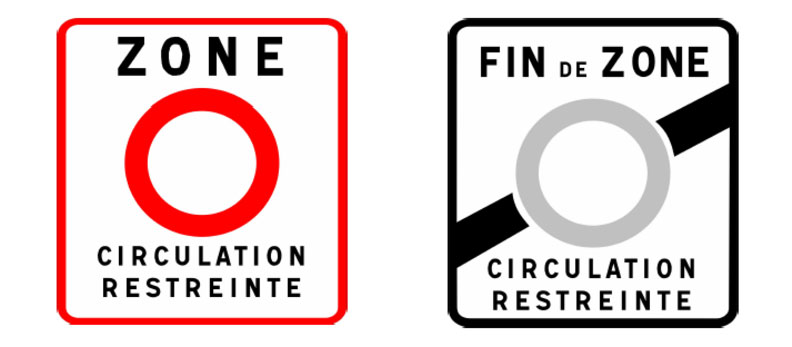
- Know your category and restrictions. Make sure you understand what Crit’Air category your vehicle is and what that means for driving in Paris. For instance, if you drive a diesel from 2008, you’ll get a Crit’Air 3 sticker, but note that from 2025, Crit’Air 3 cars are (theoretically) banned on weekdays in Paris. You, as the driver, need to keep track of such rule changes, because the sticker itself won’t stop you from entering; it’s on you to obey the restriction. Information on current restrictions is available on city websites and the official Crit’Air site. When in doubt, err on the side of caution or seek local advice. Paris has road signs at zone entry points (a red bordered sign “Zone à Circulation Restreinte”), but those won’t tell you which Crit’Air numbers are allowed or not on a given day.
- Other cities & regions: Paris is just one of several zones. If you’re road-tripping, be aware that cities like Lyon, Grenoble, Strasbourg, Marseille, Toulouse, etc. have their low-emission zones with Crit’Air requirements. The good news is that one sticker is valid nationwide; it’s not Paris-specific. So the sticker you buy for Paris will be recognised in all French cities. But different cities have different rules (some only activate restrictions during pollution spikes, others are permanent, like Paris). So do check if your route goes through any other Crit’Air zones; the rules might differ. For example, Grenoble and Lyon require the sticker and have bans on certain days, etc… Having the sticker at least means you won’t be fined for not displaying one, wherever you go.
- Don’t be complacent if you avoided a fine once. A few travellers have said, “I drove through Paris without a sticker and nothing happened.” That might occur if you went at an off-peak time or weren’t spotted. But French authorities are ramping up enforcement, and as time goes on, expect stricter policing. The cost of the sticker and the minor effort to get it are well worth the peace of mind. One British traveller reported that French police were checking cars on the side of the road with tablets, specifically looking for Crit’Air compliance. So it’s not worth the gamble.
- MOT tip: If you’re concerned about the MOT (annual inspection) back in the UK with the sticker on, remember: placing it low on the left should keep it out of Zone A of the windscreen (the critical view area for RHD). Many UK drivers have now passed MOTs with the Crit’Air still on the left side with no issues. If you ever did need to remove it (say you sold the car), you’d scrape it off like an old tax disc and clean the residue. But again, for normal cases, left side = no MOT drama.

By following these tips and being prepared, you’ll set yourself up for a smooth driving experience in Paris. Thousands of British drivers have successfully navigated the Crit’Air system, it might seem a faff initially, but it’s quite straightforward and inexpensive. And once that little colored sticker is on your windscreen, you can drive confidently, knowing you’re on the right side of French regulations (and doing a small part to help air quality too!).
Safe travels, bonne route, and enjoy your drive in Paris! With the admin taken care of, you can focus on the fun parts, like navigating those exciting Parisian roundabouts (Place de l’Étoile, anyone?) and finding that perfect café au lait. Just don’t forget to “get stickered” before you go, and you’ll be all set.
FAQs About Crit’Air Stickers in Paris
Yes, if your route takes you inside the A86 ring road during weekday hours (8am–8pm, Mon–Fri). However, if you stay on the A86 itself or only drive at night/weekends, you won’t be fined. That said, it’s best to have one in case of pollution emergencies or unexpected detours.
The official price is about €4.61 including postage to the UK. Buy only from the French government’s site: certificat-air.gouv.fr
French rules say “bottom right of the windscreen,” but for RHD cars this can interfere with the MOT view area. The official advice allows UK drivers to place it in the lower left corner (passenger side) as long as it’s visible from outside.
Fines start at €68 for cars and can rise if unpaid. Rental car companies may also add hefty admin fees if you get fined in their vehicle. Repeated non-compliance could lead to higher penalties or even your vehicle being impounded.
Yes. Vehicles displaying a valid Blue Badge (European disabled parking permit) do not need a Crit’Air sticker and are exempt from driving restrictions in Paris. Be sure to display your badge clearly.