

If you’ve ever driven through a village and spotted people in high-visibility jackets pointing a speed gun at passing cars, you may have wondered: Are these Community Speed Watch volunteers able to give me a speeding ticket? Don’t worry, you’re not alone in asking this. In this guide, we’ll explain exactly what Community Speed Watch is, how it works, and what these UK volunteer teams can and cannot do when it comes to speeding enforcement. We’ll also clear up some common misconceptions and show how Community Speed Watch contributes to road safety in residential areas.

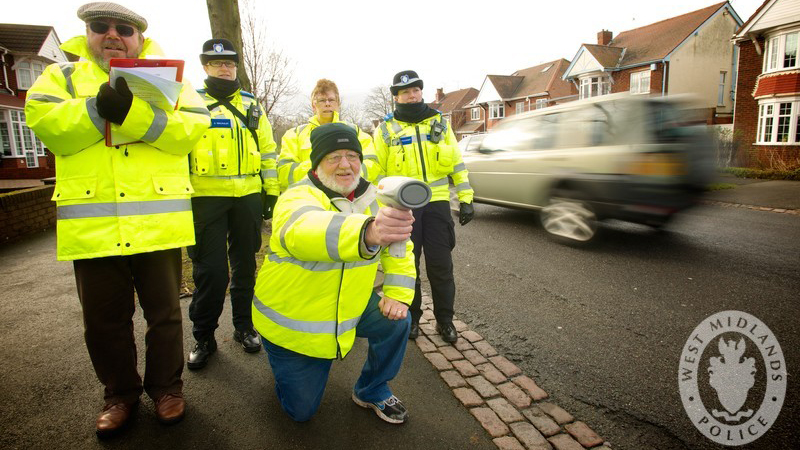
What Is Community Speed Watch?
Community Speed Watch (CSW) is a national initiative in the UK that empowers residents to help tackle speeding in their neighbourhoods. It’s run in partnership with the police, meaning volunteers work closely with local police forces (and often Police Community Support Officers) to monitor vehicle speeds on roads where speeding is a concern. The aim isn’t to punish drivers, but to educate them and encourage safer driving. By involving community members, the scheme raises awareness about speeding and helps improve road safety in residential areas.
Key goals of Community Speed Watch are to reduce speeding-related accidents, improve the quality of life for locals, and send a clear message that speeding is socially unacceptable. In short, it’s a community-driven, informative and deterrent approach, not a hardcore enforcement unit. Think of CSW volunteers as friendly local speed awareness ambassadors: they want drivers to slow down, not rack up tickets.
How Does Community Speed Watch Work?
Community Speed Watch groups operate in a systematic but non-confrontational way. Here’s how a typical CSW session works:
- Police-Approved Locations: Volunteers can’t just pop up anywhere. They set up at sites approved by the police and, after a risk assessment, usually in areas with known speeding issues. Locations are typically residential roads or village through-routes where drivers often exceed the limit. CSW teams only work in daylight hours and must remain in plain view, wearing high-vis jackets and signage so drivers see them. (This isn’t a sneaky speed trap; the goal is to be visible and get drivers to hit the brakes!)
- Speed Monitoring: Equipped with handheld speed detection devices (often radar or laser “speed guns”), the volunteers measure the speed of passing vehicles. These devices display the car’s speed but do not take photos (they’re not like police speed cameras). Volunteers typically only record vehicles going notably above the limit, often around 10% or more over the posted speed limit. This small tolerance is to focus on truly excessive speeders, not someone briefly creeping 1 mph over the limit.
- Recording Details: When a car is detected exceeding the threshold, the team writes down the vehicle’s details: typically the registration (license plate number), make and model, colour, and the time and location of the speed reading. Multiple volunteers usually work together (most CSW teams have 2–4 people on site for safety and accuracy), one operates the speed device, and others record the info.
- Data Submission: After the session, the volunteers submit the recorded data to the police, often via an online system or spreadsheets sent to the local force. The information goes into a police database (and may be shared nationally) of vehicles caught by CSW. From here, it’s over to the police to decide on any further action.
Importantly, Community Speed Watch is not about ambushing drivers or issuing on-the-spot penalties. It’s a “feedback” scheme: volunteers gather data and pass it to the police, and any follow-up comes from the police, not the volunteers themselves.
Can Community Speed Watch Volunteers Issue Speeding Tickets?
In a word, no, Community Speed Watch volunteers do not have the authority to issue official speeding tickets or fines. They are not police officers, and their role is strictly observational and educational. This is one of the biggest misconceptions, so let’s clarify what happens:
- No Legal Powers: CSW volunteers can’t stop a vehicle, can’t demand your details, and cannot impose any penalties on drivers. They are civilians gathering information. Only the police (or court) can issue a speeding ticket or fine in the UK, and that requires evidence from police-approved devices or officers.
- Equipment Limitations: The speed guns used by CSW are not Home Office type-approved enforcement devices. Many CSW devices are “indicative” speed detectors that are not calibrated to the legal standard required for court evidence. They are accurate enough to measure speed for warning purposes, but not legally robust for prosecutions. There’s also no photographic evidence being collected in a typical CSW session (unlike a speed camera, which snaps a picture of your car). Without calibrated, approved equipment and photographic proof, no ticket or prosecution can result directly from a volunteer catching you speeding.
- Data Goes to Police: Instead of a ticket, what happens is the data (your car’s details and speed) goes to the local police team. If it’s your first time being caught by a Speed Watch in that area, you won’t receive a fine or points. However, you may receive a warning letter from the police, which is meant as an educational nudge to remind you of the speed limit and encourage safer driving. This letter is not a formal penalty, just advice.
So, to be clear: a Community Speed Watch volunteer cannot pull you over and hand you a speeding ticket on the spot, and you won’t get an official Notice of Intended Prosecution in the post solely from their say-so. No penalty points, no fines, and no prosecution come directly from the volunteers. The scheme operates on a “friendly warning” basis.
What Happens to Speeding Drivers Reported by CSW?
If you’re caught speeding by a Community Speed Watch team, you might be thinking, “Okay, no ticket, so what does happen?” Here’s what you can expect:
- First Offence, Advisory Letter: In many areas, if it’s the first time your vehicle’s been recorded by a CSW, the police will log the details and usually send out a courteous warning letter to the registered keeper of the vehicle. This letter typically thanks you for being part of the community effort to keep roads safe (in other words, “we’ve noticed you were speeding, please be aware and slow down”). It’s essentially a free pass with advice, carrying no legal penalty. The idea is that seeing this official letter will make you realise that locals are watching and that you should watch your speed in that area from now on.
- Repeat Offenders, Escalation: Community Speed Watch may be educational, but if the same vehicle keeps showing up in the reports, the police will escalate their response. Each police force has its own policy, but typically, after a couple of warnings, they take it more seriously. For example, Dorset Police state that if a vehicle is observed by CSW on two occasions, advisory letters will be sent each time, but on the third occasion, police will take further action. “Further action” can include a visit from officers or targeted enforcement (like a patrol or speed van specifically watching for that car). Essentially, if you ignore two warning letters, the police will likely flag your vehicle for stronger intervention. In some areas, even after the second report, the letter might be more strongly worded or even hand-delivered by an officer for emphasis.
- Persistent Speeders: Drivers who continually break the limit despite multiple warnings can indeed face real consequences. The evidence from CSW (dates, speeds, locations) gives police a reason to watch that driver more closely. While the CSW data alone isn’t used to prosecute, it can trigger police to conduct an official speed enforcement operation against you. Many UK police forces say they will actively target repeat offenders for enforcement, beyond just letters. This could mean setting up a certified speed camera or an officer with a laser gun in your area at times you’re known to speed. If you’re caught by the police in one of those official operations, you will get a real ticket and fine/points as applicable. In short: If you don’t learn from the warning letters, you may soon meet a real traffic cop.
- Extreme Speeds: What if someone is not just a bit over the limit, but way over (say doing 60 in a 30)? Community Speed Watch focuses mostly on typical residential speeding (often 30 mph zones), so extreme cases are rare, but they do happen. For instance, in Dorset, a CSW team clocked a driver at 64 mph in a 30 mph zone, clearly an alarming speed. In such cases, volunteers will forward the details immediately, and police are likely to respond with urgency. You might get a very stern letter, and that vehicle will be marked for focused police enforcement going forward. However, even in an extreme case, CSW volunteers still cannot issue an instant prosecution; the driver in Dorset’s case did not get a ticket from the volunteers, but you can bet the police followed up strongly. The bottom line is, nobody “gets away with it” just because CSW isn’t issuing tickets; blatant or dangerous speeding will put you on the police radar quickly.
Important: These warning letters do not carry any fine or penalty points; they are purely educational. They also don’t show up on your driving record. But they are logged in the police system. So while the first letter is a freebie, consider it your chance to change your driving habits before actual enforcement steps in.
When and Where Can Speed Watch Volunteers Operate?
Community Speed Watch teams have some strict rules on how they operate, which are to ensure both safety and fairness:
- Approved Sites Only: Volunteers can only conduct speed watches at locations vetted and approved by the police. Typically, these are spots with a history of complaints about speeding or where residents feel unsafe due to fast traffic. The area will have been checked for things like adequate visibility, a safe place for volunteers to stand, and not creating a hazard by suddenly appearing around a blind bend. If you see a CSW team, you can be sure the police know they’re there; it’s all official.
- Daylight Hours: Nearly all Community Speed Watch activity happens in daylight (e.g. morning or afternoon). Volunteers do not operate at night or in dark conditions. This is because visibility is crucial; they want drivers to see them and slow down. Also, reading license plates in the dark is difficult without specialised equipment (which CSW doesn’t use). So you generally won’t encounter a CSW team after dusk.
- High-Visibility & Signage: CSW teams are required to be visible. Volunteers wear high-visibility (hi-vis) jackets often labelled “Community Speed Watch” on them. Many areas also put out signs like “Community Speed Watch Area” or temporary warning signs when sessions are in progress. The idea is not to hide, but rather to remind drivers before they speed that someone is watching. This visibility acts as a deterrent; when drivers spot the fluorescent jackets, they usually hit the brakes. (In fact, some motorists later admit they mistook CSW volunteers for actual police, which certainly helps reduce speeds!)
- Never Chasing or Confronting Drivers: Volunteers don’t step into the road to wave drivers down, and they won’t chase after anyone. They stand at the roadside or pavement at a safe distance. If you zoom past one, you might see them jotting something on their clipboard, but they won’t try to stop you there and then. Their job is only to observe and record.
So if you’re worried about an overzealous volunteer hiding behind a hedge with a speed gun, that’s not how it works. The program is designed to be highly visible and preventive, not sneaky. By operating only in approved spots and broad daylight, Community Speed Watch makes sure its presence is as much a reminder as a recorder of speeds.
Why Community Speed Watch Matters (Education Over Enforcement)
You might be thinking, “If they can’t ticket me, what’s the point of Community Speed Watch?” The point is education and changing attitudes, rather than punishment. Here’s why the scheme is still very valuable:
- Immediate Deterrence: The very sight of a Speed Watch team tends to slow drivers down. It’s human nature, see a speed gun and lift off the accelerator. Even if some drivers only slow down while passing the volunteers, that’s still reducing risk at that moment. And who knows, it might stick in their mind next time they drive that road. In many cases, drivers continue to drive more slowly in the area even after the session, expecting that CSW might be there again. It helps “de-normalise” speeding on those local streets.
- Community Engagement: Speeding in residential areas is often a top concern for villagers and neighbourhoods. Community Speed Watch gives people a way to take proactive action about it. This has a reassuring effect; locals feel something is being done and that they have some control over their road safety. Volunteers often report that drivers, even those caught, become more aware that their neighbours care about safe driving. It’s a grassroots solution to complement police efforts, not replace them.
- Educating Drivers: The scheme is fundamentally about educating, not penalising. The warning letters sent out are a prime example. Sometimes a letter is all it takes to make someone realise, “Wow, I routinely do 40 in that 30 zone without thinking. I’ve been called out on it, I should slow down for everyone’s sake.” Because there’s no fine involved, drivers are more likely to reflect on their behaviour rather than just feel punished. The letter serves as a wake-up call, especially to locals who might have grown complacent on familiar roads.
- Targeting the Worst Offenders: While casual speeders get educated, the habitual or dangerous speeders get flagged. Police can then focus their limited resources on the small minority who pose the biggest risk. In other words, CSW helps sort out who needs a gentle reminder versus who might need a knock on the door from a cop. It’s a smart allocation of enforcement. Why have police sit on a road every day if volunteers can do the initial filtering? The police can step in when there’s a real problem driver identified. Police often say the data from CSW helps them decide where to deploy officers or speed cameras in the future.
- Improving Residential Road Safety: Ultimately, the goal is safer streets for everyone, kids walking to school, cyclists, joggers, you name it. By reducing average speeds even a little, the likelihood and severity of accidents drops. Remember, if a crash does happen, a lower speed means a far less chance of it being fatal or serious. Community Speed Watch contributes to a culture of safety, where drivers know communities are vigilant. Over time, that can lead to more permanent changes (for instance, if a CSW group consistently documents a problem, it could bolster the case for a new crossing, lower speed limit, or traffic calming measures in that area).
Common Misconceptions (Clearing the Air)
Let’s address a few common misconceptions about Community Speed Watch, to ensure there’s no confusion:
- “They’re just random vigilantes with no oversight.”
False. While CSW volunteers are regular citizens, they operate with police approval and training. They have to follow strict guidelines set by the police. They are not vigilantes; they’re vetted and coordinated by the local police force’s road safety unit. Think of them as an extension of community policing. - “Volunteers will give you a ticket or points.”
False. As explained, volunteers cannot issue tickets or points. Any letter you get is advisory, not a fine. You won’t have to pay anything or go to court from a CSW notice alone. The only way you’d get an actual speeding ticket is if police themselves catch you with official enforcement tools. - “If it’s not an official ticket, I can ignore a CSW warning.”
Not a good idea. Ignoring the warning is legal (there’s no response needed), but if you keep speeding, you’ll likely attract real police attention. The advisory letter is a chance to correct course without punishment. If you blow it off and continue driving fast through that area, you may find the police setting up a speed trap with your name on it. In short, treat a CSW warning as an opportunity to avoid future fines by changing your behaviour now. - “Community Speed Watch doesn’t do anything.”
False. It does a lot, even without issuing tickets. Thousands of warning letters are sent to drivers, for example, Dorset’s CSW teams have generated about 15,000 police warning letters since 2013. That’s 15,000 instances of educating drivers. Moreover, where CSW groups operate, residents often report a noticeable reduction in speeding (at least when volunteers are out). It’s not 100% foolproof; some drivers will ignore it, but it’s certainly better than doing nothing. And those who ignore it eventually face police action, as noted. - “They’re out to get drivers; it’s about catching you out.”
False. The ethos of CSW is safety, not punishment. Volunteers often do this because someone in their community was hurt by a speeding driver or they fear it could happen. They stand out there in all kinds of weather, not to trap unsuspecting motorists, but to remind everyone to slow down and potentially save lives. If you’re driving within the limit, they’ll smile and wave you on. If you’re a bit over, you might just get a friendly slow-down gesture. They truly just want to prevent accidents and protect their neighbours, not make drivers miserable.
Helpful Links and Further Information
To learn more or get involved, here are some useful resources:
- Official Community Speed Watch Info: Check your local police force’s website for a Community Speed Watch page. For example, see the (South Wales Police Community Speedwatch page) or (Dorset Road Safe’s CSW information)to understand how the scheme operates and how to volunteer. Many police forces have similar information and even online forms to suggest a CSW location or join a team.
- UK Speeding Penalties: Curious about what happens if the police catch you speeding? You can read the UK government’s rundown of speeding penalties and fines. (Spoiler: even minor speeding incurs a £100 fine and 3 points on your licence, and it only goes up from there with severity. So it’s much better to slow down early than pay up later!)
- Local Road Safety Initiatives: Community Speed Watch is one part of the puzzle. For broader road safety measures (like speed humps, cameras, or lower speed limits), you might explore local council resources or partnerships like the Safer Essex Roads Partnership, which works on a range of “fatal four” driving issues (speeding being one of them).
- New Speeding Fine Rules (since 2017): In case you missed it, the UK updated its speeding fine structure in 2017 to make penalties income-based for serious offenders. Ensure you’re up to date with these rules; extreme speeders can face fines up to 150% of their weekly income and more severe bans. It’s a reminder that speeding isn’t worth the cost.
The Bottom Line
Community Speed Watch is all about making our streets safer through education and community spirit. No, the volunteers can’t slap you with a ticket, but they can shine a spotlight on speeding problems and get drivers to notice their behaviour. If you’re a driver, the best approach is to treat Community Speed Watch volunteers with respect (they’re there for everyone’s benefit) and use their presence as a cue to ease off the accelerator. If you ever do receive a CSW warning letter, take it to heart; it’s a friendly heads-up to slow down before formal enforcement becomes necessary.
Remember, these folks are not there to ruin your day or “catch you out”; they’re your fellow community members who want to prevent accidents and protect lives. By keeping your speed in check, especially on residential roads, you’ll not only avoid any unwanted attention from Speed Watch or police, but you’ll also be doing your part to make the roads safer for everyone. And that’s a win-win for drivers and residents alike.
Community Speed Watch FAQs
This is a scheme that allows volunteers to monitor the speed of vehicles passing through their community.
Volunteers use hand-held devices that tell them the speed at which drivers are travelling through their ‘patch’. When a driver is going a set amount above the speed limit, typically around 10%, the vehicle’s registration, make, model and colour are recorded.
A spreadsheet of the offenders’ details is then passed to the local police force, who are likely to also add them to a national database.
These schemes are predominantly about education, meaning no speeding tickets will be issued. Additionally, most schemes use equipment that is not of the correct specification, so issuing a penalty would not be possible on a legal footing.
While penalties can’t be issued, officers will act if speed watch volunteers repeatedly report a vehicle to the cops. Each force is different, but, typically, police will act after two reports of a vehicle speeding. In such a case the owner of the vehicle will be sent an official letter reminding them of the law. If three letters are sent, the force will carry out further investigation.
Most of the community speed watch activity will take place in residential areas, with speed limits of 30-40mph, so driving at excessive speed is a serious offence. If a vehicle is reported for such an ‘offence’ the local police force is likely to take the case further with a ‘strongly-worded’ letter. Prosecution will not be possible from the speed watch team’s recording.
No. Many forces say they will actively ‘target’ repeat offenders for ‘enforcement’.
Make sure you’re up to date with the new speeding fines that came into force April 2017
The volunteers must operate in a location that has been approved by the police. They must also only operate during daylight hours.
No. Community Speed Watch devices measure speed but are not Home Office, approved for prosecutions. They are used for information gathering, not issuing fines.
If the same vehicle is recorded speeding multiple times, police may escalate the response, from stronger letters to direct visits or targeted speed enforcement.
Contact your local police force’s Community Speed Watch coordinator. You’ll receive training, high-visibility gear, and approved equipment to use during sessions.