

What happens if you are selected for an airport body scan in the UK? You may be asked to stand in a security scanner for a few seconds while the equipment checks for items concealed beneath clothing. Modern UK airport body scanners use millimetre-wave technology, not medical X-rays. You can request a private enhanced hand search instead, but you must complete an approved security check to enter departures.
Being selected can feel unfamiliar, especially if you are pregnant, travelling with children or have a medical implant. This guide explains the process, what staff see, how your privacy is protected and what to do if you need assistance.

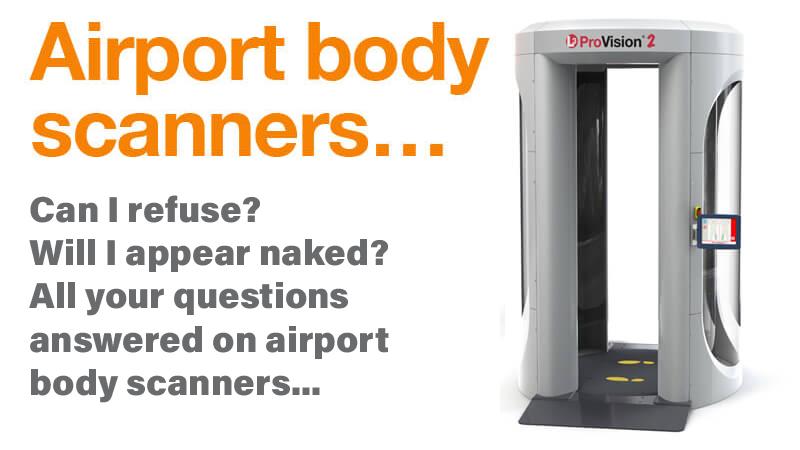
Airport body scanners: quick answers
| Question | Answer |
|---|---|
| What do they detect? | Potential concealed objects, including some metallic and non-metallic items. |
| What technology is used? | Low-power, non-ionising millimetre waves. |
| Does the scan hurt? | No. You stand still briefly; nothing touches you during the scan. |
| Is it safe during pregnancy? | UK government guidance permits scanning during pregnancy. |
| Can children be scanned? | Yes. Children are not automatically exempt. |
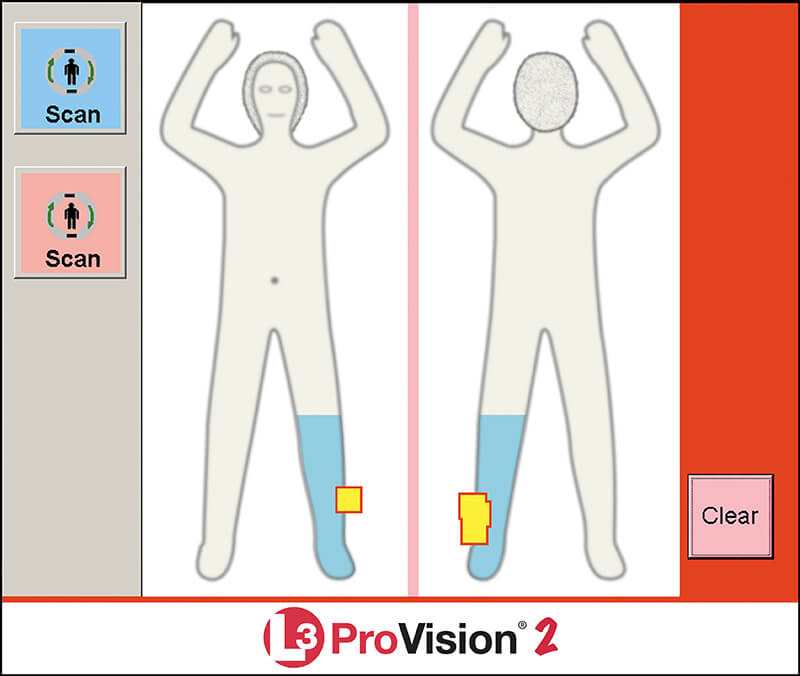
| Does the operator see you naked? | No. Modern automated detection displays a generic body outline with highlighted areas. |
| Is the scan saved? | No. UK rules require scan data to be deleted after assessment. |
| Can you refuse? | You may request an alternative enhanced hand search in private. |
| How long does it take? | The scan itself takes a few seconds; any follow-up search adds time. |
How do airport body scanners work?
A body scanner sends very low-power millimetre-wave signals towards the surface of the body. Software analyses the reflected signals for objects or anomalies beneath clothing. The purpose is to help identify items that may not be detected by a standard walk-through metal detector.
This is different from the X-ray equipment used to inspect cabin baggage. UK passenger body scanners do not use ionising X-rays. The Department for Transport maintains an approved security scanner list, updated in September 2026.
What happens during an airport body scan?
- Follow the security officer’s instructions. You may be selected at random or following an alert from other screening equipment.
- Remove items as directed. Empty pockets and follow instructions about outerwear or accessories.
- Step into the scanner. Stand in the indicated position, usually with your arms raised or held away from your body.
- Remain still briefly. The actual scan takes only a few seconds.
- Wait for the result. If the system highlights an area, staff may check it with a targeted search or other screening method.
The entire security process may take longer during busy periods, but the body scan itself is brief. You do not need to undress for a routine scan.
What does an airport body scanner operator see?
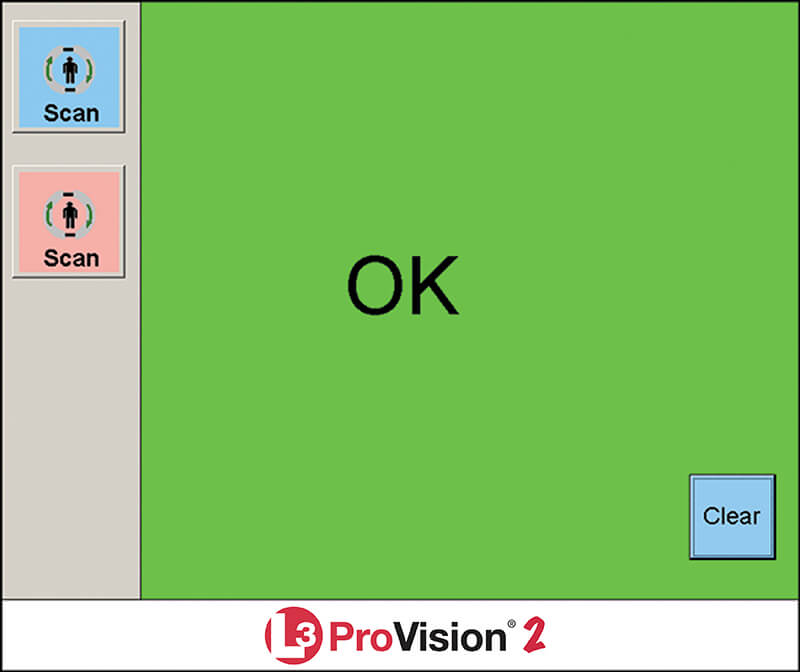
Modern UK airport scanners use automatic threat recognition. Instead of displaying a detailed picture of your body, the system shows a simplified, mannequin-style outline and indicates areas that need checking. The officer does not see a naked photograph of you.
The two original illustrations below show an example of a clear result and a generic figure with an area flagged for inspection. They are historical examples of the interface, not a guarantee that every airport currently uses identical screens.


Are airport body scanners safe?
UK-approved body scanners use non-ionising millimetre-wave technology. Government guidance states that this technology poses no known health and safety risks and operates at much lower power than a mobile phone. It is not the same as a medical X-ray or CT scan.
The Department for Transport security scanner code of practice explains the health, privacy and alternative-screening safeguards.
Can pregnant passengers use airport body scanners?
Yes. GOV.UK states that passengers may be asked to have a body scan even if pregnant. Millimetre-wave scanners do not use ionising radiation. If you would prefer not to be scanned, ask security staff for the alternative private search procedure.
Can babies and children go through a body scanner?
Yes. Children can be selected for body scanning, and there is no blanket exemption based on age. Staff should explain the process and take account of a child’s needs. If a child cannot stand in the required position or is distressed, speak to security staff about suitable screening arrangements.
What if you have a pacemaker, implant, prosthetic limb or stoma?
Gatwick Airport says its body scanners are safe for passengers with medical implants and pacemakers. A scanner may flag a prosthesis, stoma appliance or other medical item, so additional checks may be needed. Tell the officer discreetly about anything that requires sensitive handling; you can request a private search.
If you use an insulin pump, continuous glucose monitor, or another device with manufacturer-specific screening instructions, check those instructions before travel and explain them to airport staff. Do not remove essential medical equipment without appropriate advice.
For Gatwick-specific help, see Gatwick Airport assisted travel information.
Can you refuse an airport body scan in the UK?
Yes, you can opt out of the scanner, but not out of security screening. UK guidance says you can request an alternative enhanced hand search in private. This may involve loosening or removing some clothing in a private area. If you decline the permitted alternative screening as well, you may be refused access to the security-restricted area and therefore unable to board.
Ask for the alternative before entering the scanner and allow additional time. See GOV.UK: Your rights at the airport.
Can you ask for a private search or an officer of the same sex?
You can request a private enhanced hand search instead of a scan. Government guidance also explains the option to request a security officer of the same sex to analyse a scan where relevant. For a manual search, tell staff about any privacy, religious, disability or medical needs. Airports have procedures for sensitive searches; ask for a supervisor if you need clarification.
Do airport body scanners save or share your image?
No. Under the UK code of practice, automated scan analysis must not produce a recognisable image for staff, and data must be destroyed after screening. The system is designed to flag potential threats rather than store a personal body photograph. Do not confuse these scans with separate airport CCTV or identity-check systems, which have different purposes and rules.
What can trigger an airport body scanner alert?
The system may highlight an area because of an object beneath clothing or something that needs further examination. Depending on the scanner and circumstances, possible causes include items left in pockets, jewellery, clothing features, medical devices, or other objects. An alert does not mean the passenger has done anything wrong.
Security staff may inspect the indicated area, use a hand-held detector or conduct a further search. Follow their instructions and explain any sensitive medical or personal circumstances.
Body scanner vs metal detector vs baggage CT scanner
| Equipment | What it checks | How it works |
|---|---|---|
| Walk-through metal detector | Metal objects on a person | Electromagnetic detection |
| Passenger body scanner | Potential objects concealed under clothing | Non-ionising millimetre-wave scanning |
| Cabin baggage scanner / CT | Contents of hand luggage | X-ray-based imaging of bags, not passengers |
The technology used to inspect your bag is not the same as the scanner used to screen your body. Some UK airports have upgraded baggage screening equipment, but this does not remove the possibility of a passenger body scan.
Airport body scanners and accessibility: what to do before flying
- Tell your airline about assistance needs ideally at least 48 hours before departure.
- Check medical equipment instructions and bring any supporting information you may need.
- Speak to security staff early if standing, raising your arms, or using a scanner would be difficult.
- Request a private search if you have a stoma, prosthesis, sensory needs, or concerns about dignity.
- Allow extra time if you expect alternative screening or assistance.
Read the government’s airport passenger rights guide for further details.
Frequently asked questions about airport body scanners
Do all passengers have to use a body scanner?
No. Some passengers are selected at random or because another screening check triggers an alert. Selection procedures vary by airport.
Can a body scanner see through your clothes?
The technology checks for potential concealed items beneath clothing, but UK automated systems show staff a generic outline rather than a detailed body image.
Can an airport body scanner see inside your body?
It is designed to identify items on or beneath clothing, not to produce a medical image of internal organs.
Does an airport body scanner use radiation?
It uses non-ionising millimetre-wave electromagnetic energy, not ionising X-rays.
Are body scanners safe with a pacemaker?
Gatwick says its scanners are safe for passengers with pacemakers and implants. Tell staff about any device-specific requirements.
Will a body scanner detect a stoma bag?
A stoma appliance may be identified as an area needing additional checks. You can explain discreetly and request sensitive or private screening.
Will jewellery set off the body scanner?
Some jewellery or accessories may be highlighted. Follow local instructions about what to remove.
Can I ask for a manual search instead?
Yes. You may opt out of a scanner and request an enhanced hand search in private; you cannot bypass security screening altogether.
Will my scan be stored?
No. The UK code requires the scan data to be deleted after assessment.
How long does a body scan take?
The scan itself takes only a few seconds. Additional checks or queues can take longer.
Can children refuse a body scan?
Parents or guardians can speak to security staff about alternative screening; the child must still complete the required security process.
Are airport body scanners the same worldwide?
No. Technology, procedures, and legal safeguards differ by country. This guide focuses on UK airports.
Prepare for airport security with APH
A little preparation can make the airport experience easier. Check your airline’s guidance, allow enough time for security, and arrange assistance before you travel if needed. APH has been family-owned since 1980 and helps passengers plan airport parking at major UK airports.
Compare Gatwick Airport parking, Heathrow Airport parking and Manchester Airport parking. You can also explore APH Community travel guides for more airport preparation advice.
Official sources and further reading
- GOV.UK – Your rights at the airport
- Department for Transport – Security scanner code of practice
- Department for Transport – Approved security scanners (updated September 2026)
- Gatwick Airport – Assisted travel and security searches
Last reviewed: 20 November 2026. This guide covers UK airport passenger screening. Airport procedures can change, and security staff may apply additional checks where required. The original APH scanner images have been retained as historical illustrations; actual equipment displays may differ.